

Looking back, I can trace many of the most meaningful experiences in my life to a feeling I could never completely explain.
At the time, I did not have a name for it. I simply noticed that certain ideas refused to leave me alone. Something would capture my attention, and even when I tried to dismiss it as impractical, inconvenient, or unrelated to the life I was already living, it would return.
Now I have a name for that feeling.
The tug.
It rarely arrived dramatically. There were no flashing signs, no voice from heaven, and no detailed plan laying itself out in front of me. Instead, the tug felt like curiosity mixed with a strange sense of certainty. I would notice something, feel drawn toward it, and begin imagining myself stepping into an experience I knew almost nothing about.
The strangest part was that the tug usually appeared long before logic.
Logic likes evidence. It wants to know the cost, schedule, risks, potential reward, and probability of success. Logic wants a spreadsheet, which is something I usually appreciate.
The tug rarely provides any of that.
It simply asks for attention.
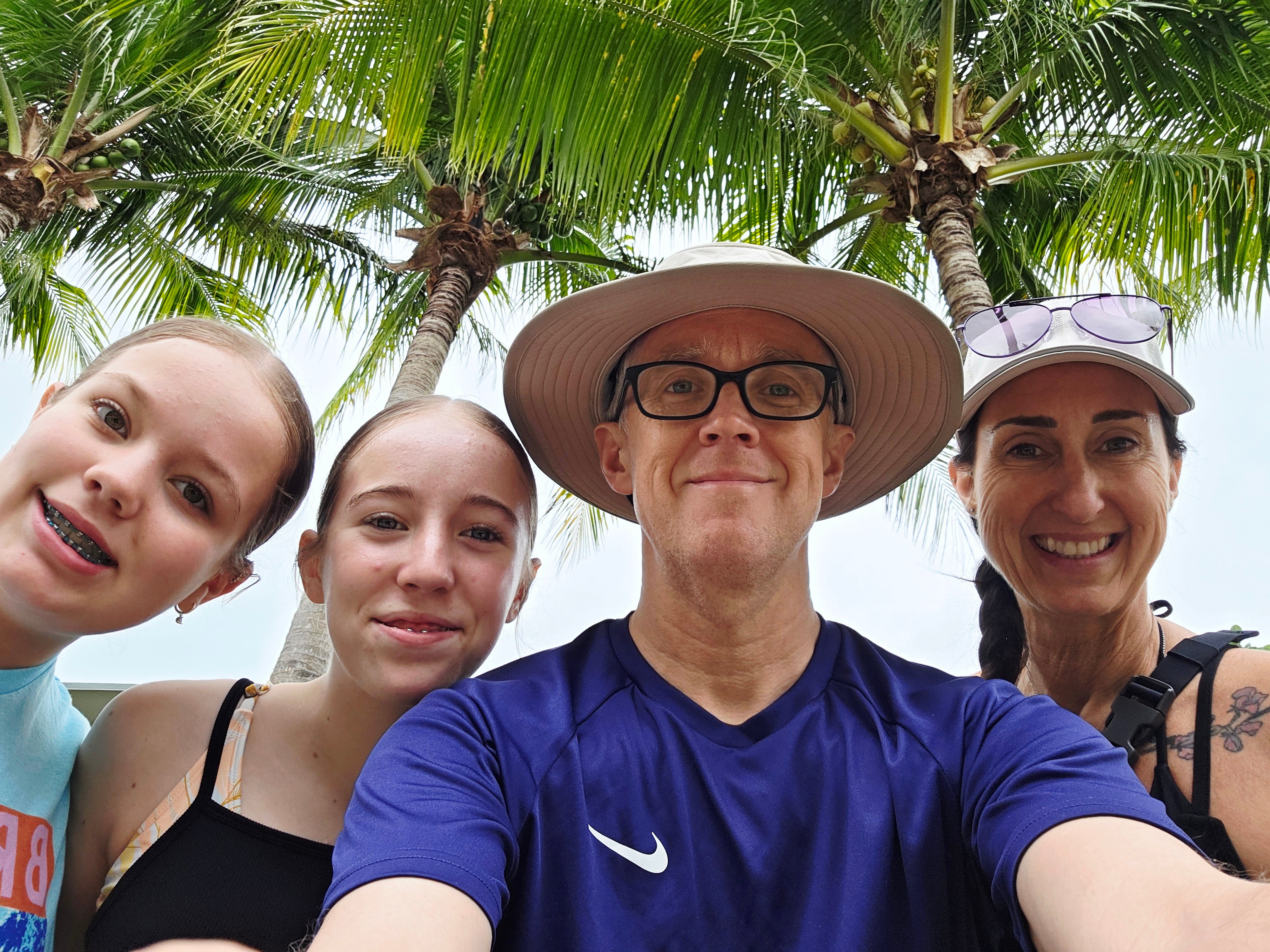
The Climbing Gym
For several years, I drove past a rock-climbing gym on my way to work. I had never climbed before. I did not know anyone who climbed, and I had no reason to believe the sport would become important to me. From the outside, the building did not appear especially remarkable. It was simply part of the scenery between home and the office.
Yet every time I passed it, the same thought appeared.
You would love that.
The thought made no sense. I had no evidence to support it. I understood technology, business, cycling, and fitness. Climbing belonged to another world, one filled with ropes, knots, chalk, harnesses, heights, and people who seemed entirely different from me.
Still, I kept thinking about it.
I would drive past the building one morning and imagine walking inside. The next day, I would dismiss the idea. Then the building would appear again, and so would the thought.
You would love that.
Months passed. Perhaps years.
The feeling remained.
Eventually, curiosity became stronger than hesitation. One afternoon, instead of driving past the building, I turned into the parking lot. I walked inside, signed the paperwork, and began climbing.
That simple turn changed several years of my life.
I fell completely in love with the sport. I climbed during lunch, after work, and on weekends. I read books, watched videos, studied movement, practiced technique, and gradually developed skills I never imagined I would possess. Over time, I became one of the gym’s most active members and eventually developed into a strong climber.
Climbing challenged me in ways that were both physical and intellectual. Every route was a puzzle written across a wall. Strength mattered, but technique mattered more. A person could not simply force every problem into submission. Sometimes the solution required balance, patience, flexibility, or the willingness to move in a direction that initially felt wrong.
Failure was immediate and honest. Either I completed the route or I fell.
Then I tried again.
The gym taught me that falling was not the opposite of progress. Falling was often how progress happened. Every failed attempt provided information. My foot had been placed incorrectly. My weight had shifted too early. I had overlooked a hold or chosen the wrong sequence.
The wall did not judge me.
It simply invited me to begin again.
Looking back, what fascinates me is not that I became a climber. It is that some part of me recognized the value of the experience long before the rest of me understood it.
The tug knew first.
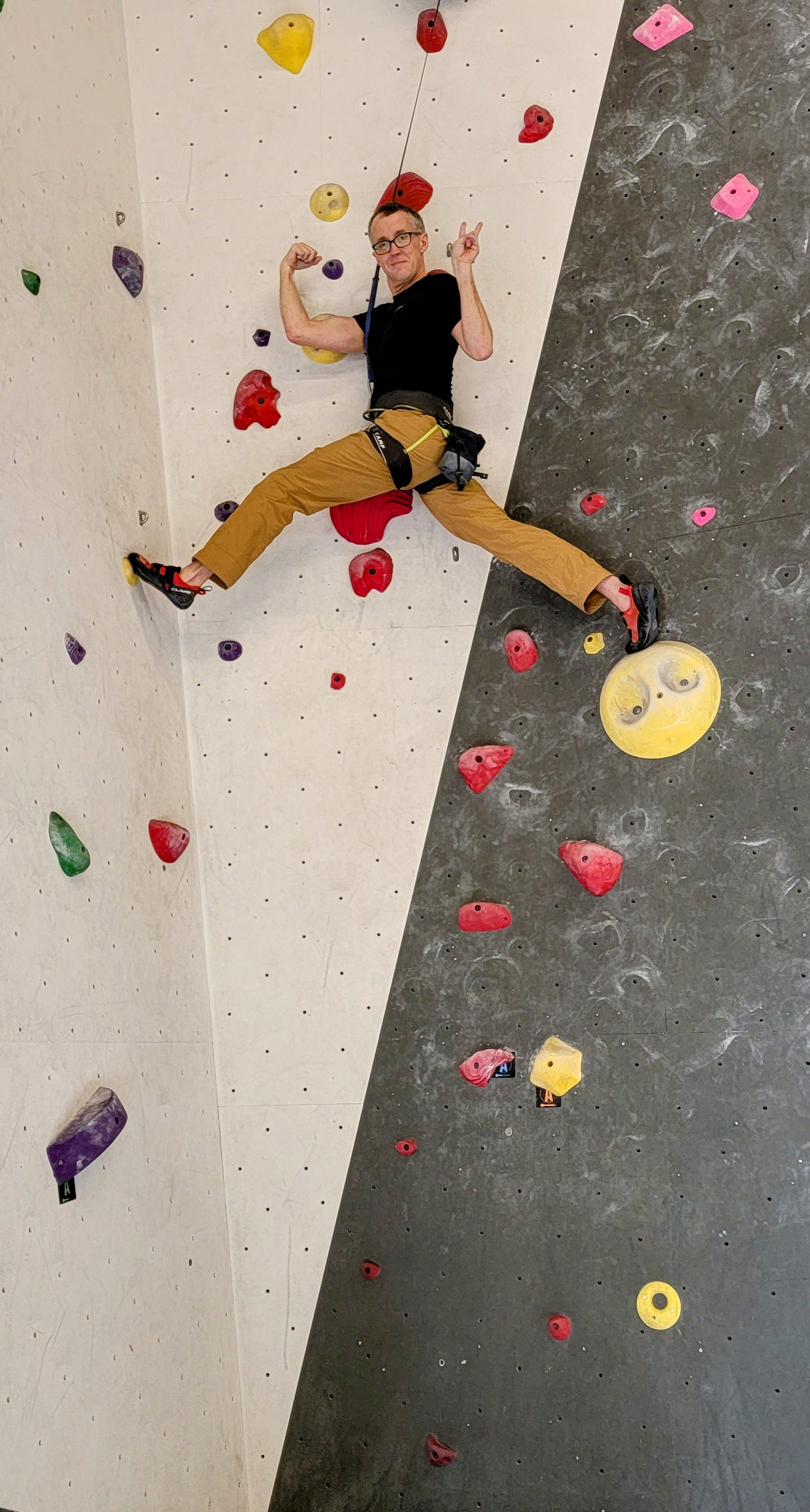
The Bison Ranch
The more closely I examine my life, the more examples of the tug I find.
One of them began in the locker room at the YMCA. I had become acquainted with a man who owned a bison ranch in western Kansas. We would occasionally talk while changing before or after a workout, and somewhere during those conversations I learned about the ranch and the work involved in managing the herd.
The idea immediately interested me.
I had no background in ranching. I knew nothing about raising livestock, handling bison, maintaining fences, or performing any of the work required on a working ranch. My professional world involved technology, consulting, computer systems, and organizational problems. Nothing about my experience suggested that I belonged anywhere near a herd of bison.
Still, during one of our conversations, I told him that if he ever needed help, I would be interested.
I did not treat the comment as a major commitment. It was simply one of those thoughts that moved from curiosity into spoken words before logic had time to intervene. I returned to my routine, and the conversation became one more interesting exchange in the locker room.
Eventually, he approached me there again and asked whether I had been serious about helping.
Once a year, over a long weekend in November, people gathered at the ranch to work the herd. The colder weather made the work more manageable, and the weekend provided enough time to complete the seasonal tasks that needed attention.
He asked if I wanted to come.
I said yes.
That first trip carried me from my familiar life in Omaha into an environment I had never experienced. I exchanged computers and customer meetings for corrals, fences, livestock equipment, cold November air, and animals far larger and more powerful than anything I had ever worked around.
Bison do not care how many degrees a person has earned. They do not care about professional titles, technical certifications, business accomplishments, or carefully developed plans. They respond to movement, pressure, space, instinct, and the behavior of the herd. Working with them required attention, humility, teamwork, and respect.
There was no room for pretending I knew more than I did.
I was a beginner.
I loved it.
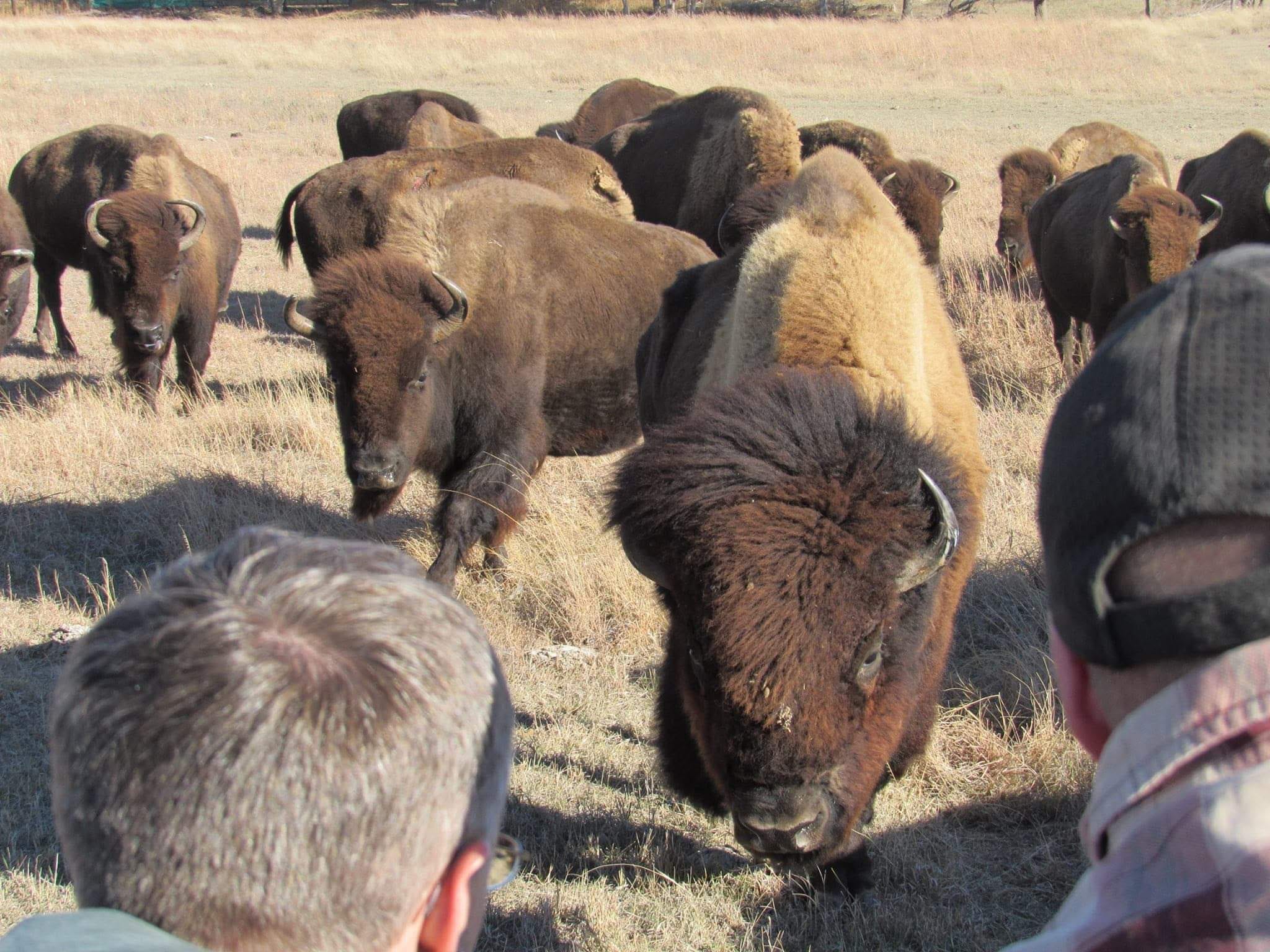
The work varied from year to year. We sorted animals, administered vaccinations, identified pregnant females, separated portions of the herd, repaired fencing, and completed whatever else needed attention during that annual weekend. The days were long and physical, and the work was unlike almost anything else in my ordinary life.
I returned the following November.
Then I returned again.
For several years, the trip became an annual tradition. I began bringing friends or family members with me, inviting them into an experience few of us would otherwise encounter. Each person arrived with a different level of experience, which was usually none at all, and each person left carrying stories.
I enjoyed introducing other people to that world. Watching someone encounter a bison at close range for the first time reminded me how unusual the experience really was. The ranch placed all of us outside our normal routines and professional identities. We had to learn, listen, cooperate, and accept that we were not the experts.
On the ranch, I was no longer following the tug only for myself.
I was allowing it to widen the circle.
There was no obvious connection between my professional life and those November weekends. From a practical perspective, driving to western Kansas to spend several days performing difficult physical work made little sense. I was not building a new career, earning additional income, or developing a credential for my résumé.
That was part of what made it valuable.
The experience required no justification beyond the experience itself.
Each year, I returned home tired, carrying new stories, and feeling more alive than I had before I left. The ranch reminded me that I did not need to remain confined to roles in which I was already competent. I could enter unfamiliar environments, become a beginner again, and discover parts of myself that ordinary life did not require me to use.
The tug had not called me toward a ranching career.
It had invited me into a larger life.
Longs Peak
One of the most memorable examples of the tug arrived in Colorado.
I was teaching a cycling class at the YMCA when I mentioned that I planned to leave for Colorado immediately afterward. I had packed my gear, prepared for the trip, and intended to climb Longs Peak.
A snowstorm had moved through the mountains only days earlier, and the news immediately changed the atmosphere in the room. As soon as class ended, people began offering advice and expressing concern. The mountain would be cold. Portions of the route might be covered in snow or ice. Conditions could change quickly. I would be traveling alone.
The concerns were reasonable. More importantly, they came from people who cared about me. They were not trying to keep me from living my life. They were responding to legitimate risks.
Still, I noticed something.
Nearly every comment focused on why I should not go.
The storm had introduced uncertainty, and uncertainty made staying home seem like the responsible choice. Staying home would be warmer, safer, easier, and completely understandable. Nobody would question my judgment if I postponed the trip.
The tug did not offer a rebuttal. It did not provide a weather guarantee, promise a successful summit, or assure me that nothing would go wrong.
It simply remained.
I listened to the concerns, finished gathering my belongings, and headed west.
During the drive, I had plenty of time to reconsider. The farther I traveled from Omaha, the easier it would have been to imagine every possible problem waiting ahead. I could have changed direction, chosen a less ambitious trail, or turned the trip into something more comfortable.
Instead, I continued toward Colorado.
That choice did not mean I intended to ignore the mountain or prove I was stronger than the weather. Experience had already taught me that confidence and carelessness are not the same thing. Mountains deserve respect, especially after a storm. I would evaluate the conditions as I climbed and turn around if the route became unsafe.
Following the tug did not require abandoning judgment.
It required refusing to let fear make every decision before the experience had even begun.
By the time I arrived in Colorado, the recent storm remained visible across the mountain. The air was cold, snow covered portions of the terrain, and the higher elevations looked severe and isolated. Longs Peak did not appear welcoming.
Mountains rarely do.
That is part of their appeal.
I began climbing, settling gradually into the rhythm that long hikes eventually create. The early steps carried the familiar excitement of beginning, but the mountain soon began demanding more attention. The elevation increased. The air thinned. The temperature dropped. Sections of snow slowed my progress and forced me to evaluate each step more carefully.
As I moved higher, the world below started falling away. Everyday responsibilities disappeared. There were no client calls, meetings, deadlines, or messages demanding an immediate response. The mountain reduced life to its most basic elements: movement, breath, weather, direction, and the decision to continue.
That simplicity is one reason I have always been drawn toward difficult outdoor experiences. Civilization gives us endless ways to distract ourselves from what is happening inside us. The mountain offers fewer places to hide.
A person climbs.
A person breathes.
A person continues or turns around.
Both choices can be correct.
The mountain does not care which one we make.
About halfway up, I met two other climbers. We talked and eventually decided to continue together. Their equipment appeared expensive and professional. Their clothing, packs, and gear suggested experience, or at least that was what I assumed.
Standing beside them, I initially felt reassured. I was alone on a mountain following a recent snowstorm, and these two men looked as though they knew exactly what they were doing.
Their presence changed the experience. The route felt less isolated, and conversation made the climb easier. We talked while moving upward, sharing enough about ourselves to become temporary companions connected by the same objective.
Eventually, we stopped to rest.
One of the men asked if we could pause a few minutes longer. Then, without ceremony, he lowered part of his climbing clothing and began adjusting a prosthetic leg.
Until that moment, I had no idea.
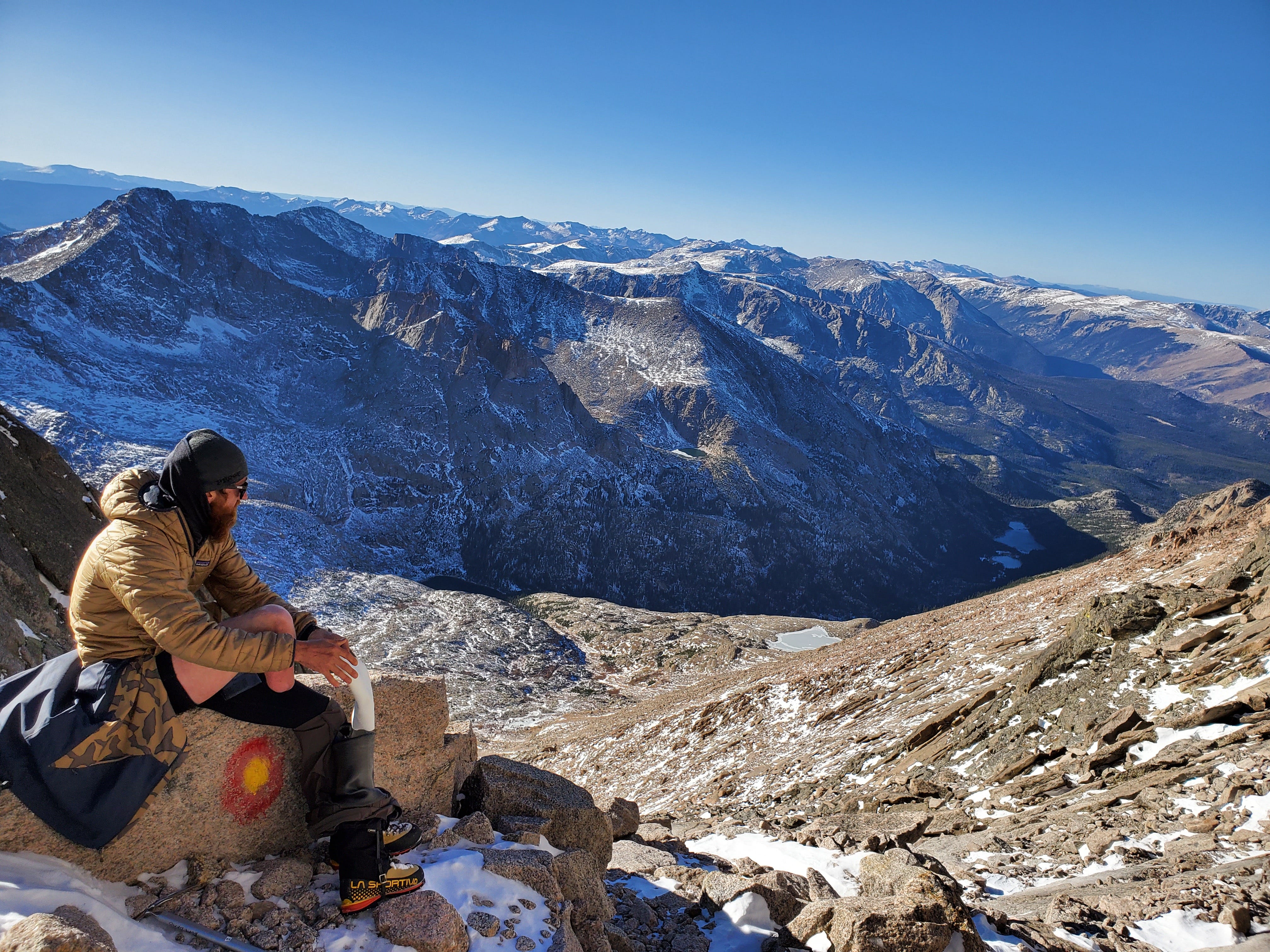
He explained that he was a military veteran who had lost his leg in Afghanistan. He lived near Denver and had a young daughter. As we talked, he shared stories about his recovery, his family, and the ways he continued challenging himself after the injury. He told me about spending time outdoors with his daughter and carrying her on hikes.
That image stayed with me.
Here was a person who had already carried far more than climbing equipment up a mountain. The consequences of war had changed his body and undoubtedly altered many parts of his life. Recovery had required him to relearn movements most people perform without thought. Fatherhood had given him someone else to carry, both literally and figuratively.
Yet he was climbing.
Not to prove the loss had never happened. Not because every limitation could be overcome through determination alone. He was climbing because part of him still wanted to discover what remained possible.
Then I learned something else.
Neither of the men had ever climbed a mountain like Longs Peak. The impressive equipment I had interpreted as evidence of experience had been rented the day before.
The realization changed our roles.
I had assumed they were more capable because they looked prepared. They wore the right clothing, carried impressive gear, and appeared to belong on the mountain. I had evaluated the surface and constructed an entire story from it.
Beneath the equipment, they were beginners.
Without realizing it, I had become the most experienced climber in the group.
As we continued, I began helping guide them through portions of the route. I paid closer attention to our progress, the changing conditions, and the decisions we needed to make. The responsibility altered the climb for me. I was no longer pursuing only my own summit.
I was participating in theirs.
That is one of the things I value most about difficult experiences. They reveal roles we did not know we were ready to assume. A person can begin an adventure looking for a personal challenge and discover an opportunity to contribute.
The veteran continued upward without making his prosthetic leg the center of the story. When an adjustment was necessary, he made it. When rest was required, we rested. Then he continued.
What struck me was not the absence of limitation.
His limitations were real.
What struck me was that he refused to let those limitations make every decision for him.
Earlier that day, a room filled with physically healthy people had offered thoughtful reasons for me to stay home. Now I was climbing beside someone who possessed a reason few people would have questioned. If he had decided the mountain was not worth the difficulty, nobody could have accused him of making excuses.
Still, he had shown up.
The contrast did not teach me that warnings should be ignored or that determination can eliminate every obstacle. That would have been an irresponsible conclusion. Some risks are not worth taking. Some conditions require us to turn around. Some limitations protect us from harm.
The experience taught me that limitations deserve examination.
Some limitations protect us.
Others imprison us.
The difficult work is determining which one we are facing.
We eventually reached the summit. The view stretched outward across snow-covered peaks and distant terrain, rewarding every difficult step with a perspective that could not have been experienced from the parking lot.
Yet when I remember that day, the summit is not the first image that returns.
I remember the surprise of seeing the prosthetic leg. I remember learning that the climbers I assumed would guide me were trusting me to guide them. I remember listening to a father talk about carrying his daughter on hikes. I remember how easily appearances had shaped my assumptions and how quickly the mountain rearranged them.
The summit gave us a view.
The climb gave me perspective.
As daylight began to fade, we said goodbye and descended in different directions. I continued alone toward the place where I intended to spend the night. The temperature dropped quickly as the remaining light disappeared. The wind strengthened, and my water line eventually froze.
The mountain felt different in darkness. Landmarks became harder to identify, shadows altered the terrain, and every sound seemed to carry farther through the cold air. The companionship from earlier in the day had been replaced by solitude.
Several hours later, I reached my hammock. I climbed inside, surrounded myself with the insulation I had carried, and settled into a suspended cocoon while the temperature outside hovered near twenty degrees. Wind moved through the mountains and pressed against the fabric, but inside I was warm.
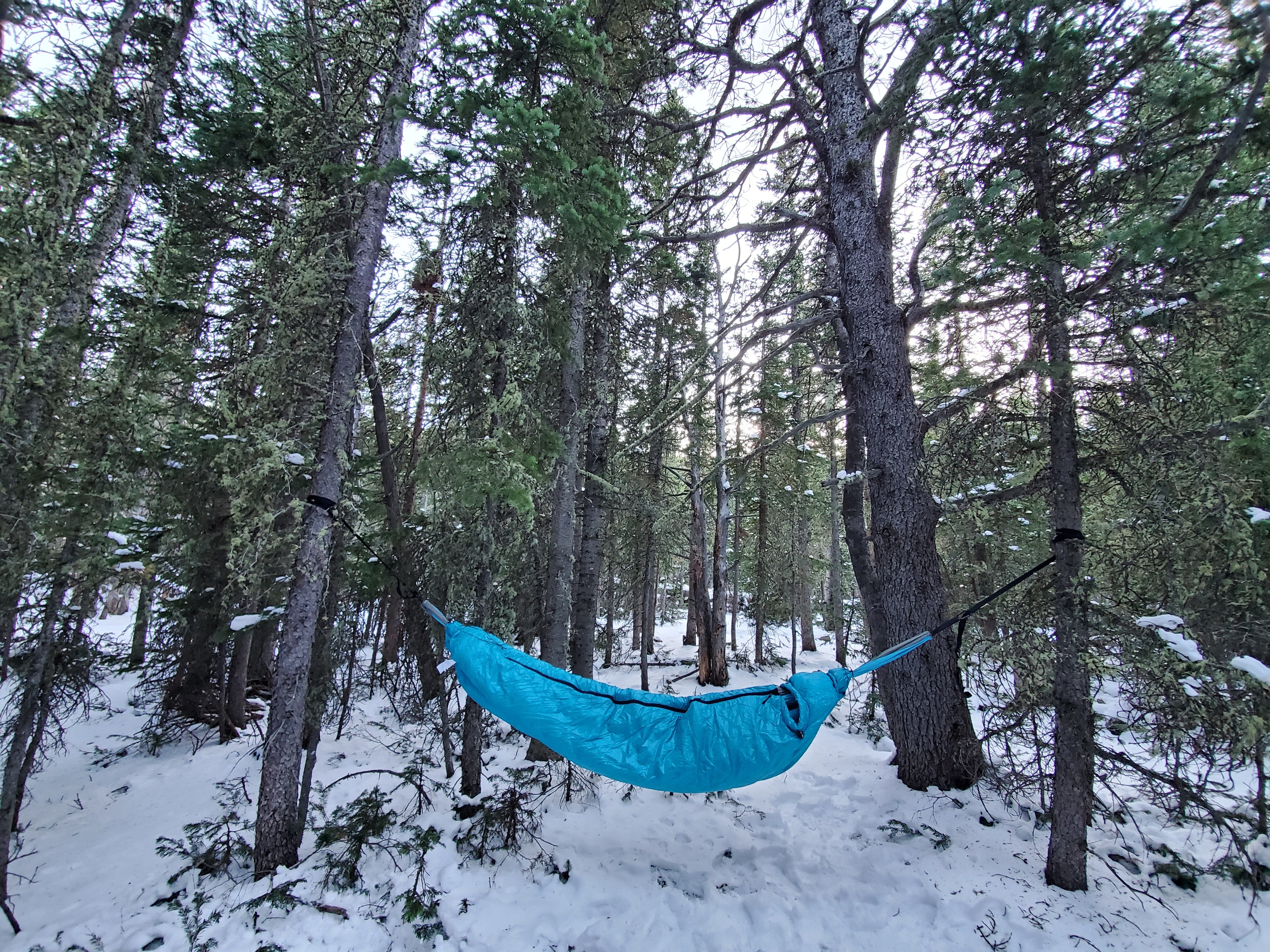
Lying there in darkness, I replayed the day.
I thought about the warnings at the YMCA. I thought about the veteran and the confidence I had mistakenly assigned to rented equipment. I thought about the moment I became responsible for helping other people move safely through terrain they had never experienced.
Mostly, I thought about how close I had come to missing all of it.
Had I stayed home, I would have been safe. I would have avoided the cold, the snow, the frozen water line, the wind, the uncertainty, and the physical effort. Nobody would have thought less of me.
But I would not have met those climbers.
I would not have heard the veteran’s story.
I would not have discovered that I was capable of guiding other people on a mountain I had initially expected to climb alone.
I would have remained comfortable.
I also would have remained unchanged.
Longs Peak helped me understand that the tug was not reckless. It was not a command to ignore danger, dismiss concern, or leap blindly into every uncertain situation. It was an invitation to examine whether fear was protecting me from genuine harm or merely preventing me from becoming someone larger.
Longs Peak was not only a mountain I climbed.
It was a place where several versions of courage met.
The courage to leave after hearing every reason to stay home. The courage to adjust a prosthetic leg and continue climbing. The courage to admit inexperience. The courage to accept responsibility when leadership appeared unexpectedly. The courage to descend alone into darkness and trust the preparation that had brought me there.
None of that courage was loud.
Most courage is not.
Sometimes courage is simply the next thoughtful step taken after fear has been acknowledged.
What the Tug Was Teaching Me
The climbing gym awakened curiosity. The annual weekends on the bison ranch taught me to become a beginner and invite other people into unfamiliar experiences. Longs Peak showed me that the tug could lead not only toward adventure, but toward responsibility, connection, and an entirely different understanding of courage.
None of those experiences fit neatly into the life I had planned.
That was precisely why they mattered.
The tug was not directing me toward specific activities. It was introducing me to parts of myself that routine might never have revealed. Each experience asked me to move beyond competence, comfort, or certainty and discover what remained on the other side.
The climbing gym was never only about climbing.
The bison ranch was never only about bison.
Longs Peak was never only about reaching a summit.
The tug was introducing me to myself.
It kept placing experiences in front of me that revealed who I was becoming: a person drawn toward growth, energized by curiosity, willing to become a beginner, and most alive when challenge, connection, and contribution came together.
When I look backward, I see the tug everywhere. It was present in the climbing gym, on the ranch, and across mountain trails. It appeared in museums, classrooms, travel, writing, teaching, and the search for Helen. It appeared each time I felt drawn toward something that did not immediately make sense but seemed capable of making my life larger.
The tug never arrived with guarantees.
It arrived with possibilities.
It did not offer certainty.
It offered curiosity.
Perhaps that is why it mattered so much. Certainty asks us to act only after we know the outcome. Curiosity allows us to move before the entire story has been written.
The best experiences of my life rarely began with confidence. They began with questions and a quiet voice suggesting that something unfamiliar might be worth exploring.
Sometimes I listened immediately.
Sometimes I drove past the climbing gym for years.
The tug was patient.
It understood something I would need much longer to learn. The experiences that change us rarely announce themselves as life-changing. They begin as an invitation, an unlikely conversation, a turn into an unfamiliar parking lot, a long drive to western Kansas, or a decision to continue toward a mountain after everyone has explained why staying home would be easier.
The tug does not demand.
It asks.
What if you tried?
What if you went?
What if the thing that makes little sense on paper makes perfect sense once you have lived it?
More often than not, the tug was right.
And the life waiting on the other side was larger than the one I would have lived if I had ignored it.