

I used to think freedom came from having more. More space, more security, more possessions, more options, and more room all seemed like evidence that life was moving in the right direction. Much of American culture reinforces that idea. We are encouraged to earn more, buy more, upgrade more, and accumulate enough visible evidence to prove that we are succeeding.
For years, I accepted those assumptions without examining them. A larger home represented progress. Full rooms made the house feel established. Bookshelves covered in books and collectibles suggested education, accomplishment, and a life filled with interests. Even when the objects themselves no longer carried meaning, their presence helped create the appearance of a complete life.
Then one evening, while sitting alone in the den of the house I owned with my wife, I watched a documentary about minimalism. Minimalism: A Documentary About the Important Things
I do not remember every argument or example presented in the film, but I remember how it made me feel. The message did not seem radical. It felt like someone had finally found language for something I had been sensing without fully understanding. The documentary suggested that reducing what we own could make room for what matters, and that possessions sometimes occupy far more than physical space.
When the film ended, I remained in my chair and looked around the den. Behind me stood two large bookshelves, both completely full. There were college textbooks I had not opened in years and would almost certainly never read again. There were collectibles, decorations, keepsakes, and small objects that had gradually accumulated because there was enough space to store them.
The shelves made the room look full and established. They made the house feel lived in. Perhaps they even made me appear more educated or interesting. Yet when I looked at the contents carefully, I realized how little of it mattered to me. I did not use most of it, and I did not love most of it. The objects remained because removing them would require effort, while continuing to ignore them required nothing.
That evening, I acknowledged something I had probably known for a long time.
I did not need any of it.
I remember deciding that I would begin making changes. I would go through the shelves, clear out what no longer mattered, and begin reducing the amount of unnecessary stuff surrounding me. It was late, however, and I was tired. I told myself I would start the following day.
Then I went to bed.
The Bookshelf
The next morning, I woke around 4:30 to prepare for the gym. Before leaving the house, I glanced into the den to make sure I had not forgotten anything.
One of the bookshelves had collapsed.
The books, textbooks, collectibles, decorations, and other objects that had been neatly arranged the night before were now scattered across the floor. I had not touched the shelf. Nobody had moved anything. Sometime during the night, the structure had simply given up beneath the weight of everything it was holding.
I stood in the doorway and stared at the pile.
Then I laughed.
There was undoubtedly a practical explanation. The shelf may have been overloaded, a connector may have failed, or gravity may simply have completed work that had been underway for years. Still, the timing seemed almost too perfect. Only hours earlier, I had looked at those shelves and promised myself I would make a change.
Apparently, the bookshelf did not trust me to follow through.
It felt as though the universe had grown impatient with my procrastination. The shelf had reached a conclusion before I had, and now everything I had planned to deal with “tomorrow” was lying in an unavoidable pile on the floor.
That morning became the beginning of a process that lasted much longer than I expected. During the following weeks, I loaded my truck almost every evening and drove to a donation center. Books, clothes, furniture, kitchen supplies, decorations, and boxes of items I had retained without any meaningful reason gradually left the house.
At first, I thought I was simply cleaning and organizing. I soon realized something deeper was happening. Each truckload brought an unexpected sense of release. As objects disappeared, the rooms became quieter. There was less visual noise and less evidence of previous versions of myself that I no longer felt obligated to preserve.
The more I removed, the lighter I felt.
We are often told that acquiring possessions produces freedom. Money gives us purchasing power, purchases give us options, and options represent success. Yet the opposite seemed to be happening in my life. As the possessions disappeared, my sense of freedom increased. There was less to manage, less to clean, less to maintain, and less to worry about. More importantly, there was more room to think about what I actually wanted.
I thought I was clearing out a house.
I was beginning to clear out a life.
Helen’s Example
The documentary and the bookshelf opened the door, but Helen helped me understand what might exist on the other side.
When I found Helen, I encountered someone who had lived very differently from most of the people surrounding me. She had traveled, hitchhiked, lived in tents and remote places, worked unconventional jobs, pursued causes she believed in, and built a life that could not be easily measured through possessions, titles, or traditional stability. She did not organize her identity around a large home filled with things.
In many ways, she had very little.
Yet she seemed happy.
More than happy, she seemed confident about the life she had chosen. She spoke with conviction about her experiences, education, conservation work, travel, beliefs, and the places that had shaped her. She did not appear embarrassed that her life looked different from the lives of people who had followed more conventional routes.
That confused me at first.
How could someone who owned so little appear so certain that life had given her so much? How could she feel confident without the house, possessions, income, business success, and visible security I had been taught to associate with achievement? She did not have everything I had spent years believing a successful adult was supposed to accumulate, yet she appeared to possess something I was still learning to find.
She had herself.
Helen’s life was not perfect, and I was not interested in romanticizing every decision she made. A life with fewer possessions does not automatically become wise, joyful, or meaningful. Neither poverty nor deprivation is a virtue, and having less does not guarantee freedom.
What affected me was the intentionality behind the choices I saw. Helen did not appear to measure herself by what she owned. She measured life through experiences, ideas, relationships, education, contribution, freedom, and the causes to which she had devoted herself.
Her confidence seemed to emerge from participation rather than accumulation.
I had spent decades building security. Helen had spent decades collecting experiences. I had created stability and accepted increasing responsibility. She had repeatedly stepped toward uncertainty because she believed something valuable waited there.
Our paths looked radically different, but the contrast forced me to question my assumptions. I had more possessions, more conventional markers of success, and a life that other people could easily understand. Why, then, did I sometimes feel as though I was maintaining that life rather than living it?
Helen’s example complicated the story I had inherited about success.
She showed me that a person could own very little and still possess a rich life.
Leaving With Almost Nothing
Several years later, when my marriage ended, those earlier lessons returned with greater clarity.
During the divorce, I told my wife that she could have everything. She could keep the house, furniture, household contents, decorations, and nearly all the material evidence of the life we had built together. I did not want to fight over chairs, dishes, artwork, appliances, or objects that neither of us might remember years later.
All I really needed were my clothes and a small collection of meaningful personal items.
Some people might interpret that decision as impulsive or careless. I understand why. A home represents money, security, history, and years of effort. Walking away from its contents could appear foolish.
For me, however, it felt like an opportunity.
I did not want to reproduce the same life in another location. I did not want another large space that would require my time, energy, and money to maintain. I wanted to begin again with almost nothing and discover where I fit in the world without the walls, rooms, furniture, and expectations that had previously defined my place within it.
I wanted less around me and more of the world available to me.
That distinction became the center of the life I hoped to build. I wanted a home that required very little maintenance so I could spend my time living rather than taking care of a house. I wanted a smaller environmental footprint, with less energy required to heat, cool, illuminate, and maintain space I did not truly need. I wanted to own only what was useful, beautiful, or genuinely meaningful enough to deserve a place in my smaller world.
Most of all, I wanted time.
A house consumes more than mortgage payments. It consumes weekends, repairs, cleaning, yardwork, upkeep, insurance, attention, and thought. None of those responsibilities is inherently wrong. Many people gain enormous joy from caring for their homes, improving their property, gardening, building, decorating, or creating a beautiful place for their families.
I simply realized that was not where I wanted most of my energy to go.
I did not want to spend my best hours maintaining square footage.
I wanted to spend them experiencing the world.
Five Hundred and Fifty Square Feet
I moved into a 550-square-foot studio apartment, and I had Natalie and Annabelle with me half of the time. People occasionally reacted with concern when they imagined one adult and two children living inside such a small space.
How could three people live there?
The answer was simple.
Together.
The girls shared the bed, and I slept wherever made sense. Sometimes I slept on the couch. Other times, I used a backpacking mat on the floor. On some nights, I slept in a hammock on the balcony.
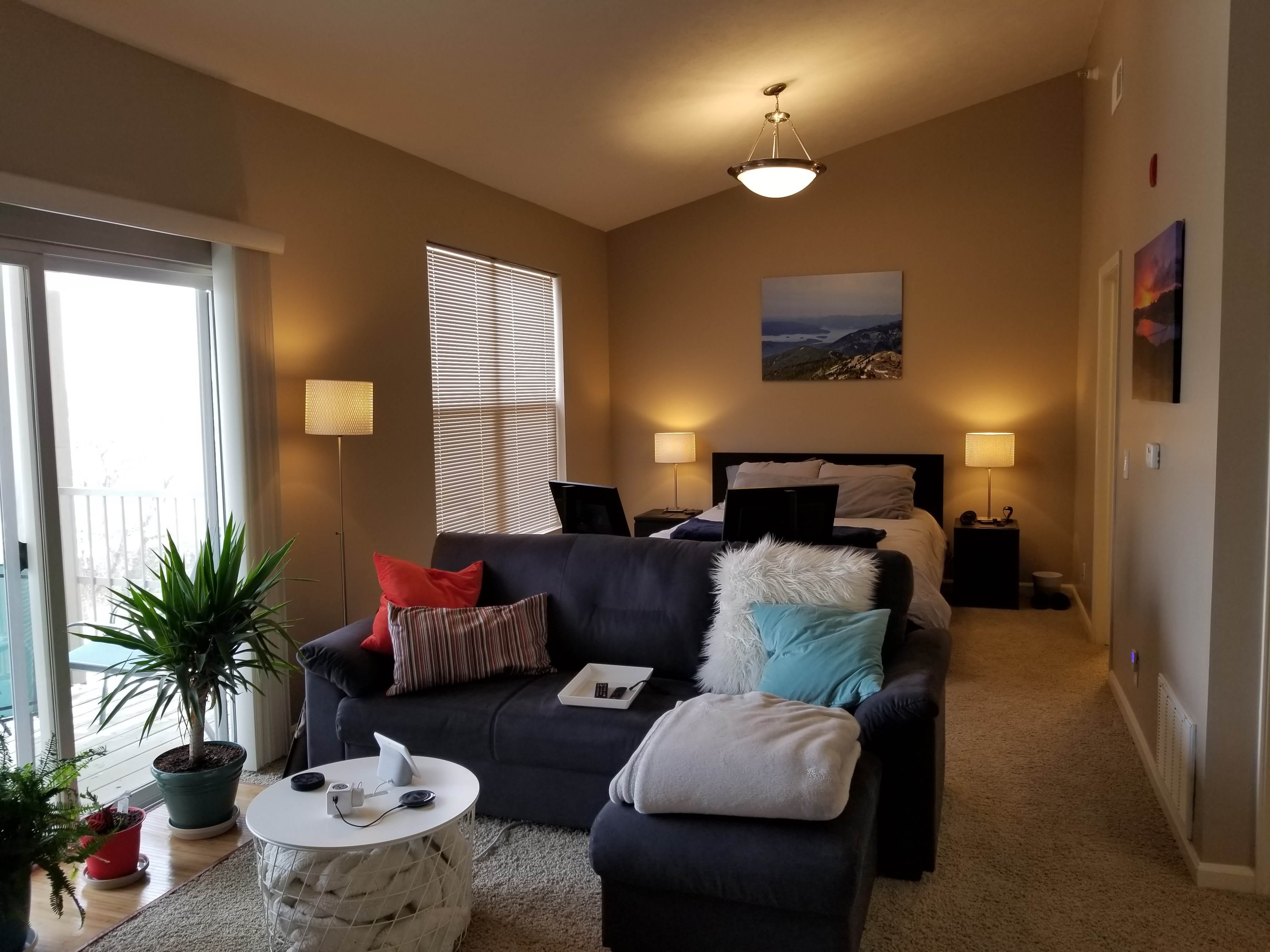
Except for the bathroom, the girls and I were almost always in the same room. We could see one another, hear one another, and interrupt one another. There was nowhere to disappear when someone was frustrated, no distant wing of the apartment where a person could retreat, and no collection of separate rooms allowing us to live parallel lives beneath the same roof.
Sometimes that was inconvenient.
We annoyed one another. We interrupted conversations, stepped over belongings, disagreed about noise, and learned that privacy inside a studio apartment often required creativity. There were moments when each of us would have appreciated more distance.
Yet the limitations created something valuable.
We were together.
Not theoretically together because we shared an address, but physically and emotionally present in the same small world. We talked because there was no separate room in which to avoid talking. We shared meals, stories, frustrations, laughter, television, homework, morning routines, and the ordinary rhythm of daily life.
We could not hide from one another.
Looking back, some of my favorite parenting memories took place inside that small apartment. The limited space forced us to develop patience, flexibility, and awareness. We learned how to give one another room without always having separate rooms. We learned that togetherness is not always convenient but can still be meaningful.
The apartment never impressed anyone.
It did not need to.
It gave us what we required: shelter, safety, closeness, and a place from which we could go out and experience the world. It supported our lives without becoming the center of them.
That was exactly what I wanted.
Growing Up Together
A few years later, as Natalie and Annabelle approached womanhood, I recognized that our needs were changing. I moved into a larger place of approximately 750 square feet, which felt enormous compared with the studio.
Even then, I chose to have the girls share the single bedroom.
Some people questioned that choice. My daughters were getting older, and separate space might have offered privacy and convenience. I understood the concern, but I continued to believe the relationship they were building mattered more than the additional personal space.
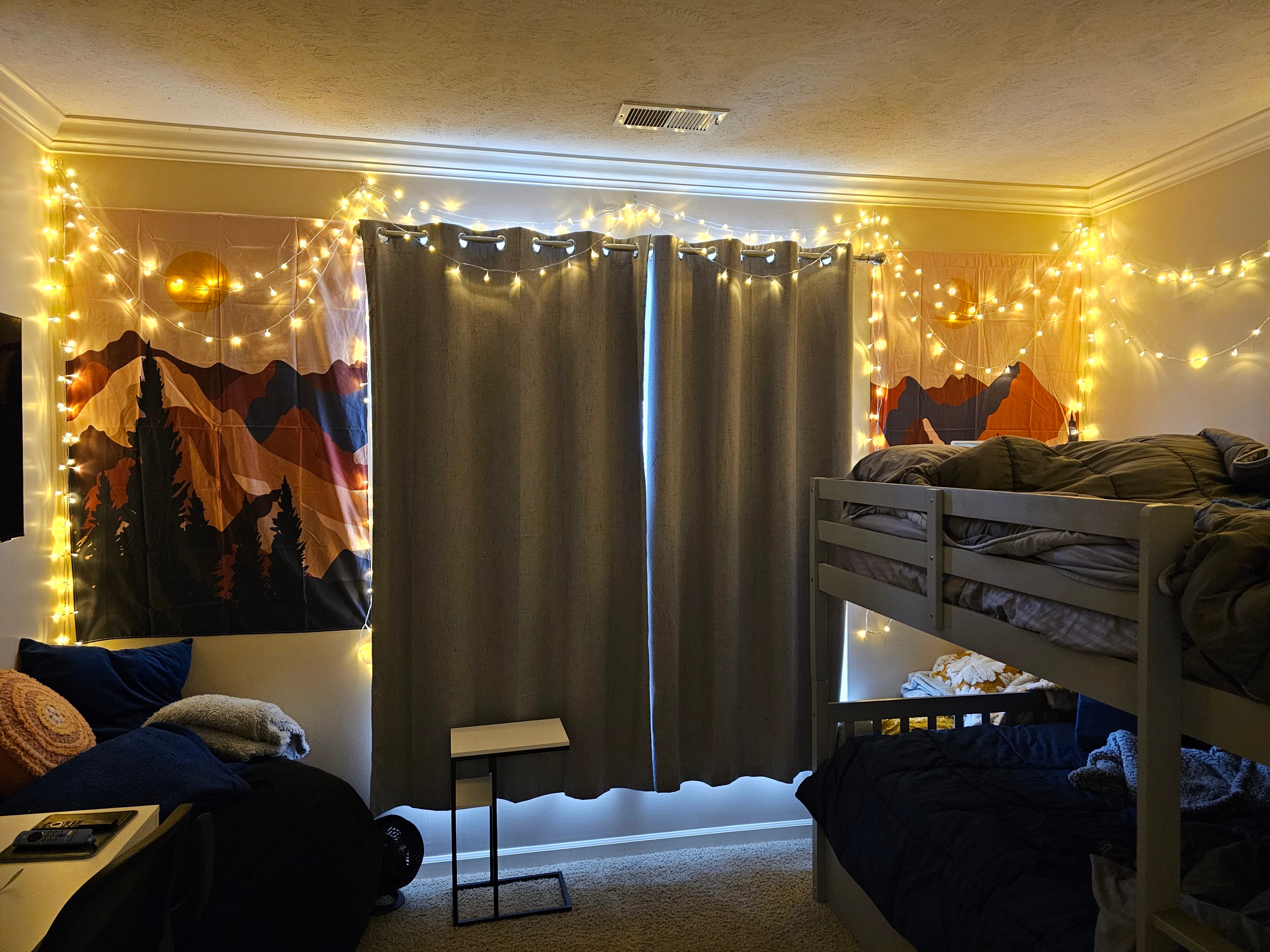
I wanted them to learn how to live with someone else, communicate, resolve conflict, share, compromise, forgive, and experience each other’s lives. I wanted them to be present for the quiet conversations that occur after the lights are turned off, the laughter that begins unexpectedly, and the ordinary exchanges that become part of a shared childhood.
I often reminded them that they would always have one another.
Life would give them victories and disappointments. There would be joy, heartbreak, uncertainty, conflict, and moments when they felt alone. One day, Paula and I, their mother, grandparents, teachers, and other important adults would no longer be present in the same ways.
Through it all, Natalie and Annabelle would remain sisters.
That relationship mattered more to me than square footage. It mattered more than convenience and, at times, more than comfort.
I was not trying to create artificial hardship or deny them something they genuinely required. I wanted them to understand that a meaningful life does not necessarily depend upon having more space, more privacy, or more possessions. Sometimes a smaller space contains a larger relationship.
Years later, I learned that Paula had made a similar choice with her two boys. They shared a room with bunk beds until college, even when another room was available.
When she told me, I smiled.
Of course she had.
The story revealed another shared value between us. We both believed closeness was not something that happened automatically simply because people were related. Relationships needed shared time, shared space, shared inconvenience, and the opportunity to work through difficulty rather than escape from it.
That is another story and perhaps another chapter.
Less Space, More World
The older I become, the more convinced I am that minimalism is not really about owning fewer things.
It is about creating more room.
The room does not need to appear as empty square footage. It may appear as time, energy, attention, possibility, or freedom. Removing an object does not improve a life simply because the object is gone. The value comes from what becomes possible in the space it leaves behind.
I wanted space for relationships, experiences, curiosity, adventure, creativity, service, learning, and joy. I wanted fewer objects competing for my attention and fewer responsibilities attached to maintaining possessions I did not value.
Every object asks something from us. It needs to be stored, cleaned, repaired, protected, insured, moved, organized, or eventually discarded. A single possession may ask very little. Thousands of them slowly construct a second life devoted to caring for the first one.
The fewer things I owned, the less of my time was spent managing things.
The more of my life became available for living.

Helen had understood this long before I did. Her lack of possessions had not prevented her from becoming educated, curious, adventurous, passionate, and fully engaged with the world. If anything, owning less appeared to have given her the mobility and freedom to follow experiences wherever they led.
She had not waited until she owned enough to begin living.
She lived first.
That realization stayed with me because I had spent years following the opposite formula. I worked, accumulated, maintained, and assumed that a sufficiently secure future would eventually give me permission to live more freely.
Helen’s example challenged that sequence.
Perhaps freedom was not the reward waiting after accumulation.
Perhaps freedom began when we recognized enough.
Minimalism and Joyopoly
This realization eventually merged with Joyopoly.
Monopoly rewards accumulation. Minimalism asks whether accumulation is the right goal. Joyopoly offers another scorecard altogether.
Most people spend their lives adding. I began intentionally subtracting.
Not because possessions are evil or money is unimportant. I still own things, buy things, save money, and appreciate objects that improve my life. I am not trying to become a monk, reject comfort, or pretend material security has no value.
I simply want what I own to support my life rather than require my life to support it.
Every possession competes for space in a world I have intentionally kept small. That limitation is useful because it forces me to ask whether something genuinely matters. Will I use it? Does it offer meaningful beauty? Does it support an activity I value? Does it carry a memory important enough to preserve?
Often the answer is no.
Sometimes the answer is yes.
The purpose is not deprivation.
The purpose is intention.
I wanted more stories than storage, more experiences than inventory, more memories than merchandise, and more life than maintenance.
Possibility
When people see my travel spreadsheet with more than two thousand entries, they occasionally assume I am obsessed with travel. Travel certainly brings me joy, but the spreadsheet represents something larger.
I am obsessed with possibility.
Every line is an invitation to experience something beyond what I already know. A museum, trail, road trip, city, conversation, unusual attraction, historical site, or experience becomes a doorway into another story.
The spreadsheet is the opposite of the collapsed bookshelf.
The bookshelf held objects from a life I had already lived, many of which no longer meant anything to me. The spreadsheet holds possibilities for a life still unfolding.
One occupied space.
The other creates it.
Years ago, I decided I would rather fill my life with experiences than fill my closets. I would rather add places to the spreadsheet than furniture to the house. I would rather tell the story of sleeping in a hammock, hiking with my daughters, meeting an unexpected person, or discovering a remarkable museum than explain why I needed another room to store objects I had forgotten I owned.
One day, nobody will count my square footage or inventory my furniture. Nobody will remember how many bookshelves I owned, how full they were, or whether my house looked sufficiently established.
The people I love will remember stories.

They will remember adventures, laughter, conversations, disagreements, reconciliation, connection, and time spent together. If I am lucky, they will remember that I tried to be present and that I chose to fill my world with experiences rather than objects.
Looking back, I remain grateful that a bookshelf collapsed in the middle of the night. That shelf did not create the person I became, but it gave me a wonderfully literal image of a life carrying more than it needed.
Helen then showed me that meaning did not depend upon accumulation. She had less than many people I knew, yet she moved through the world with conviction, curiosity, and confidence. Her life raised a question I could no longer avoid:
How could someone with so little appear to possess so much?
Eventually, I understood.
She possessed her time.
She possessed her curiosity.
She possessed her experiences and convictions.
Most importantly, she appeared to possess herself.
I did not need a larger life.
I needed a smaller one with more room inside it.
Fewer possessions.
Fewer distractions.
Fewer obligations attached to things that did not matter.
And far more of the world available to live.