

After finding Helen, I tried very hard not to find Michael. That may sound strange. I had spent thirty-five years wondering about my biological family, imagining faces I had never seen and stories no one had told me. Once I finally found one biological parent, it would have seemed natural to begin searching for the other immediately. But finding Helen had already shifted the ground beneath me. I knew I needed time to stand on it before I moved again.
For most of my life, my biological parents had existed as a pair of unanswered questions. They were connected in my mind because they were both absent, both unknown, and both part of the same blank space in my story. Now Helen was no longer a question. She was a real person with a voice, a sense of humor, memories, opinions, and a life that had continued for decades after mine began. Our relationship was new, fragile, and unlike anything I had experienced before. I wanted to give it room before opening another door.
Helen and I exchanged long emails. We told stories and compared histories, trying to compress three and a half decades into messages that could be read in a few minutes. There was no simple way to explain a life to someone who had missed every ordinary day of it. I could tell her where I had lived, what I had done, whom I had married, and what my daughters were like, but those facts could not fully convey the person I had become. She was doing the same thing for me. Each message added another piece, and slowly the woman I had imagined for thirty-five years was replaced by the woman who actually existed.
As our conversations unfolded, Michael occasionally appeared in her stories. I learned that they had lived together in North Omaha in a large historic house divided into apartments. Michael was twenty years old. He had recently graduated from high school, drove a taxi, and played guitar. Helen never described their relationship as a great romance. What I heard instead was the story of two young people from very different worlds who were trying to decide who they wanted to become.
Helen had come from a conservative Catholic family on the East Coast. Michael had grown up in a blue-collar Midwestern family that was less conventional. In their own ways, both seemed to be pushing against the expectations they had inherited. For a period of time, their lives converged in that North Omaha apartment.
Then I arrived.
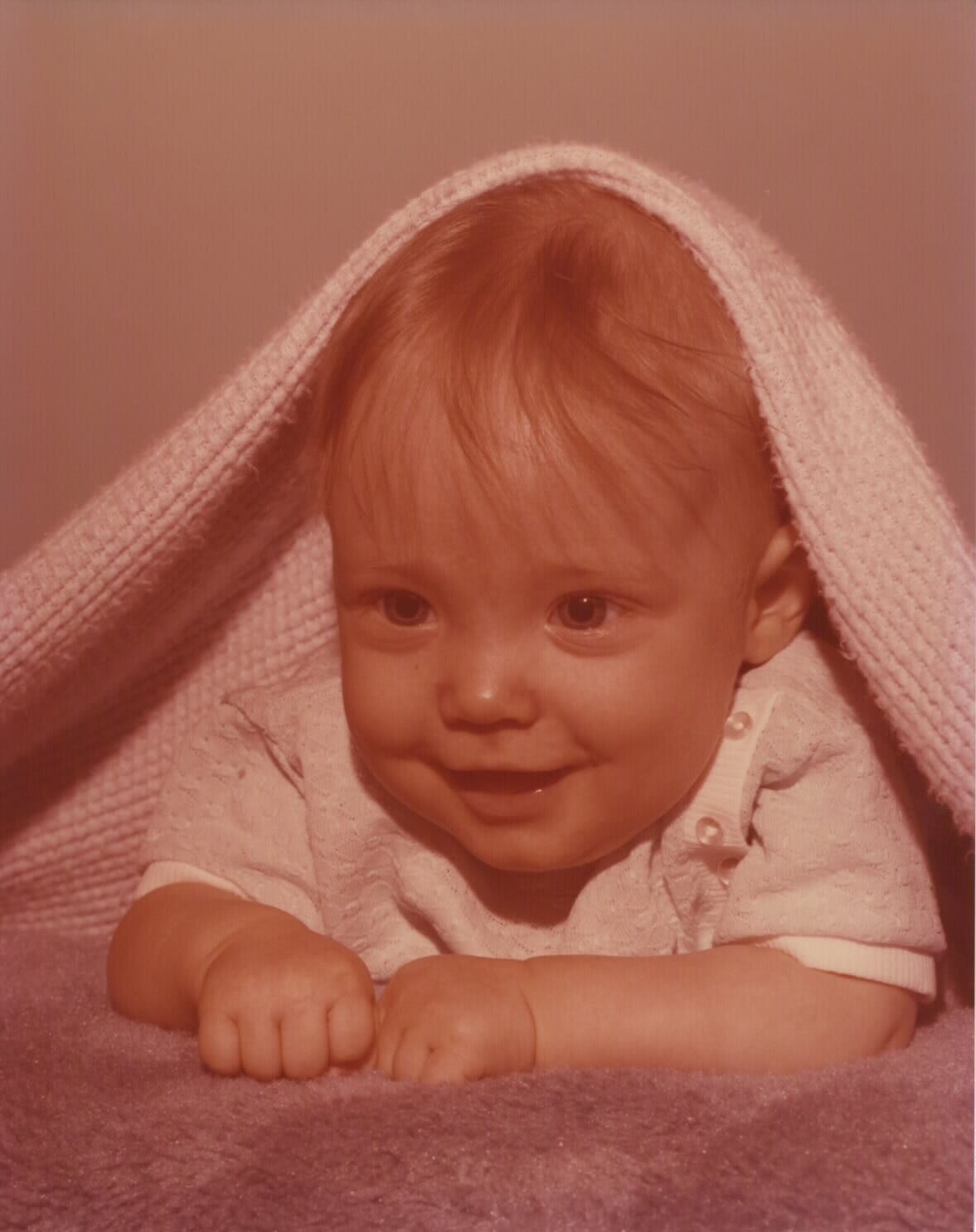
My arrival changed the direction of all three of our lives before any of us fully understood what was happening.
About a month after I found Helen, I woke on Halloween morning and discovered an email from her. She wished me a happy Halloween and explained that it was her favorite holiday. Then, with the directness I was beginning to recognize in her, she casually told me that Halloween night in 1975 was the night I was conceived.
I laughed when I read it. Most people never learn a detail like that about themselves, and it was certainly not information I had expected to receive with a Halloween greeting. Yet I appreciated it. Adoption had left so many blank spaces that even an unconventional fact felt valuable. Helen possessed an openness that was unfamiliar to me. If something was true, she generally shared it. I had spent much of my life with carefully guarded answers, so her honesty felt startling and freeing at the same time.
By then I knew Michael’s first name, but I deliberately avoided learning more. The reason was simple: I knew myself. The moment I had enough information, I would start searching. Curiosity had already carried me across thirty-five years to Helen. I knew it would not remain quiet once it had a last name, a hometown, or any trail it could follow. I wanted to focus on one relationship before beginning another.
That plan lasted until Helen accidentally mentioned Michael’s last name. The instant I saw it, restraint gave way to momentum.
The search was officially underway.
At first, the trail was frustrating. His first name was common, and so was his last. Nothing about the combination pointed clearly to one person. Then, sooner than I expected, I found a possible match. A second possibility followed. There were two men with the same first, middle, and last name, and both had been born in the same year. One of them was my biological father. I simply did not know which one.
I found photographs of both men and saved them to my computer. One had long, dark hair and looked exactly like the version of Michael I had assembled in my imagination. He looked like a musician, a little unconventional and a little rebellious. If someone had told me that he had spent the 1970s playing guitar and resisting expectations, I would have believed it immediately. The other man had a flattop haircut and the weathered appearance of someone who had spent decades doing physical work.
I was certain the man with the long hair was Michael. My certainty was based on nothing more than the story I had created, but it felt convincing. I had taken the few details I knew and built a person around them. That is what we often do when information is missing. Imagination fills the space, then quietly begins presenting itself as memory.
When Helen later came to Omaha, I opened my laptop one evening and showed her the two photographs. She studied them for only a few seconds before pointing to the man with the flattop. I looked at her and laughed. “Really?” She laughed too, but she did not hesitate. After thirty-five years, she recognized him immediately.
In that moment, Michael stopped being a shadow from the past. He became a real person with a recognizable face. Even more surprising, he was a real person living about fifteen minutes from my house. For thirty-five years, I had imagined my biological father somewhere far away. Helen lived in Idaho, and my mind had placed Michael at a similar distance, as if missing people naturally belonged in distant places. Instead, he was practically my neighbor. We could have driven past each other on the street or stood in the same checkout line without knowing who the other person was.
Once I confirmed his identity, the search itself was over. I knew where he lived and where he worked. The remaining question was not where to find him, but how to enter his life. There is no ordinary way to introduce yourself to the father who last saw you as an infant. A telephone call felt too abrupt. Showing up at his door felt unfair. I chose a letter because a letter would give him space to absorb the news before deciding whether or how to respond.
A few days after Helen returned home, I sat down to write. I kept the letter intentionally simple. I apologized in case I had reached the wrong person and explained that I was looking for a Michael who might have had a particular connection to July 13, 1976. I included a family photograph of my wife, Natalie, Annabelle, and me. I wanted him to see that the infant he had once known only briefly had grown into a man with a family of his own.
Then I placed the letter in the mail and waited. Mailing it felt like releasing something I could no longer control. Until that moment, the search had belonged to me. Now I had placed the decision in Michael’s hands. He could call, write, ignore it, or decide that thirty-five years was too much distance to cross.
A few days later, I came home from work and my wife told me there was a message on the answering machine. I pressed play and heard Michael’s voice for the first time. The emotion in it was immediate. This was not the guarded response of someone confused by an unexpected letter. He sounded like someone who had been waiting much longer than I had understood.
When I called him later that evening, he told me what had happened. He had returned home from his job as a diesel mechanic and found the letter. He sat down and began to read. As the meaning of it settled in, he started to cry. His wife noticed and asked what was wrong.
His answer became one of the defining sentences of my entire adoption story.
“My boy found me.”
I had spent thirty-five years wondering about him. Until that conversation, I had rarely allowed myself to imagine that he might have spent those same years wondering about me. The language he used made clear that my search had not been one-sided. He spoke of me as a hole in his heart. He said he had never believed he would meet me. He described the adoption as the greatest mistake of his life and told me that my letter had lifted a weight he had carried for decades.
Those words were powerful, but they also complicated the simple story I had carried since childhood. Adopted children often wonder whether their biological parents remember them, whether a birthday passes with recognition, or whether the separation became a closed chapter. I had imagined many possible answers, but I had never known which one was true. Now Michael was telling me that I had remained present in his life through absence. I had been missing from his home, but not from his heart.
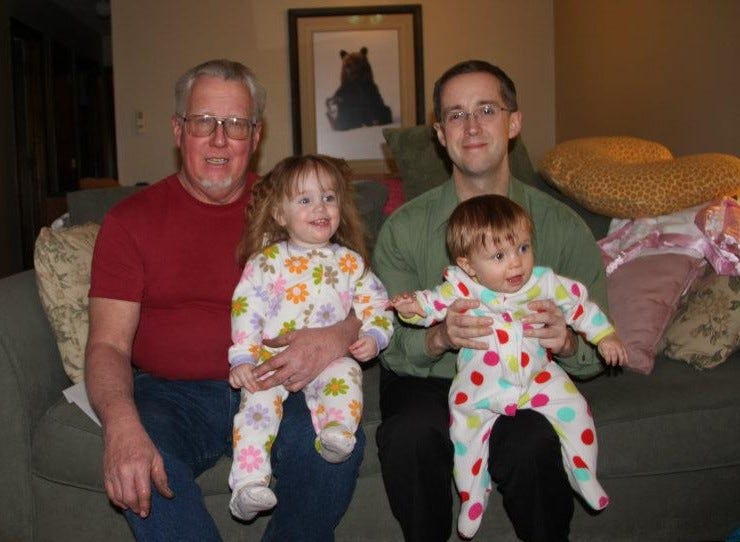
A few days later, he came to my house. He met my wife and then met Natalie and Annabelle. Photographs from that evening still exist. In them, Michael sits beside me holding one of my daughters while I hold the other. At first glance, they look like ordinary family photographs. Yet the history inside them is anything but ordinary. A man who believed he would never see his son again was sitting in that son’s living room, holding his granddaughters.
That visit also changed what I understood about the days surrounding my birth. For most of my life, I had assumed that the adoption had followed a straight and settled path. Michael told me there had been a last-minute effort to stop it. He wanted me, and his mother, Lucy, wanted me too. Lucy offered to help raise me and encouraged him to bring me home. For a brief moment, another future had been considered.
The practical obstacles were substantial. Michael was twenty years old and earning minimum wage. Hospital bills alone felt overwhelming. Helen was not comfortable with the proposed arrangement, and the adoption proceeded. I do not tell that part of the story to assign blame or to decide which choice should have been made. Everyone involved was young and facing consequences larger than any one of them. What affected me was the discovery that my path had not been inevitable.
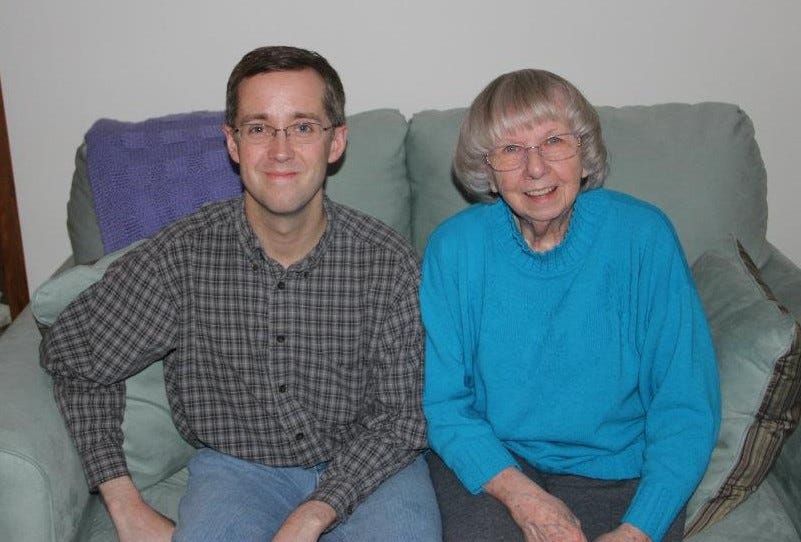
Another childhood. Another family. Another version of me.
It is unsettling to stand near the edge of a life you almost lived. I could not know whether that other life would have been better or worse. I could only recognize that it had been possible. The knowledge did not replace gratitude for the family that raised me. It simply added complexity to a story that had always been presented as complete. Adoption was not one clean decision made in a single moment. It was a collection of fears, limitations, hopes, and choices whose effects continued long after the paperwork was signed.
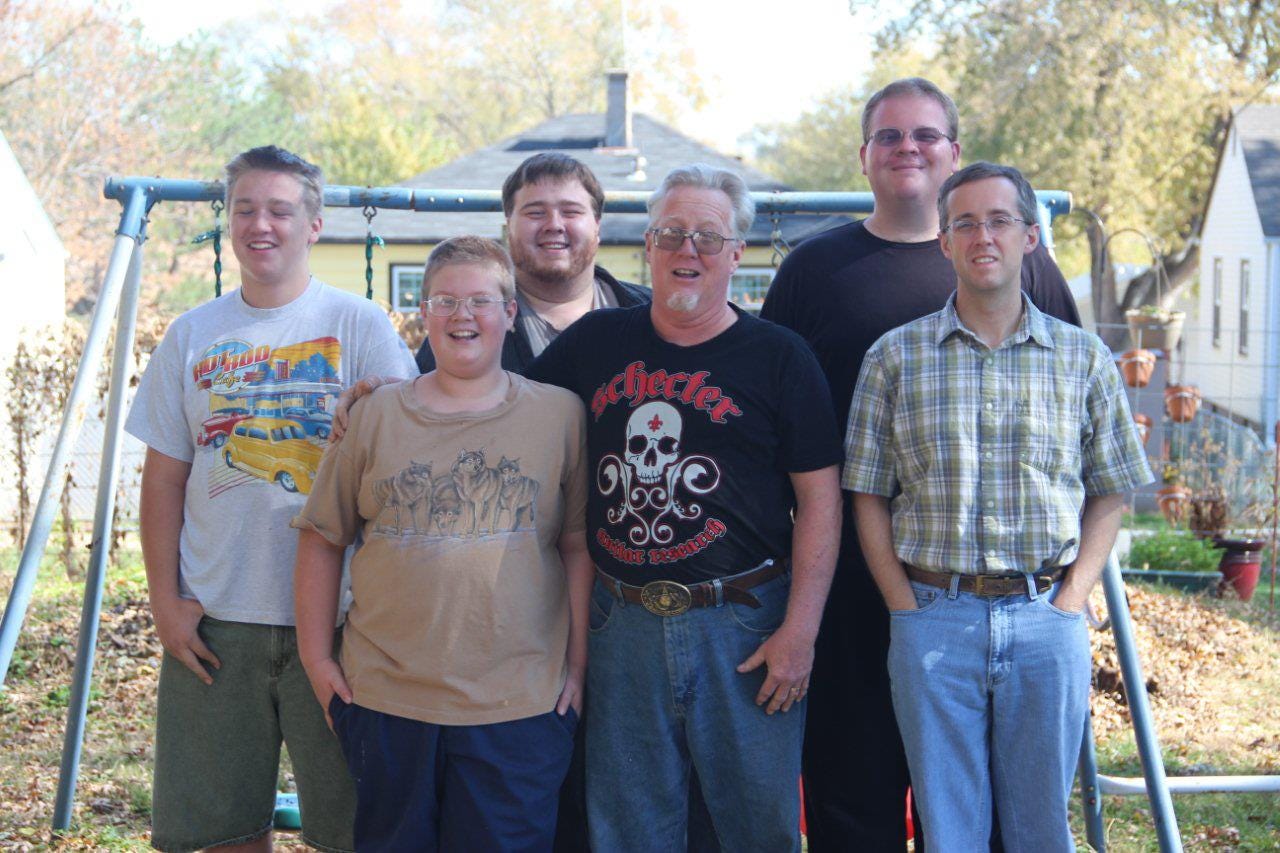
As Michael and I spent more time together, the family tree expanded again. I learned that I had four half-brothers, two from his first marriage and two from his second. The discovery came with an unexpected observation: I appeared to be the runt of the family. Michael was about five feet nine inches tall, and I am five feet seven. Every one of my brothers grew beyond six feet, and even my grandfather was exceptionally tall. Apparently, the genes responsible for height looked at me and decided to take the day off.
The similarities mattered more than the differences. Michael had drawn cartoons as a hobby for much of his life, and I had been a cartoonist for my high school newspaper. He still played guitar, and our taste in music, especially classic rock, overlapped. These discoveries did not suddenly explain everything about me, nor did they prove that every interest had been waiting in my DNA. They felt more like threads in a tapestry, small connections that gave shape to a picture I had never been able to see in full.
Eventually, I gave Michael’s contact information to Helen. They began corresponding, reopening a line of communication that had been silent for decades. During one of Helen’s later visits to Omaha, I asked whether they wanted to see each other. They both agreed.
On a Sunday morning, I drove Helen to Panera Bread. Michael arrived shortly afterward. For the first time in thirty-five years, they sat across from one another. I left them alone and found a place elsewhere in the restaurant. For several hours, they talked. Every so often I looked in their direction and smiled.
The two young people who had once shared an apartment in North Omaha were gone. Time had carried them through separate careers, marriages, disappointments, accomplishments, and countless ordinary days. They had become people their younger selves could not have imagined. Yet there they were again, connected by the son neither of them had expected to know as an adult. Watching them together was one of the strangest and most beautiful moments of my adoption story. My search had not simply connected me to each of them. For a few hours, it had also connected them to each other.
Over time, Michael and I gradually drifted apart. There was no argument, betrayal, or dramatic ending. Life simply continued. That truth may be less satisfying than a reunion story in which every missing piece clicks permanently into place, but it is honest. Biology can introduce people. It can reveal similarities and open a door. It cannot manufacture the years that were not shared.
Michael and I met after thirty-five years of separate lives. We shared DNA, interests, and pieces of personality, but we did not share childhood mornings, family vacations, school events, birthdays, or the thousands of ordinary moments through which closeness is built. Relationships require more than recognition. They require time, repetition, trust, and a history created together.
Helen and I built a deeper relationship. Michael and I built a smaller one. The difference does not erase what finding him meant. He answered questions I had carried for most of my life. He gave me a face, a voice, four brothers, and stories that had been missing from my beginning. He showed me that I had not been forgotten. Perhaps most importantly, he revealed that absence can contain love even when it cannot become a lasting relationship.
For most of my life, both of my biological parents existed only as questions. Then the questions became names. The names became stories. The stories became people, each more complicated than the version I had imagined. Finding Michael did not resolve every uncertainty or create the perfect ending. It gave me something more truthful: the other half of the story, complete with longing, possibility, connection, and distance.
For the first time, the family tree that had felt incomplete for so many years contained faces where there had once been empty spaces. I could finally see where I came from, even if seeing did not mean that every branch would grow close together. Sometimes finding a person does not restore the life that might have been. Sometimes it simply allows the unanswered question to become human.
For me, that was enough.