

Looking back, I sometimes think college taught me two completely different subjects. One was computer science. The other was agency. At the time, I thought I was simply leaving home to get an education. Years later, I realized I was also learning how to make decisions for myself.
The second lesson would eventually matter far more.
When I applied to college, not one of the schools was close to home. I considered schools in Missouri, Iowa, and Arizona. None of them would have allowed me to remain comfortably connected to the life I already knew. I do not think that was an accident. At some level, whether I understood it or not, I wanted distance.
That does not mean I hated my family or had a miserable childhood. I loved my parents, and they loved me. I simply wanted room. Room to think. Room to make decisions. Room to discover who I was when the expectations around me became quieter.
When my parents dropped me off at college, my mother cried. I did not. That sounds harsher than I mean it to sound. I was not angry or trying to escape. I was ready. If I had stayed at school until summer without returning home, I probably would have been perfectly content. I never became homesick. Instead, I became interested in the person who was beginning to emerge.
The farther I moved from home, the more clearly I could see myself.
A few months after I arrived, my parents came to visit. One evening, we sat around a large table with several of my roommates and their parents. I told stories, made observations, and kept people laughing. After dinner, my mother looked at me and said, “I had no idea you were so funny.”
She meant it as a compliment. I know that. Still, the comment stayed with me because I had been funny my entire life. My grade-school friends knew it. My high-school friends knew it. My college friends certainly knew it. Years later, I would perform stand-up and improv, but I had no idea that future was waiting for me.
College did not create my humor. It created room for it to appear.
Something similar happened academically. In high school, I thought I wanted to become a teacher or counselor. I liked helping people understand things. I enjoyed explaining ideas and watching someone approach a problem differently because of a conversation we had. When I shared those interests with my father, he discouraged them. He wanted me to choose something more practical, reliable, and financially secure. His message was clear enough that I understood it. If I chose certain paths, I should not expect his support.
So I adjusted. First, I pursued astrophysics, and then atmospheric sciences. To be fair, I genuinely loved weather. I still do. Put me near a thunderstorm, and I will probably be standing outside watching it. But another interest kept pulling me in a different direction.
Computers.
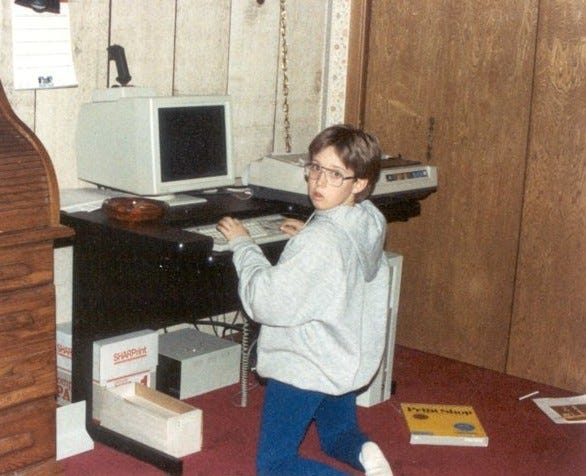
The timing could not have been better. The internet was beginning to change the world, and the World Wide Web was still young enough that nobody fully understood what it would become. Every month seemed to introduce another possibility. Entire industries appeared almost overnight. It felt like standing at the beginning of something important.
My father’s computer company exposed me to technology, but exposure alone does not create passion. I loved the challenge. There was always another puzzle to solve, another system to understand, and another opportunity to learn. Eventually, I changed my major to computer science. At the time, it felt like a practical decision. Looking back, it was one of the first major decisions I made because it reflected what I wanted.
Agency was beginning to emerge in my life.
The clearest example arrived during my sophomore year. I came home for Christmas heavier than I had ever been. Like many college students, I had discovered that cafeteria food, late-night eating, unlimited choices, and very little structure can produce predictable results. I weighed about 210 pounds, and my size 34 jeans were becoming increasingly uncomfortable.
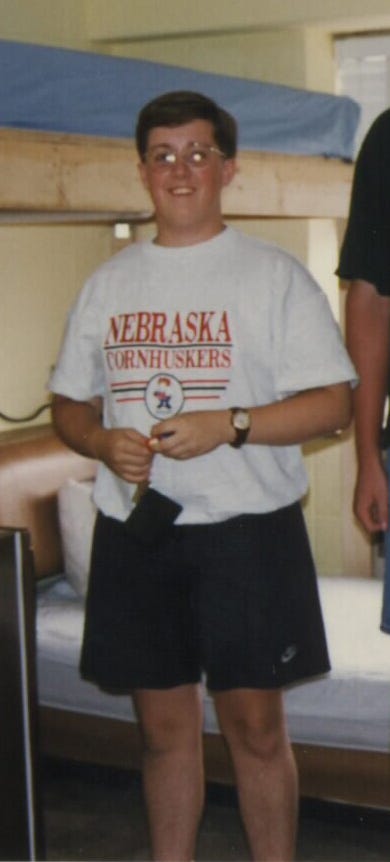
So I did the obvious thing. I went shopping and bought three pairs of size 36 jeans. The important moment came after I returned home. I placed the jeans on my bed and stared at them. For reasons I still cannot completely explain, I stopped seeing clothing.
I saw a future.
If I bought size 36 jeans now, what came next? Size 38? Then 40? Then 42? I could see the direction. More importantly, I understood that the future I was imagining was not inevitable. It was simply where my current choices were taking me.
A trajectory is not destiny. It is a direction.
There was only one person capable of changing that direction.
Me.
That realization changed everything. I stopped eating red meat and drinking pop, including diet pop. I started playing racquetball and became more intentional about what I put into my body and what I asked my body to do. Within a few months, I lost about forty pounds. Eventually, I would lose roughly thirty-five percent of my body weight.
The funny thing is that I never wore those jeans. Not once. They sat in my closet for years. At the time, I thought the lesson was weight loss. It was not.
The lesson was ownership.
What fascinates me now is not that I lost weight. It is what happened afterward. Decisions rarely remain contained to the moment in which we make them. They begin moving through our lives, often reaching places we could not have imagined when we started.
Years later, after getting married and moving to Ralston, I began using a different YMCA. I had been a member since 1998, but this location had new people and new routines. I was not a group fitness person. I exercised alone. I did my own workouts. I rode a stationary bike outside the cycling room while everyone else took class inside.
The instructor repeatedly invited me to join them. I repeatedly declined. This continued for nearly a year.
Eventually, I gave in.
I loved the class. I liked the camaraderie, the friendships, and the experience of struggling beside other people. Before long, I was attending several classes each week. Then the instructor had to leave town for an extended period because of work, and the class essentially nominated me to replace him.
I thought they were crazy. Looking back, they probably saw things I did not yet recognize in myself: humor, storytelling, encouragement, leadership, and an ability to help people do something difficult. I became certified, and shortly after Natalie was born, the YMCA hired me. I have been teaching cycling ever since.
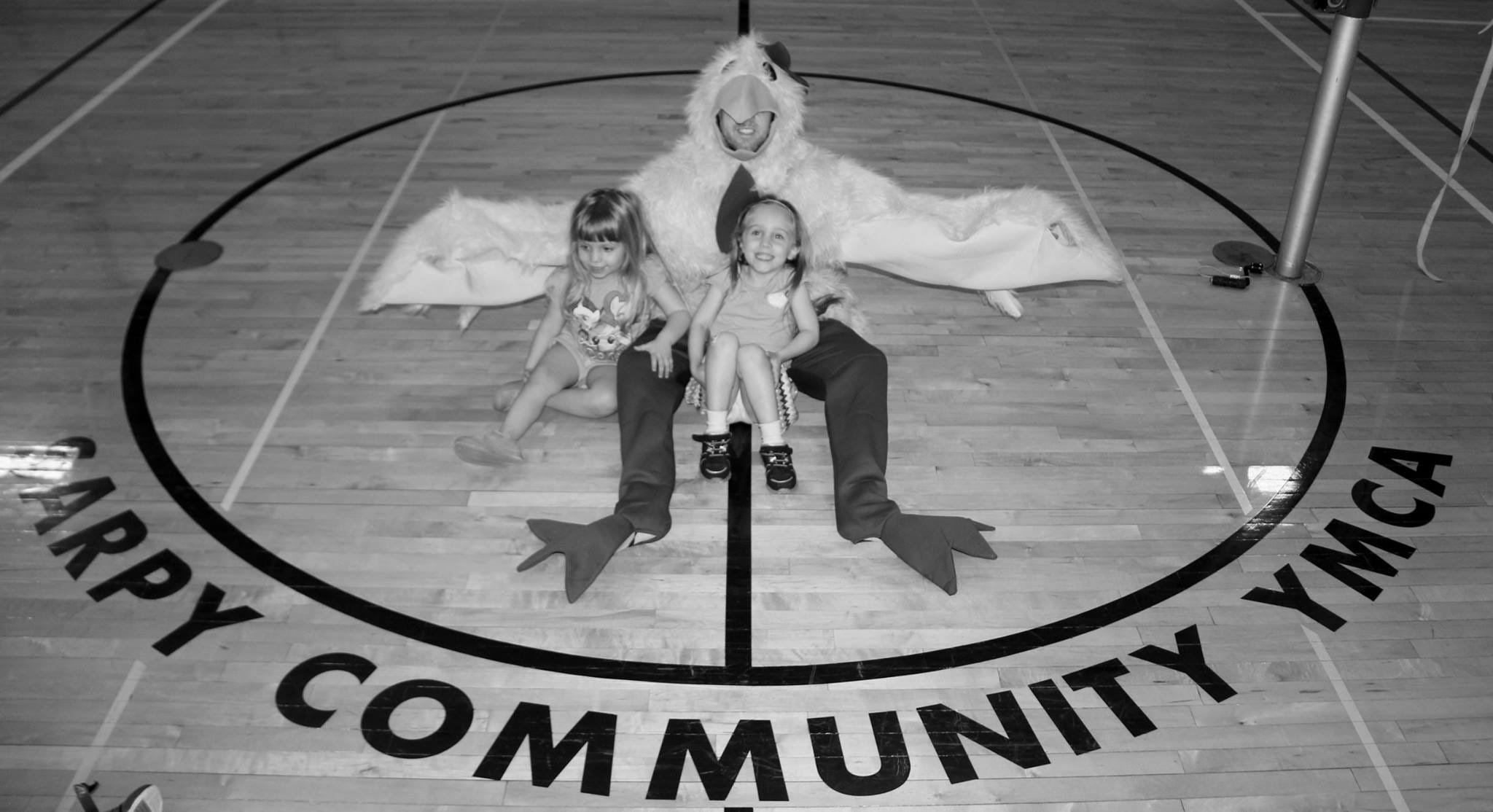
The YMCA became a second family.
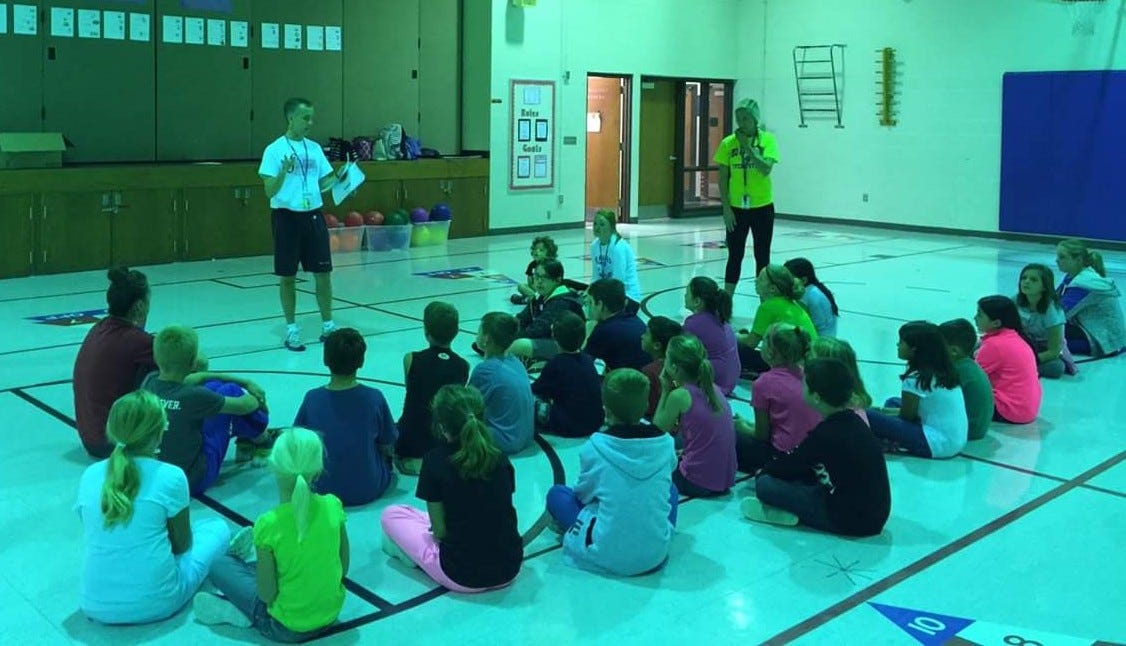
What began with three pairs of jeans eventually became a long commitment to helping other people pursue health. A few years later, while serving on a school board, I attended a conference in Boston and learned about a youth fitness program sponsored by Reebok. When I returned home, I offered to lead a before-school fitness program at any elementary school willing to try it. One principal, whom I deeply admired for her commitment to children and wellness, said yes.
For years, I taught cycling at 5:30 in the morning, drove to the elementary school by 7:00, exercised with children, and arrived at work by 8:00. Those mornings were exhausting. They were also some of the most meaningful mornings of my life.
I still remember a mother telling the principal that her son had never been excited about school. Now he could not wait to arrive early for the fitness program. Teachers saw better focus, attention, and classroom behavior. Years later, I attended an event hosted by the school foundation and saw that student again. He was graduating, healthy, confident, and excited about his future. He remembered me, and I remembered him.
Standing there, I thought about those three pairs of jeans. Twenty-year-old Jeff had been trying to avoid buying larger pants. He had no idea that the decision would eventually reach a child decades later.
That is how trajectories work. They rarely stop where they begin.
The older I get, the more I realize how much we underestimate the power of direction. Families have trajectories. Religions, communities, cultures, and societies have them too. They teach us how to define success, happiness, health, relationships, security, and meaning. When we remain on those paths, people usually tell us we are doing everything correctly. Approval is reassuring. Certainty is comfortable. Familiar directions feel safe.
Sometimes those trajectories fit who we genuinely are. Sometimes they do not. Health and fitness were not major priorities in my family. That is not criticism. It is simply an observation. I was not raised around endurance athletes, cyclists, swimmers, hikers, or people intentionally designing their lives around wellness. If I had continued living exactly as the people around me lived, nobody would have thought it was unusual.
The trajectory was already there. All I had to do was remain on it. Instead, I chose another direction. Eventually, the same thing happened with my career, relationships, joy, identity, and purpose.
Tomorrow rarely changes unless we do.
Many people discover this only after a crisis forces the question. It may be a health scare, divorce, financial collapse, or near-death experience. I was fortunate. Leaving home gave me enough freedom to begin asking the questions while I was still young. Where am I headed? Who am I becoming? If I keep doing exactly what I am doing, where will I be in one year? Five years? Ten years? Twenty years?
The answers are never certain.
But the direction usually is.
The final part of the lesson arrived years later when I found Helen. The agency I practiced in my twenties had been relatively easy because it mostly affected me. Nobody felt rejected because I stopped drinking pop. Nobody questioned their understanding of the world because I started playing racquetball.
Real agency was harder. Helen had built her life by making choices, accepting the consequences, enduring criticism, and continuing forward even when other people misunderstood her. For years, I had confused agency with selfishness. If someone was unhappy with my choices, perhaps I was wrong. If someone was disappointed, perhaps I needed to reconsider.
Agency is not selfishness. Agency is responsibility.
It means accepting that your life belongs to you. Your health, joy, growth, and future belong to you. Other people can encourage, advise, criticize, or disagree, but they cannot create those things on your behalf.
The three pairs of jeans taught me that a trajectory can change. Helen taught me that changing direction sometimes makes other people uncomfortable. Together, those lessons changed the way I understood my life.
I still ask the question I first asked while staring at those jeans: If I keep doing exactly what I am doing, where will I eventually arrive? I cannot control every part of the future. None of us can. But if I do not like the direction, I now understand something that twenty-year-old Jeff was only beginning to learn.
I can change it.
That may be the greatest gift agency gives us. Not control over the future.
A voice in creating it. 🌈 📖