

While the World Changed
Most people can tell you where they were when the COVID-19 pandemic became real to them. They remember the news reports, empty shelves, school closures, canceled events, and the growing realization that life was about to change in ways nobody understood. I missed almost all of it.
I was in the mountains.
On March 12, 2020, I flew to Nashville for a solo backpacking trip through the Great Smoky Mountains and portions of the Appalachian Trail. My plan was to hike roughly eighty miles over four days and return home Monday morning. When I entered the mountains that Thursday afternoon, I left the modern world behind. There was no cell service, no news, no social media, and no steady stream of notifications reminding me what was happening somewhere else.
My world became much smaller. Water, food, weather, campsites, miles, and the condition of my feet mattered. Everything else disappeared. While the world below was beginning to shut down, I watched fog move across mountain ridges and followed the reassuring rhythm of one foot in front of the other.
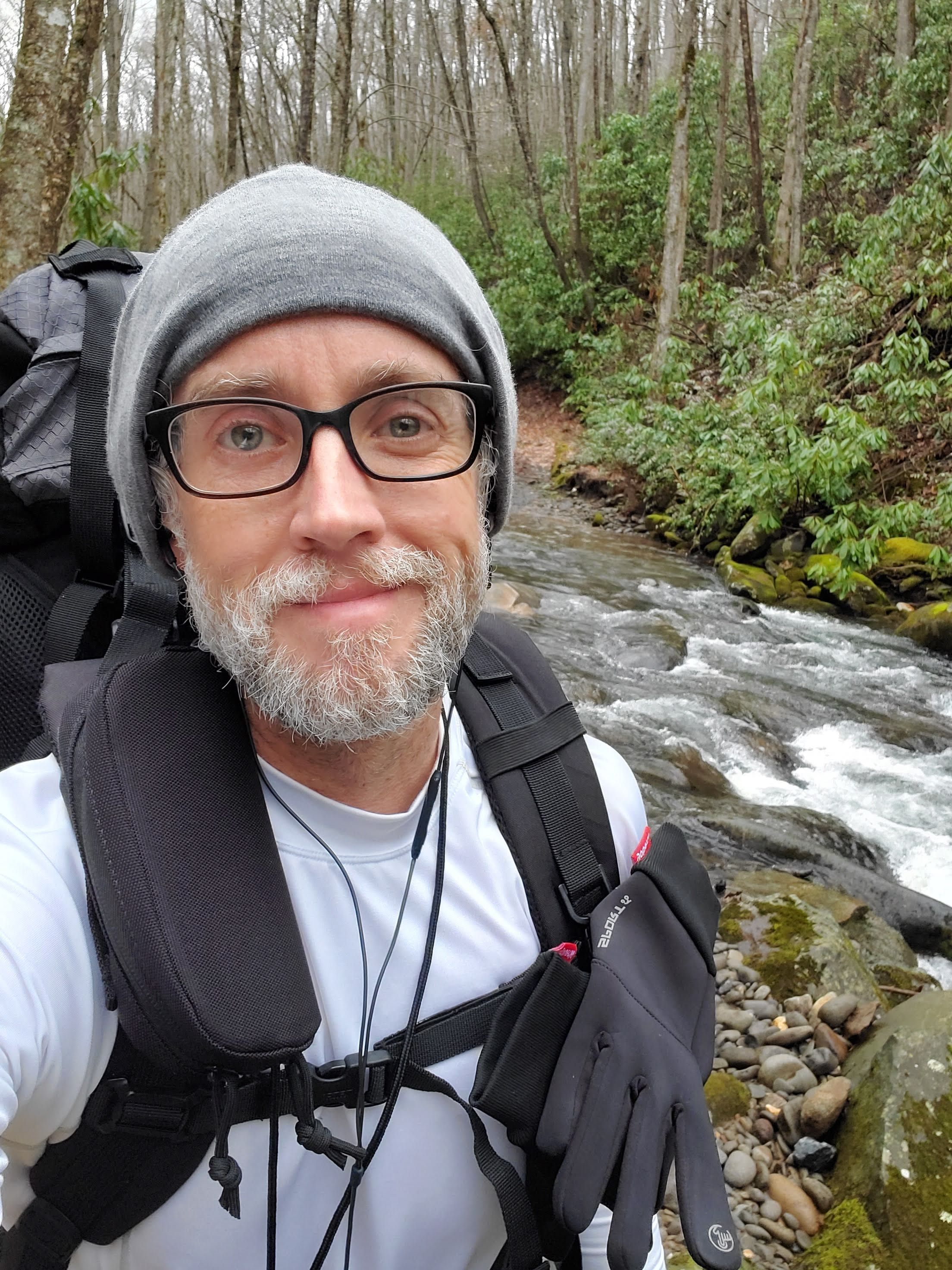
By the middle of the trip, however, the mountains had begun presenting problems of their own. One of my Achilles tendons started aching terribly. That is not an ideal development when you are alone in the wilderness with miles still to cover, no cell service, and no easy exit. I had little choice except to slow down, pay attention to what my body was telling me, and keep moving.
At about the same time, I discovered another problem. The hiking application I was using to track my progress with GPS was draining my phone battery much faster than I expected. Whatever satisfaction I might have received from recording every mile suddenly seemed much less important than having a functioning phone if I actually needed one. I turned off the GPS tracking and began rationing the battery, knowing I would be dependent on my portable battery and small solar panels for whatever additional power I could generate.
It was an interesting reminder of how quickly technology loses its importance in the wilderness. I had a device in my pocket capable of communicating with almost anyone in the world and locating me through satellites orbiting the planet. Without a signal or electricity, it was mostly a very expensive object I was afraid to turn on.
Later that evening, the river crossings began slowing me down. Darkness was approaching, and I knew I was behind schedule. As dusk settled into the forest, I rounded a corner and noticed several small black shapes moving ahead of me. The light had faded enough that I could not tell exactly what they were. They were clearly animals, and because they were small and dark, my first thought was wild pigs.
Then I saw the much larger black shape.
It was a mother bear. The smaller shapes were her three cubs.
I had not brought bear spray because I had flown to Tennessee, so I pulled out the high-frequency whistle I carried and started blowing it. My strategy, if it can be called a strategy, was to make myself sufficiently annoying that the bears would prefer to be somewhere else. I cautiously moved in their direction while continuing to blow the whistle, hoping that startling them would send them away rather than encourage a closer investigation.
Thankfully, they disappeared into the woods.
Between the Achilles pain, river crossings, fading daylight, and unexpected encounter with a mother bear and her cubs, I did not reach my intended destination that night. The unfortunate thing about falling behind on a backpacking trip is that the missed miles do not disappear. They simply move to the next day.
That next day included the most dangerous river crossing of the trip. The water was above my waist, the rapids were moving quickly, and I had roughly fifty pounds strapped to my back. Crossing moving water with a heavy pack creates an uncomfortable physics problem. The current pushes against your legs while the weight above your hips changes your balance, and your feet search for stable rocks you cannot clearly see beneath the surface.
There was nobody standing downstream waiting to help me if I fell.
I moved slowly and deliberately until I reached the other side.
Looking back, what strikes me most about those days is how completely occupied I was by my own immediate problems. I was worried about an injured Achilles, a dying phone, darkness, river crossings, bears, food, water, navigation, and getting myself safely out of the mountains. They were real problems, and some of them presented real danger. What I did not know was that a very different kind of danger was unfolding beyond the mountains.
While I was being tested by a primitive world of water, weather, animals, and terrain, the modern civilized world was confronting something for which it seemed equally unprepared.
I knew nothing about it.
When I finally emerged from the mountains Monday morning and turned on my phone, four days of information seemed to arrive at once. Emails, messages, notifications, and news alerts filled the screen. Schools were closing. Businesses were sending employees home. Sporting events had been canceled. People were being told to avoid one another. Events that had seemed unimaginable when I entered the mountains were suddenly normal conversation.
The world I had entered on Thursday no longer existed.
I stopped at a YMCA to shower, gathered my things, and headed toward the airport. The atmosphere was unlike anything I had experienced while traveling. People spoke quietly, and everyone seemed uncertain about what they were supposed to do. At one point, I saw people walking through the airport in full protective suits surrounding a woman who was coughing. They appeared to be interviewing and testing her.
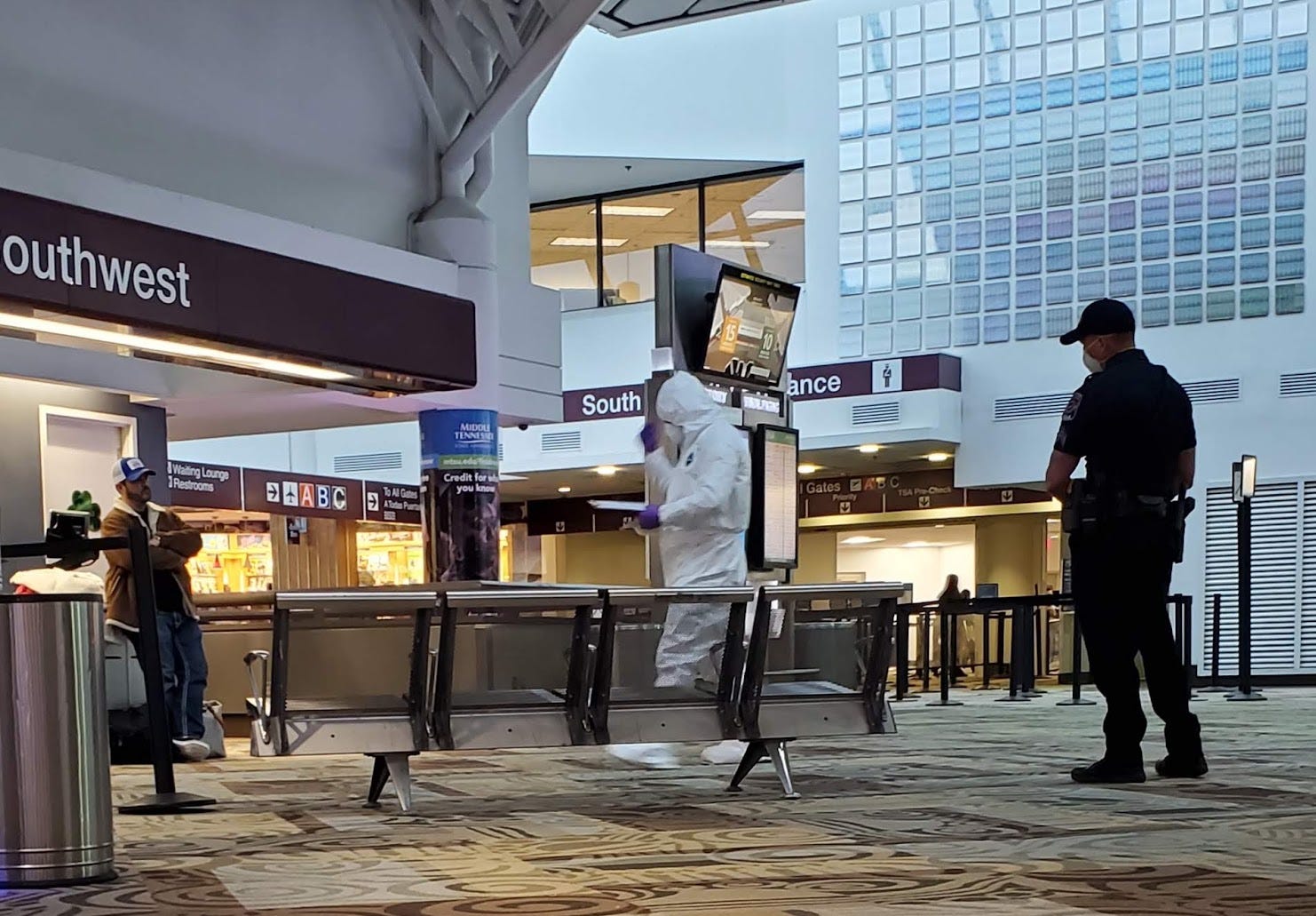
Only a few days earlier, I had been worried about bears and river crossings. Now I was standing in an airport watching something that looked more like a scene from a movie than the world I remembered leaving.
The airport was nearly empty, and my flight to Omaha carried perhaps a dozen passengers. For the first time in my life, simply getting home felt like an accomplishment.
At the time, I thought that was the story.
It was only the beginning.
The Trip That Disappeared
A few months later, I was supposed to fly to Seattle and backpack through Olympic National Park. Like many plans in 2020, that trip disappeared. Flying was no longer something I wanted to do, but staying home did not feel particularly appealing either. Adventure had never depended on one specific destination for me. If I could not go where I had planned, I could find somewhere else.
I started looking at places I could reach by car in about eight hours. Colorado and Wyoming would normally have been obvious possibilities, but it was May and there would still be too much snow at elevation. Eventually, my attention moved south toward Arkansas. I had heard Arkansas was beautiful, but I had never spent enough time there to understand exactly what that meant.
Because of the pandemic, I approached the trip differently than I normally would. I packed my own food and water and planned to have as little contact with other people as possible. I stopped primarily for gas and spent my time either driving, sleeping in the car, or exploring the wilderness. Like everyone else, I was still trying to understand how to live in a world where avoiding other people had suddenly become an act of responsibility.
What I found in Arkansas surprised me.
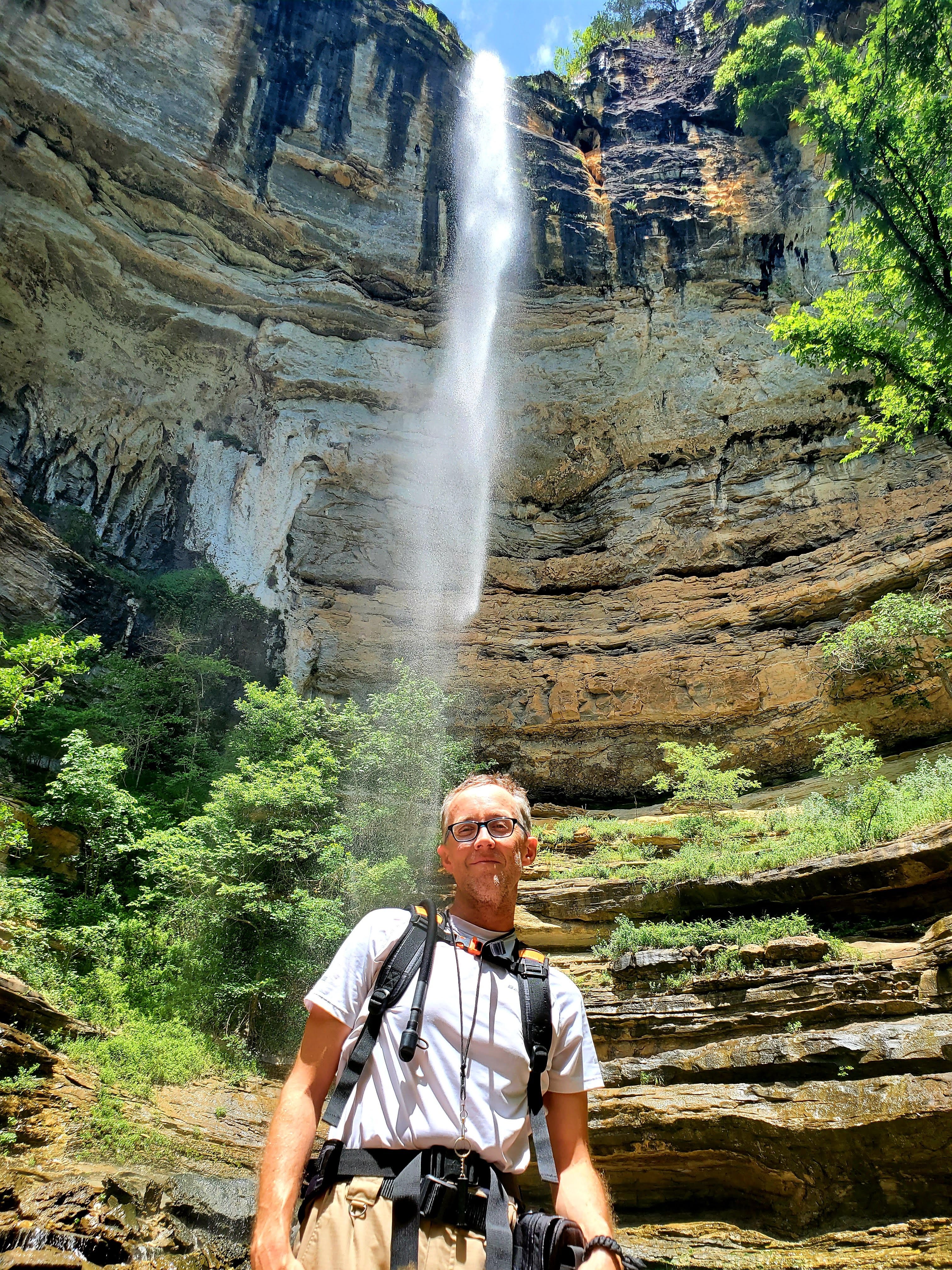
There were waterfalls flowing into emerald-green pools, rocky mountains, cliffs, thick forests, and trails winding through landscapes that looked nothing like the Arkansas I had imagined. Parts of it reminded me of Costa Rica. It was lush and rugged and beautiful in a way I had not expected to find so close to home.
I fell in love with the Arkansas wilderness.
I have returned to different parts of Arkansas almost every year since. It remains one of the great hidden wilderness gems I have discovered, a place I might never have explored if the destination I originally wanted had remained available.
On the final day of that first trip, I found one of the most beautiful trails I had ever hiked. Indian Creek Trail lies in the Buffalo National River area and winds through the kind of landscape that makes it difficult not to wonder what is around the next corner. There were waterfalls, green pools, steep sections, narrow ledges along cliffs, and a rope-assisted climb. The trail was beautiful and slightly dangerous, which may explain why I liked it so much.
That was where I met Jobe.
Jobe was an Arkansas native and a retired Army Ranger. He was large, confident, and carried enough photography equipment to support a small expedition. Then there was me, a technology consultant from Nebraska wearing glasses and carrying a backpack. If I had to guess, he probably wondered what this little nerdy guy was doing on a trail like Indian Creek.
We started talking.
Jobe knew the area extremely well, and Indian Creek was one of his favorite places. As we hiked, he told me about other places throughout Arkansas that I needed to visit. He was dealing with a foot problem at the time that made hiking difficult, but there was no question how much he loved the wilderness.
As often happens outdoors, our conversation moved beyond small talk quickly. There is something about walking beside another person that makes honesty easier. Maybe it is because nobody has to maintain constant eye contact. Maybe it is because silence does not feel uncomfortable when you are both climbing a hill. Or perhaps people who love the wilderness recognize something familiar in one another.
We talked about our lives, dreams, places we hoped to visit, and the experiences that made us feel alive. At some point, I told him I hoped to backpack through Colorado’s San Juan Mountains later that year. His face lit up. It was something he had always wanted to do.
By the time we returned to the trailhead, neither of us wondered whether the other belonged there.
Somewhere along those miles, a stranger had become a friend.
As we separated, I told him I would remember him if the Colorado trip actually happened. People say things like that all the time and then return to their ordinary lives. Phone numbers disappear into contact lists and good intentions become things we planned to do someday.
A few months later, I remembered.
Three Hammocks in Colorado
When September arrived, I invited Jobe. I also invited my friend Greg, whom I knew from the YMCA. Greg and I had met in the locker room, which probably tells you something about the unusual ways friendships form in my life. I talk a lot in locker rooms, and Greg would overhear stories about places I had gone, places I wanted to go, and whatever adventure I was planning next. He was also very good at offering cautionary advice, which was probably useful considering some of the places I was describing.
After I returned from Arkansas, I began talking about wanting to take a longer backpacking trip. At some point, I invited Greg to come along. By then, I had completed plenty of solo adventures and knew that I did not need someone else there. But independence and isolation are not the same thing. I was learning that experiences were often richer when they became shared experiences, and there was also the practical reality that difficult wilderness travel was safer with other people around.
Greg and I had also bonded over hammock camping. He had been a tent person, but apparently I talked about hammocks enough that eventually he became curious. Once he tried it, I converted him. Over the years, I have even loaned him hammocks so he could use them while camping with his family.
By the time Colorado arrived, the three of us already shared a common language of adventure even though nearly everything else about us was different. Jobe tended to go with the flow and was comfortable making decisions as the day unfolded. Greg was an architect, and architects plan things. Greg planned things thoroughly. Jobe leaned politically in one direction. Greg leaned in another. I probably landed somewhere between them.
None of it mattered very much once we reached the mountains.
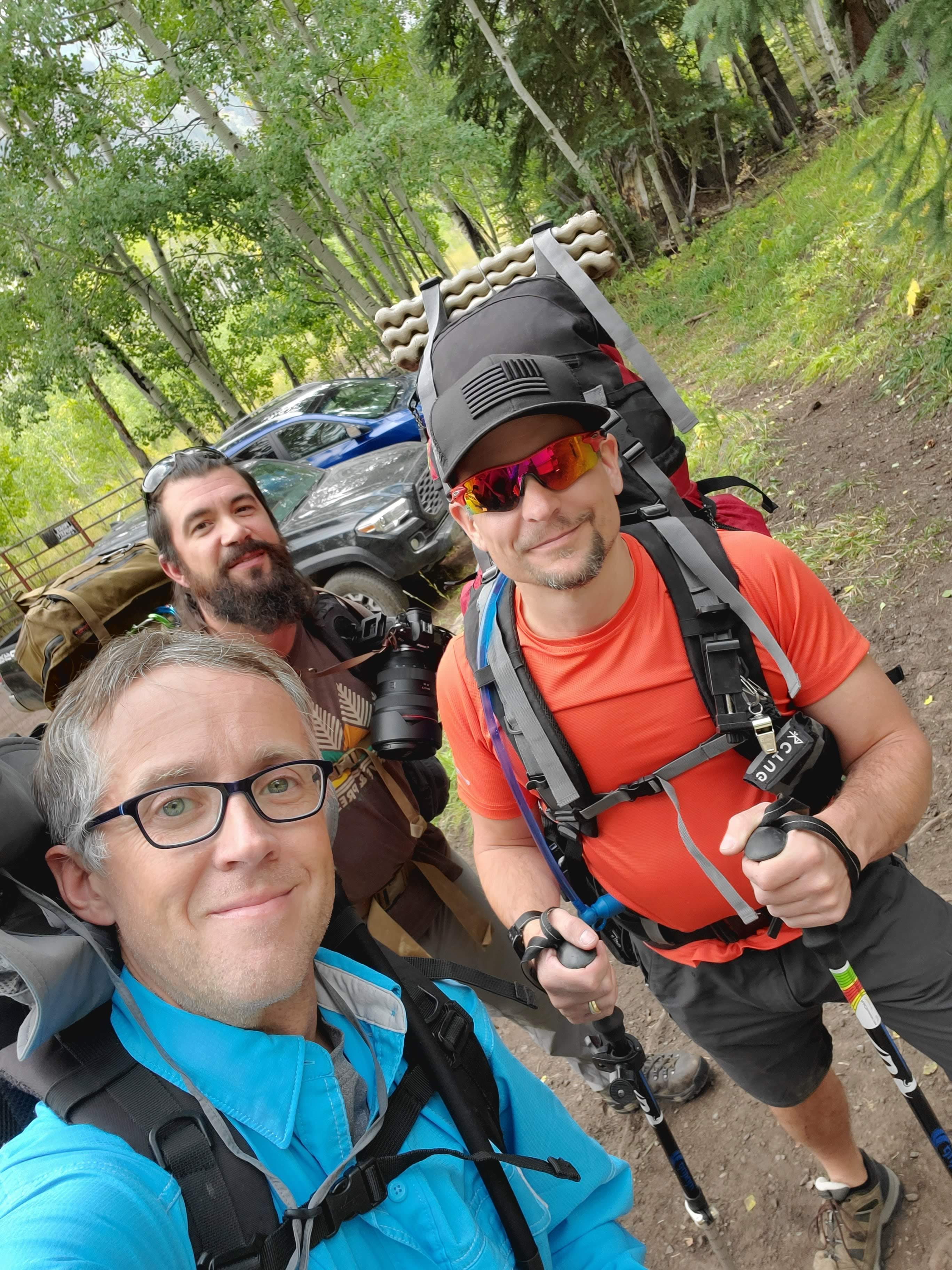
For nine days, we explored Colorado together. We hiked Maroon Bells, Snowmass Lake, Columbine Lake, Ice Lake Basin, Chicago Basin, and other places that still barely seem real when I look at the photographs. We drove the Million Dollar Highway and had one memorable incident in which Greg’s truck nearly rolled down a cliff, the sort of event that becomes entertaining only after everyone and everything involved survives it.
Jobe’s foot continued to cause problems. Because his injury had kept him from hiking much of the summer, his fitness was not where he wanted it to be. There were portions of the trip when he stayed in a hotel while Greg and I continued backpacking. On our final day, we all climbed two fourteeners in the Front Range Rockies.
The scenery was extraordinary, but many of my favorite memories came from the conversations along the trail. The three of us had come from remarkably different backgrounds. We told stories about our pasts, our families, things we had experienced, and places we still wanted to see. The longer we walked together, the less important our differences became.
Our common ground was wilderness and adventure.
It never mattered very much where we came from.
It mattered where we were going.
Only later did I understand that the trip had meant something more to Jobe too. His foot problems had largely kept him out of the wilderness after we met in May. Combined with COVID and everything happening in the world, he had fallen into something of a funk. Colorado became his return.
Jobe has told me that trip changed the trajectory of his life. It helped bring him alive again. Since then, he has continued traveling and exploring, combining his love of wilderness with his passion for photography. When I invited a stranger I had met on an Arkansas trail to join me in Colorado, I thought I was simply inviting someone on an adventure. I had no idea the invitation might become a meaningful part of his story too.
I also had no idea that something seemingly insignificant about the trip was going to become part of mine.
All three of us slept in hammocks.
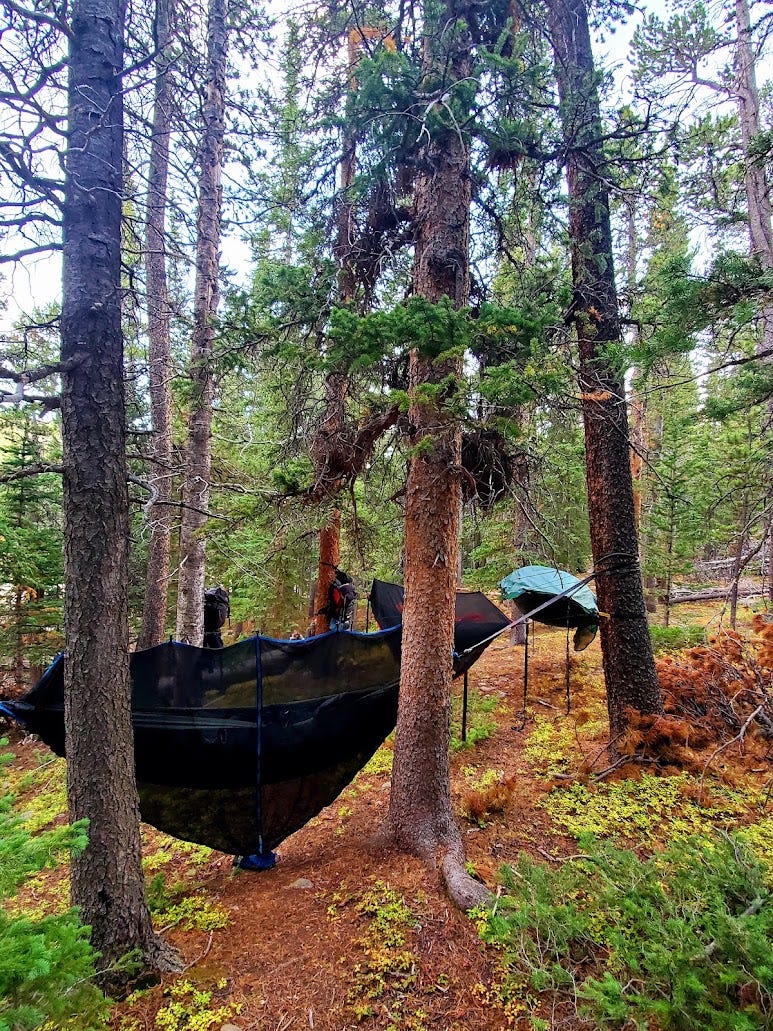
At the end of each day, while most backpackers disappeared into tents, we found trees, hung our hammocks, and slept suspended above the ground. To us, it was completely normal. To everyone else, three grown men hanging between trees high in the Colorado mountains probably looked ridiculous.
Like I usually did, I posted photographs from the trip online. There were mountain ridges, sunrises, alpine lakes, hiking trails, and occasionally photographs of three hammocks hanging between trees. I never thought much about who might be looking at them.
A year earlier, I had become Facebook friends with Paula.
I should probably admit that becoming Facebook friends with her was not entirely accidental. We had mutual connections through the school district, and I had noticed photographs she posted from her family’s farm. I liked them because they felt authentic. They showed a life very different from mine.
I also thought she was cute.
There was one potential complication. In some of the photographs, Paula was standing beside two large, grown men. I assumed one of them was probably her husband, so beyond occasionally liking a photograph, I did not give the situation much thought.
Eventually, I discovered that the two large men were not her husband.
They were her sons.
Our birthdays happen to be only a few days apart. That year, I did something I almost never did and sent her a private Facebook message wishing her a happy birthday.
She responded, “Thank you!!!”
Three exclamation points.
This would eventually become an ongoing disagreement between us. I believe one exclamation point is generally adequate to communicate enthusiasm. Paula apparently believes punctuation should participate enthusiastically in the conversation.
At the time, however, that was the entire exchange.
A few months passed.
Then we both went camping.
At almost exactly the same time that the three of us were backpacking through Colorado, Paula was camping at Lake McConaughy. Her parents were warm inside their camper. Paula was freezing in a tent.
She later told me that she had seen my photographs and could not understand how some guy on Facebook appeared perfectly comfortable sleeping in a hammock in the cold Colorado mountains while she was freezing beside a Nebraska lake.
That created a question.
Curiosity has always been one of the most powerful forces in my life. This time, the curiosity belonged to someone else.
A few weeks later, I left Omaha for a solo trip to Mammoth Cave National Park in Kentucky. Normally, communication disappeared when I backpacked. This trip was different. For reasons I still cannot explain, I seemed to have cell service through much of it.
While I was hiking, I received a Facebook message from Paula.
How do you stay warm in those hammocks?
That was it.
There was no grand introduction or carefully planned opening. There was no obvious attempt to start something. It was a genuine question about camping equipment.
I answered it.
Then she asked another question, and I answered that one.
Then came another.
Before long, the conversation stopped being about hammocks.
We talked about travel, children, divorce, books, parenting, adventure, work, dreams, and life. What struck me was how quickly we seemed to move beyond small talk. Most people spend considerable time safely circling one another before conversations become meaningful. Somehow, we began talking about real life almost immediately.
The messages continued as I walked through Kentucky. Normally, I enjoyed the solitude of backpacking. I liked being alone with my thoughts and being able to move through the world without negotiating my direction with another person. This trip still had that freedom, but somehow it did not feel quite as solitary.
Paula was hundreds of miles away in Omaha, yet at times it felt as though she were walking beside me. I would hike for a while, stop and check my phone, and find another message waiting. Another question. Another story. Another idea I wanted to respond to before continuing down the trail.
When I returned home, Paula continued asking questions about hammock camping. I decided that rather than answering them individually, I would explain the entire thing.
Thoroughly.
Thoroughly has always been a dangerous word for me.
Most people would probably have sent a paragraph. I sent a multi-page email. I explained rain flies, bug nets, straps, sleeping pads, underquilts, top quilts, pillows, setup techniques, gear recommendations, safety whistles, tree spacing, and nearly every lesson I had accumulated from sleeping in hammocks. I included links and recommendations and enough information to qualify as an introductory college course in hammock camping.
When I finished, I remember looking at the email and thinking that normal people probably did not do things like this.
Then Paula responded.
She called it “insanely detailed” and “possibly one of the most thoughtful things anyone has ever done” for her. She thanked me for the kindness, openness, and willingness to share.
Her response surprised me.
Looking back, I understand that she was not really responding to information about underquilts or sleeping pads. She was responding to something about me. The email revealed the same curiosity, enthusiasm, and tendency toward thoroughness that had always been part of my personality. When I discovered something interesting, I wanted to understand it. When someone else became interested, I wanted to share everything I had learned.
Other people might have found that excessive.
Paula interpreted it as thoughtful.
That distinction mattered more than I understood at the time.
Our conversations continued. One day became another, and eventually we decided to have lunch. I arranged Thai food. By then, we had covered so much territory through messages that meeting in person did not feel quite like meeting a stranger. It felt more like continuing a conversation in a different format.
What I remember most was not the food. It was how easily the conversation continued.
We talked about travel and children, family and work, fitness and ideas, places we had been and places we hoped to go. One subject led naturally into another, then another. Hours disappeared without either of us seeming to notice.
There was always another question to ask.
There was always something else I wanted to know.
Eventually, lunch ended and I drove home thinking about the afternoon. There was no dramatic revelation. I did not suddenly decide that something extraordinary had happened or that my life had changed.
I simply knew one thing.
I wanted to know more about this person.
Looking backward, the path to that lunch seems almost impossible to reconstruct. It included a pandemic, an eighty-mile backpacking trip through the Smokies, a painful Achilles tendon, bears, river crossings, a canceled flight to Seattle, a map of places within driving distance, the unexpected beauty of Arkansas, a retired Army Ranger with an injured foot, conversations in a YMCA locker room, Colorado, three hammocks, a freezing tent at Lake McConaughy, Facebook photographs, three unnecessary exclamation points, Mammoth Cave, a ridiculously detailed email, and Thai food.
None of those moments announced themselves as important when they happened.
That may be one of the strangest things about life. We recognize patterns looking backward that were completely invisible while we were moving through them. Something feels like a disappointment, a coincidence, a detour, or an ordinary conversation. Only years later do we understand what it connected us to.
If Olympic National Park had not become impossible, I probably would not have gone to Arkansas.
If I had not gone to Arkansas, I would not have met Jobe.
If I had not met Jobe, he would not have joined Greg and me in Colorado.
If Greg had not listened to my stories in the YMCA locker room, perhaps he would not have become part of the trip either.
If the three of us had not slept in hammocks, there would have been no photographs of them hanging between Colorado trees.
If Paula had not been freezing in a tent beside Lake McConaughy, perhaps she would not have wondered how I stayed warm.
And without that question, I have no idea when our first real conversation would have happened.
Years later, I returned to Arkansas with Paula and her boys, and they were able to meet Jobe. I loved the strange symmetry of that moment. Jobe had unintentionally become one of the reasons Paula and I ever had a reason to talk, and now people who had entered my life through completely different circumstances were standing together in the same place.
I still have not made it to Olympic National Park.
It remains on the adventure spreadsheet.
The difference is that now I plan to go there with Paula.
Perhaps that is why I have become less suspicious of detours. A canceled plan is not necessarily an ending. Sometimes it merely changes the path. The frustrating part is that we rarely know where the new path leads while we are walking it.
At first, I thought Paula was curious about hammocks.
Maybe she was.
But the hammock was never really the story.
The hammock was the excuse.
What began as curiosity about camping gear slowly became curiosity about a person. If I am being honest, I was becoming very curious about her too.
Life had spent months arranging a series of circumstances neither of us could possibly have understood at the time.
All it needed was a question.
How do you stay warm in those hammocks?