

Across the Street
About a year after Paula and I met, she moved into the same apartment complex where I lived.
She did not move into my apartment or even my building. She lived across the street, close enough that we could see each other easily but far enough away that we still had separate homes. It was not the sort of arrangement most people would consider a major commitment, but that was exactly what it felt like to me.
Paula was moving closer. That made me happy. It also made me nervous.
By that point, my parents had not yet sued me, but I had already felt abandoned by them during and after my divorce. Some of the relationships I once assumed would remain permanent had proven far more conditional than I understood. I had learned that people could leave emotionally even when they remained physically present, and I had become more cautious about commitments that depended upon another person staying.
Paula moving across the street felt significant because it introduced a practical consequence to the relationship. If everything worked, we would see more of each other and continue building a shared life. If it did not, my former girlfriend would be living directly across the street.
There would be no clean escape.
Every morning could include the possibility of passing each other in the parking lot. Every trip to the mailbox might become an awkward encounter. One of us might eventually date someone else while the other watched from an apartment window.
The possibilities were not ideal. Fortunately, the relationship worked.
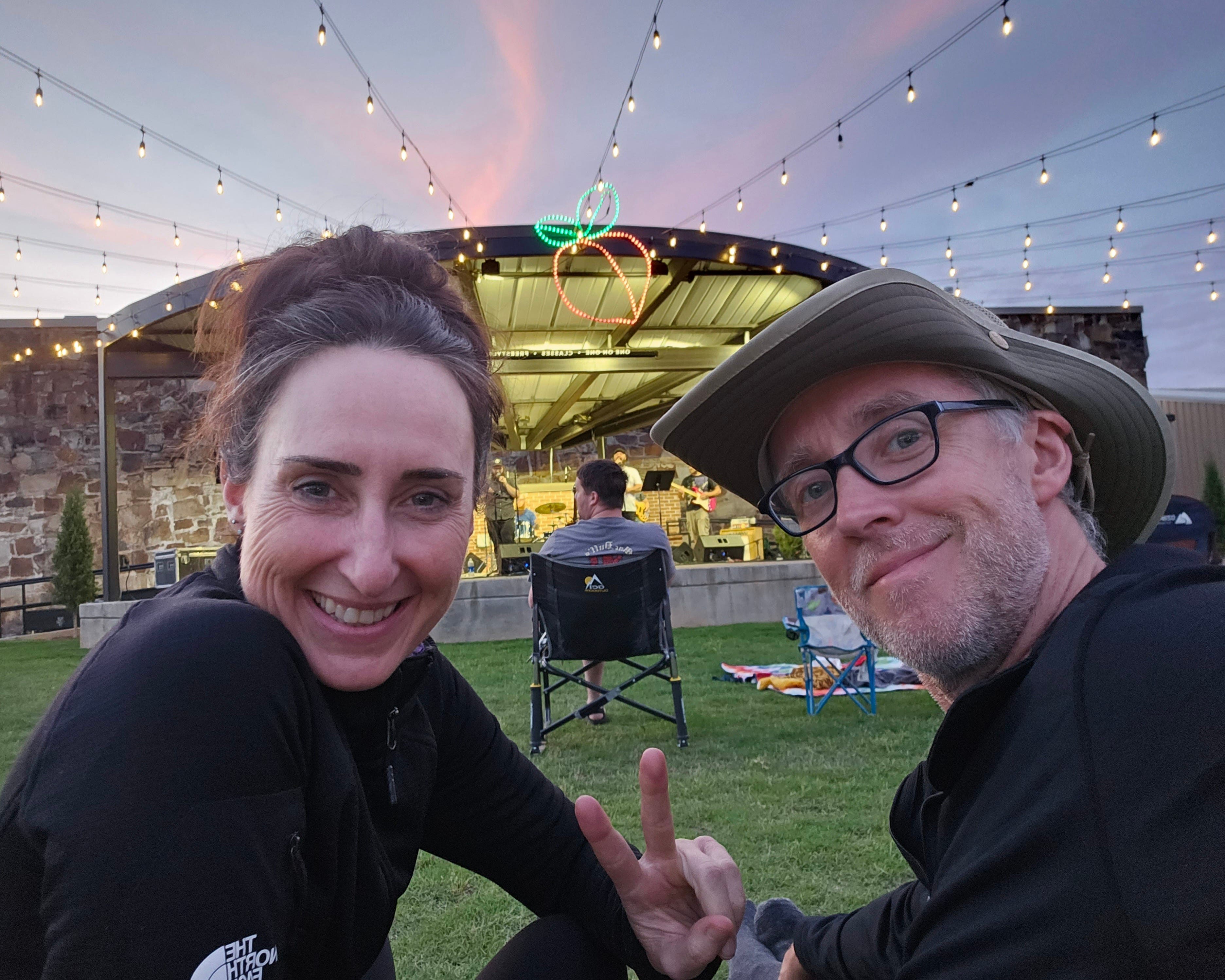
Having Paula nearby brought our lives closer without forcing us to give up our independence. We could spend an evening together and still return to our own spaces. We could share meals, workouts, conversations, and ordinary parts of the day without pretending that commitment required us to surrender every boundary between our lives.
The arrangement gave us closeness with breathing room.
Across the Hall
A couple of years later, I moved across the street into Paula’s building.
This time, I moved directly across the hallway.
My girlfriend now lived a few steps from my front door. If both apartment doors were open, we could probably have held a conversation without leaving our living rooms.
We marked the arrangement with “His” and “Hers” magnets on our doors. They made the hallway look like the entrance to an unusually spacious shared home with two kitchens, two bedrooms, and a public corridor running through the middle.
Visitors found it funny. We did too.
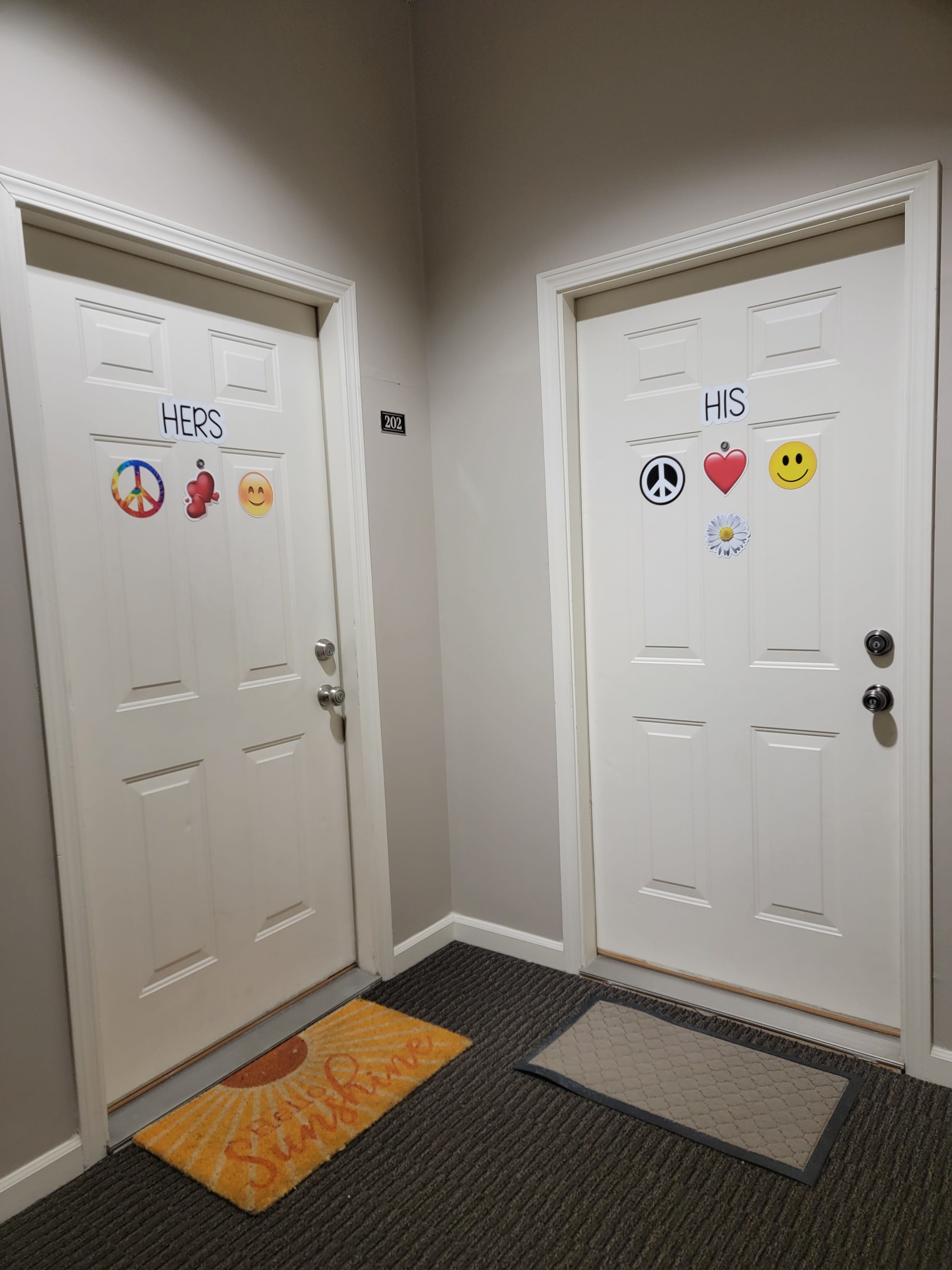
In many ways, it was the perfect arrangement for us. We were together whenever we wanted to be, which turned out to be most of the time. Yet we both retained the freedom to close a door and have a separate space. Neither of us had to ask permission to be alone. Neither of us had to interpret independence as rejection.
That mattered because we had both spent years developing identities outside our previous marriages. We wanted connection, but neither of us wanted to disappear inside a relationship again. Living across the hall allowed us to practice being partners without giving up the autonomy we had worked so hard to reclaim.
Eventually, however, the arrangement became difficult to justify.
We were spending almost every moment together while paying for two apartments. We cooked together, slept in the same apartment, planned our lives together, traveled together, and moved back and forth across the hall carrying clothing, food, chargers, and whatever else we needed.
At some point, continuing to pay for two kitchens and two living rooms stopped representing independence and started representing poor financial judgment.
We moved in together.
The transition felt surprisingly natural. There was no dramatic moment when two completely separate lives suddenly collided. We had already spent years gradually bringing them together. By the time we shared an address, we understood each other’s habits, schedules, quirks, and needs. We knew when the other person wanted conversation and when silence was more helpful. We knew how to travel together and how to recover after returning home.
Life was good.
Our apartment was small, but it contained everything we needed. My daughters were part of the household, and our lives developed their own rhythm. There was enough space for each of us, but not enough room to accumulate an endless collection of things we did not need.
The apartment also gave us freedom. If something broke, someone else fixed it. We did not worry about replacing a roof, repairing a fence, mowing a lawn, cleaning gutters, or spending an entire weekend completing projects simply because a house had generated another list of demands.
When we wanted to leave for a week, we left.
We locked the door, carried our bags to the car or airport, and went somewhere. There was no complicated process required to escape our responsibilities because we had intentionally limited the number of responsibilities attached to where we lived.
While other people spent weekends maintaining their houses and yards, we could ride bicycles, climb mountains, explore museums, take road trips, or stay home without feeling guilty about unfinished projects.
The apartment was not a compromise. It was part of the life we had chosen.
The Life Before the License
Throughout our relationship, Paula and I had talked openly about marriage. We discussed what we appreciated about it, what had failed in our previous marriages, and which parts of the institution seemed helpful or unnecessary. Neither of us entered the relationship with romantic illusions about what a wedding ceremony could accomplish.
We knew a marriage license could not manufacture trust. A ring could not produce compatibility. A ceremony could not guarantee kindness.
Both of us had already experienced enough life to understand that marriage could provide legal structure without creating emotional safety. It could bind two people together on paper while they gradually became strangers everywhere else.
Because of those experiences, we were cautious.
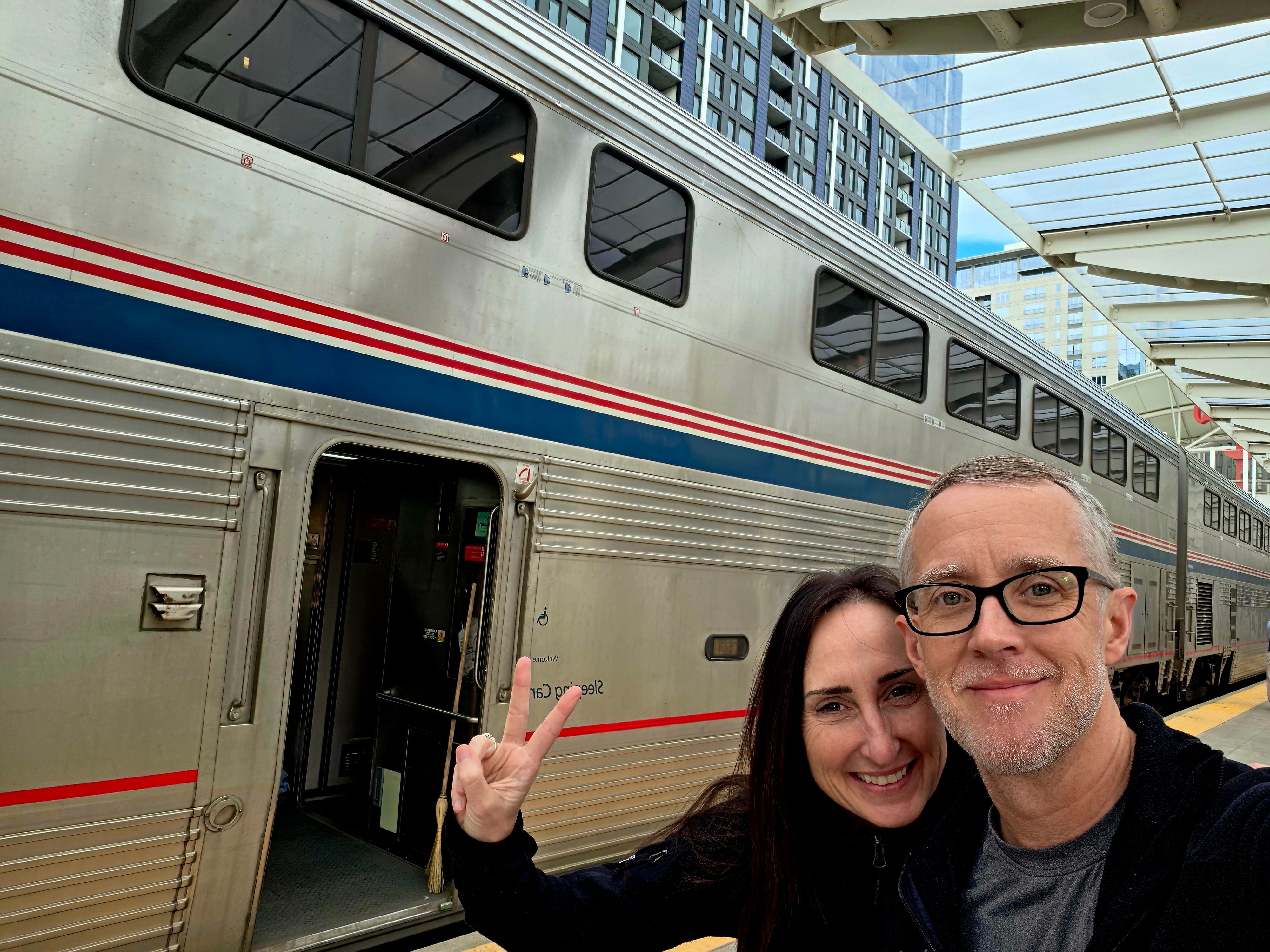
At different times, we told each other we would never get married. The declaration did not feel bitter or rebellious. It felt practical. We already loved each other. We were building a life together. We had learned to communicate openly, support one another, and maintain our independence within the relationship.
What exactly would marriage add?
There were financial considerations too. We had concerns about whether marriage might affect part of Paula’s retirement benefits from her previous marriage. That possibility alone made the question more complicated. We were not interested in holding a wedding simply because society considered it the logical next step in a relationship.
We were content. More than content, really. We were happy.
We had a small home, our children, our adventures, and our life together. We did not need a ceremony to convince ourselves or anyone else that the relationship mattered.
Then, on the Friday before Thanksgiving, I started thinking. This is often dangerous.
I reflected on where we had come from and where we appeared to be going. We had moved from separate apartment buildings to apartments across the hall and eventually into a shared home. We had supported each other through family challenges, parenting, work, travel, and the ordinary complications of being alive.
I thought about our future together, not merely the next adventure or the next year, but the decades ahead.
We were getting older.
What would happen if one of us became ill? How would we protect each other in a medical emergency? What if one of us could no longer make decisions independently? How would legal systems, insurance companies, hospitals, and financial institutions view our relationship?
I already had powers of attorney and medical powers of attorney. We had taken practical steps to protect one another, but marriage would provide another layer of legal recognition and security. It would make certain decisions easier as we aged.
Then I thought about the federal taxes I expected to pay the following year.
Romance may have opened the door. Taxes invited themselves inside.
Suddenly, marriage seemed to offer several practical advantages. It could assist with taxes, insurance, medical decisions, legal protections, and the long-term support we wanted to provide one another.
I decided to propose. Naturally, I sent Paula an Outlook meeting invitation.
The invitation arrived on a Friday and requested her attendance the following Tuesday morning before work. The location was the Sarpy County Clerk’s Office. I had included enough information that the purpose should have been reasonably obvious, but apparently not enough to remove all doubt.
A few minutes later, Paula sent me a message.
“Why are we going to Sarpy County?”
Before I could answer, another message arrived.
“Are we getting married? 😂 Somehow I feel like that is exactly how that would happen if it ever did. I would just get a calendar invite. 🤣🤣”
She knew me well. I responded with a thumbs-up emoji. That requires explanation.
Paula and I both dislike the thumbs-up emoji. To us, it can feel dismissive, like the digital equivalent of saying “fine” when something is clearly not fine. It became a running joke between us, which made it the perfect response to a possible marriage proposal.
Nothing expresses lifelong devotion quite like a symbol both people hate.
After allowing that deeply romantic gesture to settle in, I provided the details.
“Yes, possibly. I checked and if you get married, you will not lose your retirement. So, if you want, we could get a marriage license on Tuesday for $25 and let your dad do it when they are in town next week, when your boys are here. Maybe at your sister’s house. If you want. Or not. It would help with taxes, insurance, and other legal issues.”
I was not exactly placing pressure on the situation. If you want. Or not. She responded to the message with a heart. Then I waited.
The meeting invitation remained unanswered for the rest of the workday. As the hours passed, I began wondering whether my proposal strategy needed improvement. Perhaps Outlook was not the ideal environment for asking someone to spend the rest of their life with you. Maybe I should have included an agenda. Maybe the invitation needed refreshments.
What I did not know was that Paula wanted to speak with her sons before making the decision. Their feelings mattered to her. The marriage would not involve only the two of us. It would formalize a relationship connecting two families, each with histories, loyalties, and people we loved.
Her boys understood. They thought it was good for her. Near the end of the day, the notification finally appeared. Paula had accepted the meeting invitation. Apparently, we were getting married.
The following Tuesday morning, we went to the Sarpy County Courthouse. I had researched the process and believed the marriage license would cost twenty-five dollars.
It cost thirty-four.
Paula still jokes that she nearly backed out when she discovered the nine-dollar price increase.
Every relationship has limits. Ours was apparently close to thirty-five dollars.
We paid for the license, completed the paperwork, and walked out of the courthouse legally authorized to get married. There was no photographer waiting outside. No champagne. No crowd of people applauding.
We had errands and work.
Later that day, Paula’s parents drove into town from the farm near Scottsbluff. We met them at Paula’s sister’s house for dinner. Before going inside, Paula purchased a Salted Nut Roll and two Cherry Mash candy bars.
They were her father’s favorites.
After dinner, we handed her parents the marriage license and asked her father if he would marry us after Thanksgiving dinner.
The request did not come with an elaborate explanation. He had the authority to perform the ceremony, the family would already be gathered, and everyone needed to eat anyway. Combining Thanksgiving and a wedding seemed efficient.
He agreed. His compensation would be three candy bars.
Her father may have officiated larger or more formal weddings, but I doubt many offered a better payment package.
The plan was to surprise most of the family. Only Paula’s sons, my daughters, her parents, and her sister and brother-in-law knew. Thanksgiving dinner would already be held at her sister’s house, so the location problem had solved itself.
Paula’s sister wanted to contribute cakes. She arranged for a wedding cake and a cheesecake, the latter specifically identified as the groom’s cake.
I approved. Six days after my Outlook proposal, Thanksgiving arrived.
The day began as most Thanksgivings do. People gathered, food appeared from every direction, conversations overlapped, and everyone worked toward the moment when too many dishes would somehow fit onto one table.
We ate dinner.
Nobody who was unaware of the plan seemed to suspect that the potluck meal was also a wedding reception.
After dinner, we waited for a few more people to arrive. Then we invited everyone into the living room. There was a moment of confusion as people tried to determine why they were being gathered and why the normal flow of Thanksgiving had suddenly acquired an agenda.
Paula’s sister picked up her violin and played a song. She is a professional musician, and the music transformed the familiar room without making it feel like something it was not. We were still standing in a family home after Thanksgiving dinner, but the moment had become ours.
Paula’s father stood in front of the fireplace with his Bible and ceremony notes.
People began to understand.
Paula and I stood together while her father performed the ceremony. I do not remember every word he said, and I do not think I need to. The relationship had already been built through years of conversations, choices, support, adventures, and ordinary days. The ceremony did not create our commitment.
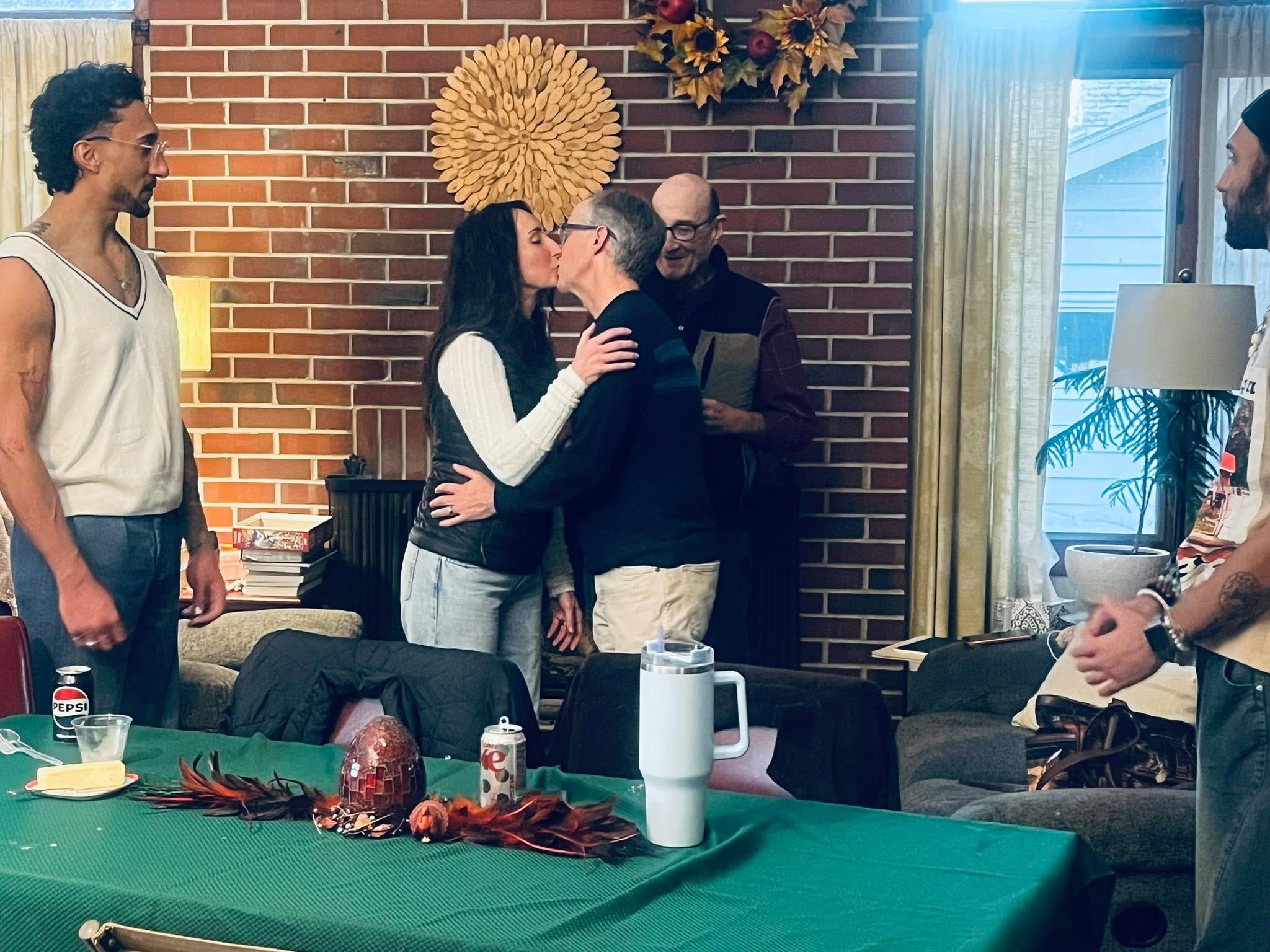
It recognized it. Within a few minutes, we were married.
There had been no long engagement, no wedding planner, no seating chart, and no discussion about floral arrangements. We did not rent a ballroom or spend months debating menus. We did not need a photographer to confirm that the moment happened.
There was a fireplace, a violin, family, and Thanksgiving dinner. Then we ate cake.
Several family members accused us of using the Thanksgiving potluck to have our wedding catered for free.
They were correct.
Our wedding cost approximately forty dollars. The marriage license accounted for thirty-four dollars. The rest went toward the Salted Nut Roll and two Cherry Mash bars we used to compensate the officiant.
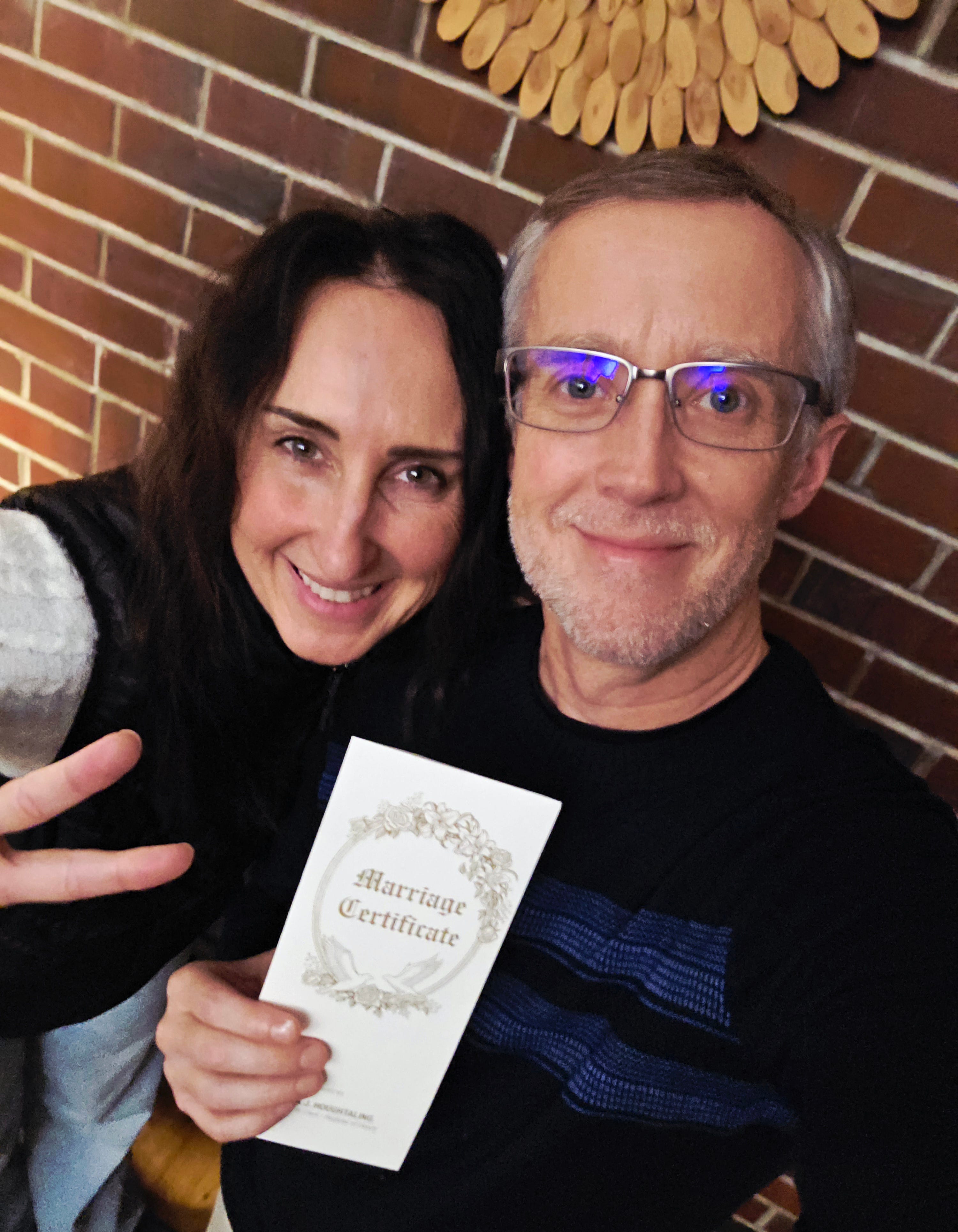
It was economical. It was unconventional. It was completely us.
After the ceremony, we took a few photographs and continued with the day. Thanksgiving did not transform into a formal reception. Nobody changed into special clothing or moved to another venue. We were married, cake had been served, and life continued.
That may have been the most honest part of the entire experience. Marriage was not supposed to interrupt our life. It was supposed to support the life we were already living.
A few days later, on Sunday, we were sitting at home in newly married bliss when I realized Paula did not have a wedding ring.
I asked if she wanted to go to a pawn shop and look for one.
I could have afforded an expensive ring. If Paula had wanted a fifteen-thousand-dollar diamond, I could have bought one. The problem was that neither of us would have felt particularly good about it. An expensive ring would have represented someone else’s idea of romance, not ours.
So we went to a pawn shop.
The jewelry counters were filled with engagement rings and wedding bands. Rows of diamonds sat beneath the glass, sparkling under carefully positioned lights and representing relationships whose stories we would never know.
We joked that the cases were filled with lost hopes and dreams.
Every ring had probably begun with some version of forever. Now those promises were organized by size and price inside a pawn shop display case.
Paula examined them for nearly an hour. Nothing felt right.
The modern rings seemed too conventional. They were beautiful in the way jewelry is expected to be beautiful, but none of them looked like Paula. They looked like rings designed to appeal to everyone, which meant they did not speak specifically to her.
Then she noticed something different.
It was a 1920s Art Deco ring with champagne diamonds. We did not know whether it had originally been a wedding ring or represented some other occasion. Its history had disappeared somewhere along the way.
That did not matter. It was unusual. It was beautiful. It was exactly her style. We bought it.
On Monday, Paula paid an additional fee to have it resized more quickly. After nearly backing out of the marriage over a nine-dollar increase in the license fee, she willingly paid extra to get the ring sooner.
That was how I knew she loved it.
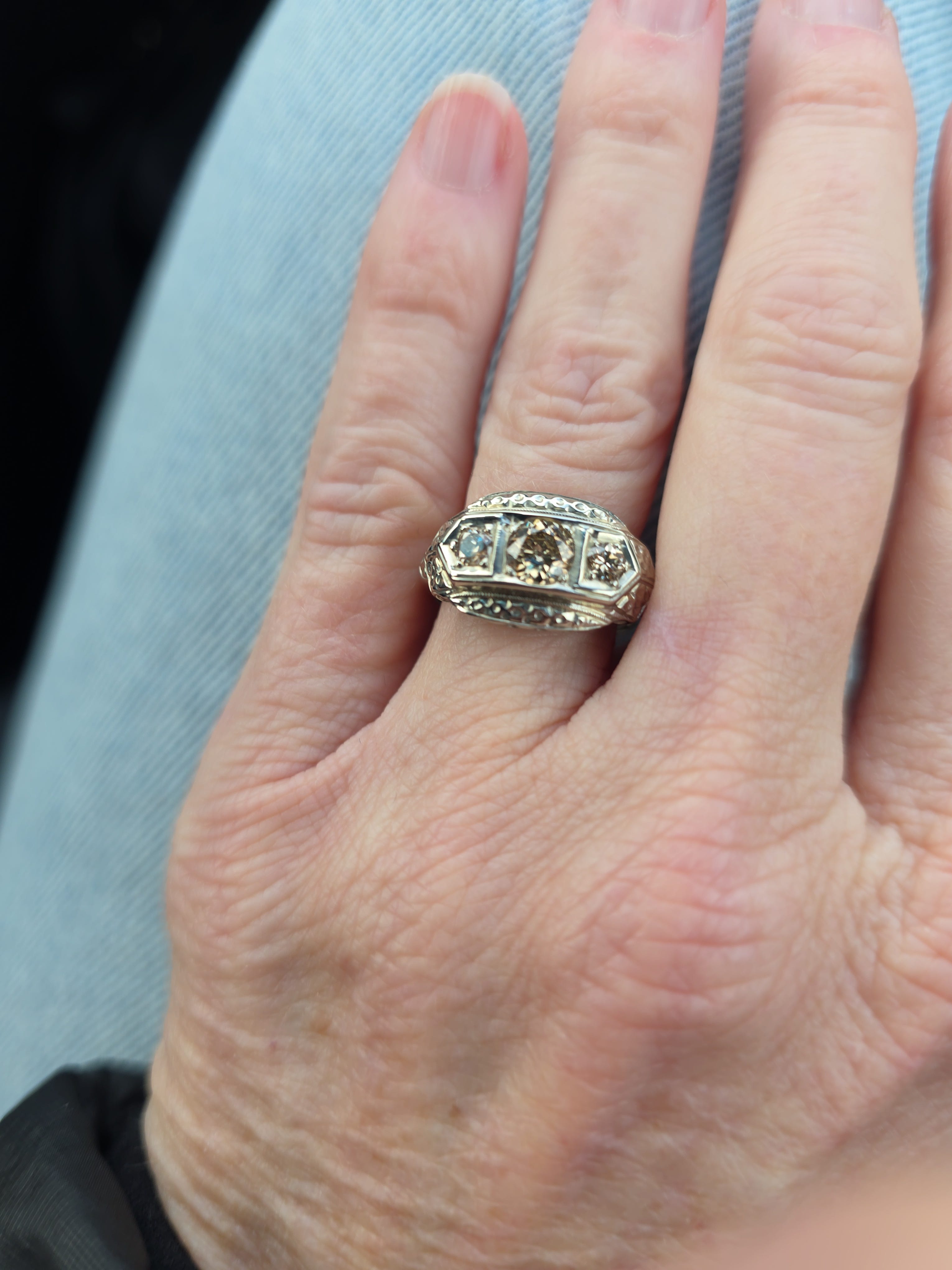
When the ring returned, it looked as though it had always belonged on her hand. It was not the ring I would have selected without her. That was part of what made it perfect. It reflected her taste and her history while fitting naturally into the life we had built together.
It was her style. It was our style. Approximately six months later, Paula asked whether being married felt different. I thought about the question and answered honestly.
“No.”
It did not feel as though anything had changed. We woke up in the same apartment, continued planning the same adventures, cared for the same people, and returned to the same conversations. We still laughed at each other, encouraged each other, irritated each other occasionally, and made choices about how we wanted to live.
My taxes were slightly better. Beyond that, the weekend had not transformed the relationship. I think that was the point.
Our marriage had not begun on Thanksgiving. It had been forming for years. It grew every time we told each other the truth, respected a boundary, offered support, followed through on a promise, or made room for the other person to remain fully themselves.
The ceremony simply caught up with the relationship.
I had once believed marriage was built primarily through commitment. I now think commitment is only part of it. A person can remain in a relationship for decades through duty, pressure, fear, financial necessity, or the belief that leaving would represent failure.
Remaining is not always the same thing as choosing.
The marriage I wanted with Paula was not based on the idea that either of us had to stay. I wanted us to wake up and choose the relationship again. Not because a license required it or because leaving would be complicated, but because the life we created continued to feel more meaningful together.
Marriage, at its best, should protect individuality rather than erase it.
It should allow each person to remain curious, independent, and alive. It should create a place where people can grow without forcing the other person to stand still. It should offer support without control, stability without confinement, and companionship without obligation.
That is what I wanted for us.
Paula and I often say that we want to come home every day and still want to be together. That desire cannot be enforced by vows. It has to be nurtured through the way we treat one another.
Kindness matters. Respect matters. Attention matters.
The way people speak during frustration matters more than what they say during a ceremony.
I try to treat each day with Paula as though it might be the last day I see her, while hoping I will see her again tomorrow. That does not mean living with fear. It means refusing to treat another person’s presence as something guaranteed.
Love can become careless when it assumes permanence.
I do not want to stay with Paula because I am obligated to remain married. I want to stay because she is the person I continue choosing.
And I want her to feel the same freedom.
She does not owe me her presence simply because her father stood in front of a fireplace with a Bible after Thanksgiving dinner. She does not belong to me because I paid thirty-four dollars for a license and later found a ring in a pawn shop.
She is with me because she chooses to be. I am with her for the same reason.
Marriage did not bind us together by removing the exits. It gave legal recognition to a relationship in which both people remained free and continued moving toward each other.
That may not be everyone’s definition of marriage. It is ours.
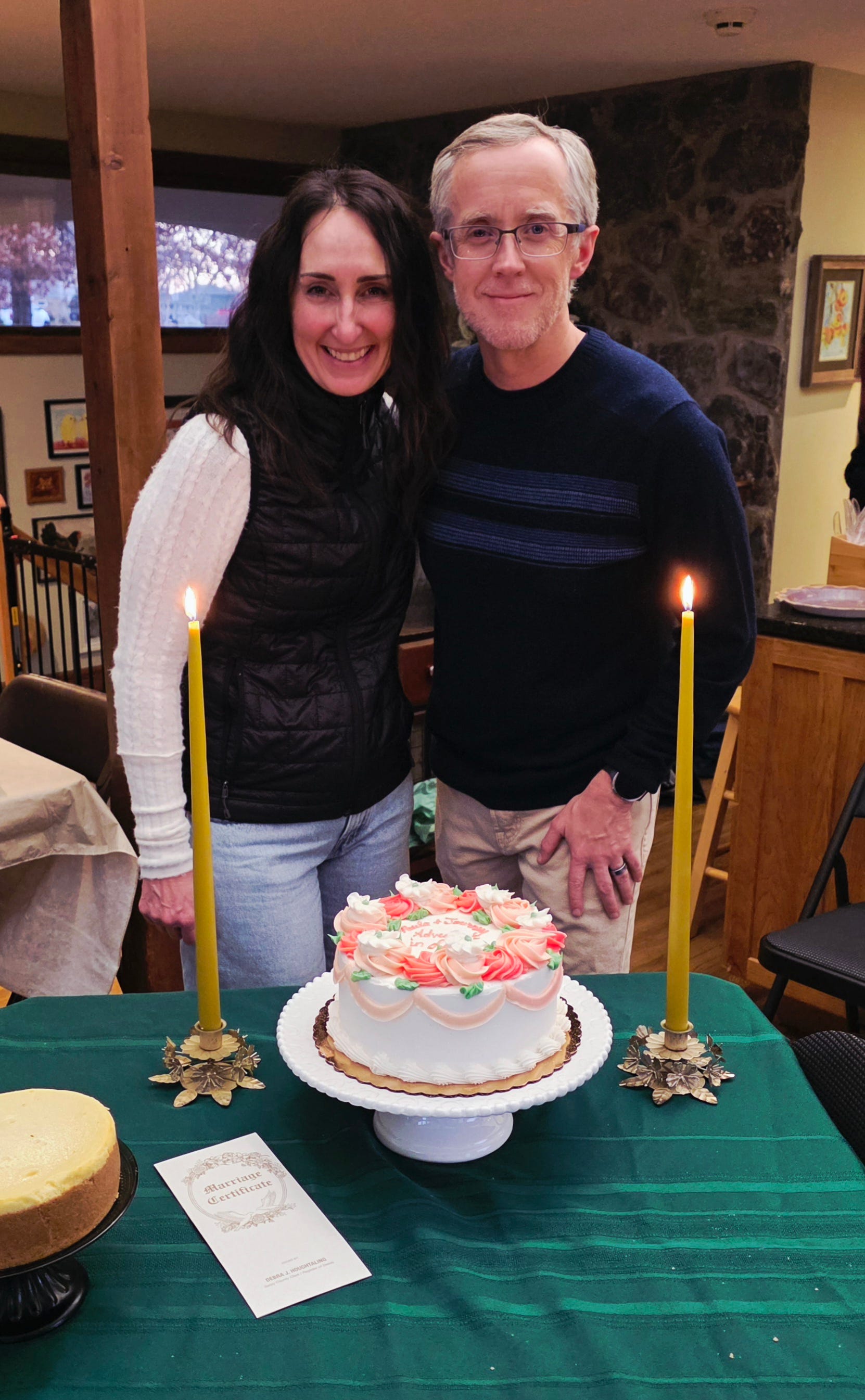
When people ask how I proposed, they often expect an elaborate story involving a restaurant, a vacation, or a carefully hidden diamond ring. Instead, I explain that I reviewed retirement implications, considered my future tax liability, and sent a calendar invitation to the county clerk’s office.
Six days later, we were married. It may not sound romantic. But romance has never been about following someone else’s script.
It is about knowing another person well enough to create a moment that could belong only to the two of you.
For Paula and me, that moment included an Outlook invitation, a hated thumbs-up emoji, a thirty-four-dollar marriage license, three candy bars, Thanksgiving leftovers, cheesecake, and a ring filled with someone else’s lost history.
It was not the wedding we had always dreamed about. Neither of us had dreamed about a wedding. It was simply the wedding that fit the life we had chosen. And somehow, that made it perfect.