

By this point in the story, Paula and I were married, but every adventure in this chapter happened before our wedding. Before moving forward, I want to rewind to those earlier years, when we were still learning each other’s rhythms, discovering what kind of travelers we would be, and, in many ways, deciding what kind of partners we wanted to become. Long before we made promises in front of other people, life was already teaching us how we would face the unexpected together.
I have always liked having a plan. This should not surprise anyone who has seen my spreadsheets. I plan trips, routes, permits, museums, unusual lodging, trailheads, restaurants, backup trails, and sometimes backups for the backup trails. Planning is part of the joy for me. It lets me imagine an experience before I live it and gives shape to possibilities that might otherwise remain only ideas.
Life, however, has never shown much respect for my spreadsheets. Weather changes. People become sick. Campsites disappear beneath snow. Animals visit in the night. Bones break on the day before a long-awaited hike. Again and again, the experience we expected has been replaced by something inconvenient, uncomfortable, or completely absurd.
Those are often the stories we remember best.
The phrase “making lemonade from lemons” can sound too cheerful for real life. Some lemons are not funny. Some changes carry real loss, and some circumstances cannot be improved with a positive attitude. But many disappointments are not endings. They are invitations to look again. There is often something left: another direction, another trail, another place to sleep, another version of the day.
Paula and I learned to look for what remained possible.
The Snow That Changed the World
Early in our relationship, we spent a Valentine’s Day weekend at Paula’s family farm west of Scottsbluff. From the front door, Scotts Bluff National Monument rises above the prairie. It does not feel separate from the farm. It feels like a permanent presence, watching over the fields and marking the horizon. Every time I visit, I still stop and look at it.
The forecast called for a couple of inches of snow. That seemed harmless enough. We packed snowshoes, hiking gear, winter clothing, and heated socks for Paula. We thought that, if the weather cooperated, we might hike the monument in the snow. It sounded romantic in the practical, outdoorsy way that made sense to us: cold air, a quiet trail, and the satisfaction of doing something instead of simply talking about it.
Then the snow began. It did not stop after a couple of inches. It kept falling, sometimes heavily, until more than a foot covered the farm and the surrounding country. Under other circumstances, that much snow might have felt like a barrier. Roads would be harder to travel. Plans would be canceled. Everything would become slower and more complicated.
But this snow was different. There was almost no wind, which is a rare gift on the high plains. The flakes fell straight down, soft and heavy, without being ripped sideways across the prairie. The world became quiet in a way that felt almost impossible. Fences softened. Fields disappeared beneath white. The monument itself looked gentler, as though the storm had erased every sharp edge.
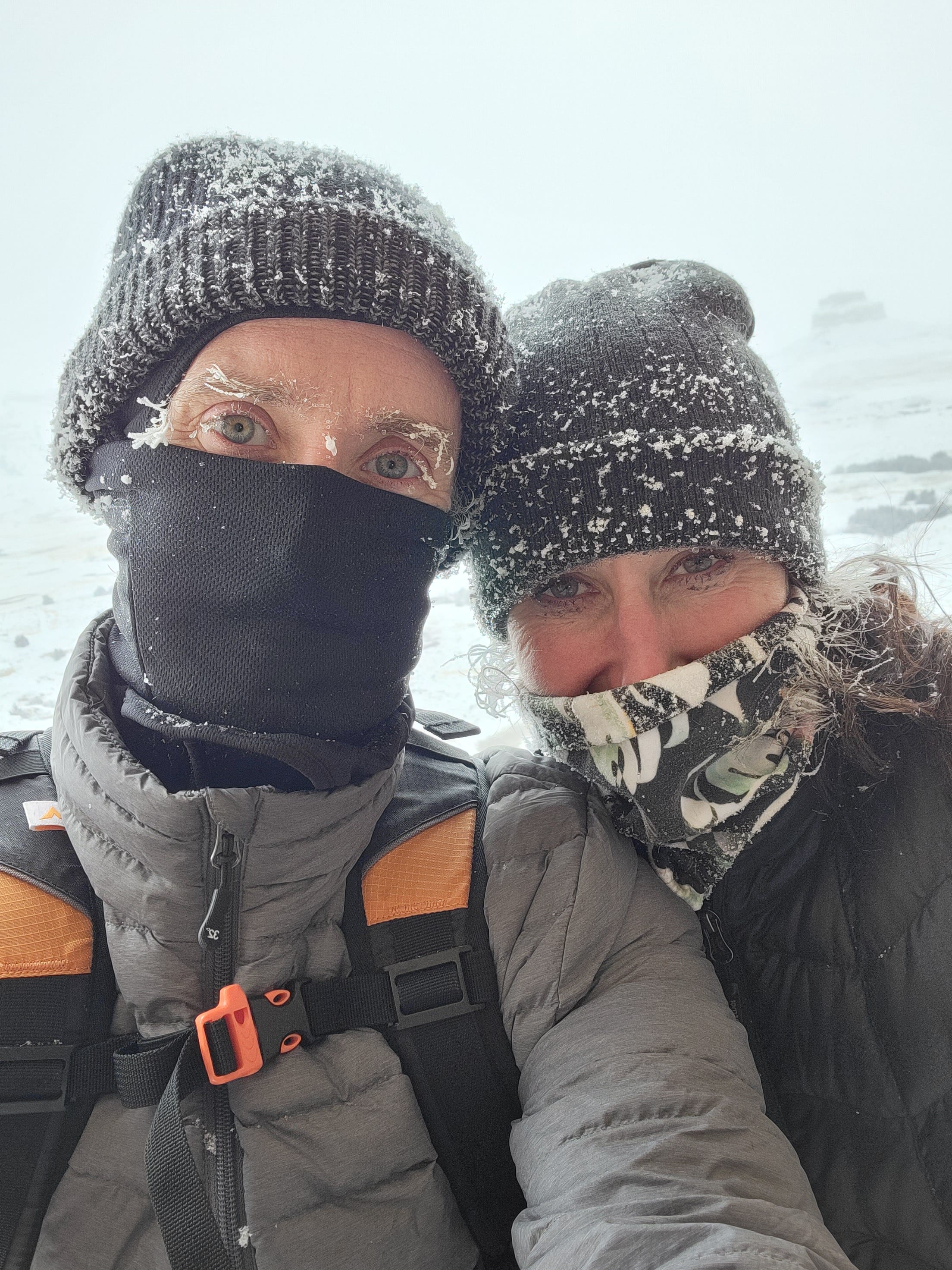
The temperature never rose much above two or three degrees Fahrenheit. On paper, that sounds miserable. Without the wind, in the dry western Nebraska air, dressed for the conditions and moving steadily, it felt perfect. The cold was present, but it was not hostile. It made the silence more complete.
We went to the monument and found it empty. There were no visitors, no voices, and no footprints ahead of us. We fastened our snowshoes and began climbing, pressing the first tracks into a landscape that appeared untouched. Every step made a soft, muffled sound. Snow gathered on the rocks and branches. The familiar trail had become something new.
At some point, I stopped and listened. There was nothing to hear. No wind. No traffic. No conversation from another group around the bend. Only the quiet breathing of two people standing together in the cold.
Nothing was happening, and it was magnificent.
If the forecast had been correct, we probably would have enjoyed a pleasant winter hike. Instead, the storm gave us one of the most peaceful days I have ever spent outdoors. The extra snow did not ruin the experience. It transformed it. It took a familiar place and made it feel private, temporary, and sacred.
Small reflection: Beauty is not always found by escaping difficult conditions. Sometimes it appears when we enter them prepared, pay attention, and discover that what looked like an obstacle has changed the world in our favor.
The Horse Trailer at the End of the Detour
On another Valentine’s Day weekend, some time later, we planned to return to the farm. The drive from Omaha takes about seven hours, and we were already roughly five hours into it when Paula’s mother called. Her parents had tested positive for COVID. In a single phone call, the destination disappeared.
We could not stay at the farm. We could not visit her parents. We were too far from home for turning around to feel like the only reasonable choice, yet the entire purpose of the trip had changed. Most people probably would have accepted the loss, pointed the car east, and spent the next five hours retracing the road they had just traveled.
We did not want the weekend to end on the shoulder of Interstate 80.
We pulled out our phones and started searching. We looked along the interstate, considered different towns, and eventually turned our attention toward Wyoming. Somewhere in that search, we found lodging that was both completely impractical and exactly right: an Airbnb made from a horse trailer.
It was not a luxury conversion featured in a travel magazine. It was a small horse trailer with barely enough room for a queen-size bed and a space heater. At the front sat a bucket with sawdust for a toilet. Fairy lights had been strung inside, casting a warm glow over the narrow space. It was tiny. It was strange. It was cozy and lovely.
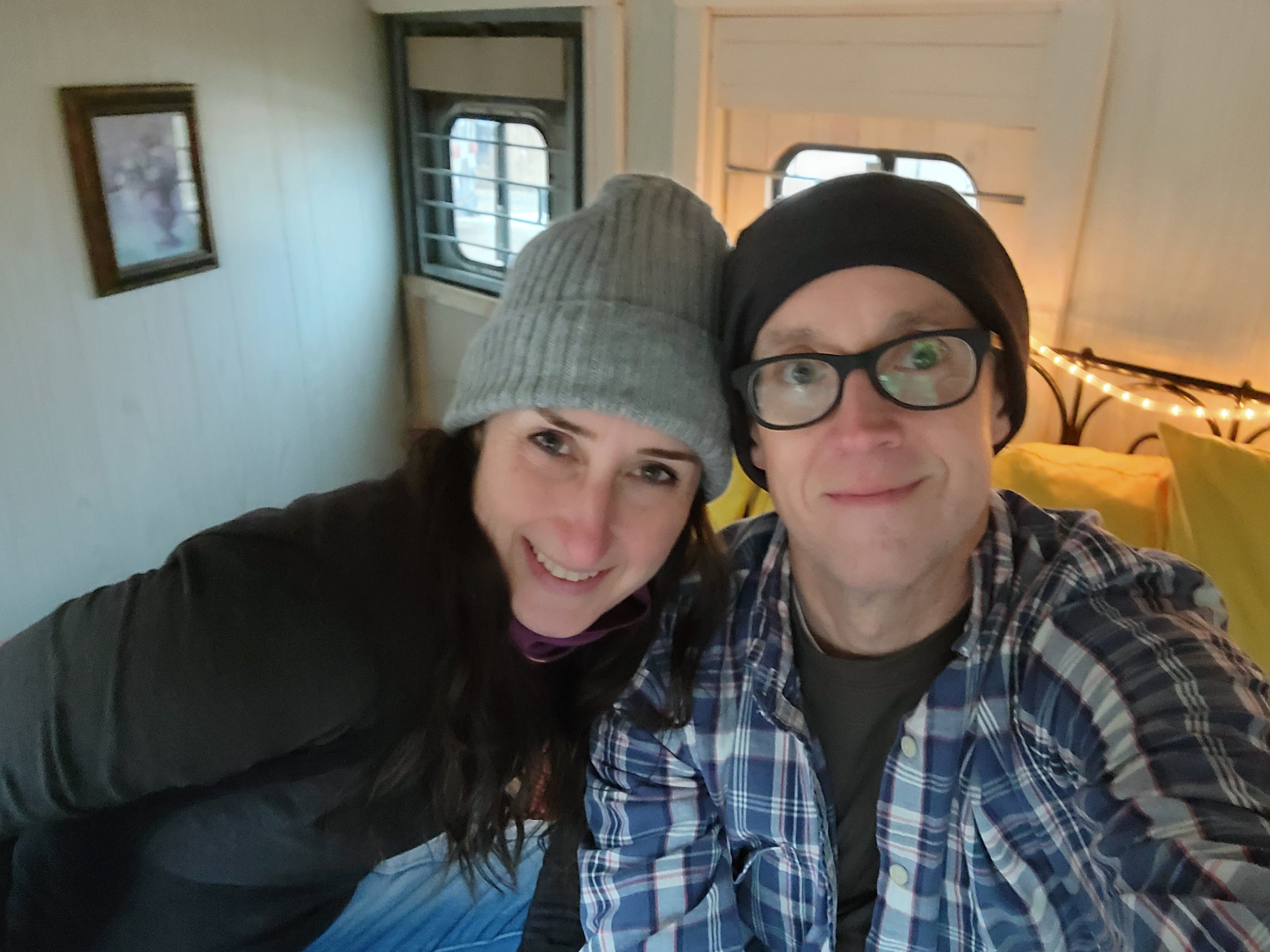
It was the kind of place no spreadsheet would have suggested.
The next day, we drove west of Cheyenne to hike the Turtle Rock Loop. When we started, the weather was pleasant. The sun was out, only a little snow covered the ground, and the trail felt inviting. We began the loop believing we were taking a winter hike, not entering a survival story we would later laugh about.
As we continued, the snow returned. It fell harder and accumulated quickly. Then the wind joined it. The landscape that had welcomed us at the beginning of the hike changed by the time we approached the end. Visibility narrowed. Snow swept across the trail and collected in deep drifts. The open spaces of Wyoming stopped feeling spacious and began to feel exposed.
When we reached the trailhead, the entrance was almost unrecognizable. An enormous drift had formed near the guard shack, rising so high that the building was difficult to see. We climbed over the snow and made our way back to the car, relieved to reach it but not yet safe.
The road out of the park had its own surprise. A drift several feet high stretched across the road. I was driving a rental car, which I believe was a Toyota Camry. We had no shovel, no recovery boards, and no four-wheel drive. There was no graceful solution available. I had a gas pedal, a low car, and the hope that momentum could substitute for preparation.
Sometimes the backup plan is acceleration.
I backed up enough to give us a chance, pressed the pedal, and aimed at the drift. The car hit the snow with a heavy thud. White exploded over the hood and windshield. For a moment, I could not tell whether we were breaking through or burying a rental car in the middle of a Wyoming road. Then the tires found traction, the car lurched forward, and we burst through the other side.
The drive back was treacherous. The interstate at elevation was windy and snow-covered, and every mile demanded attention. As we descended, however, the storm loosened its grip. Near our little horse trailer, the roads were fine. We stepped back inside, turned on the heater, watched the fairy lights glow, and felt as though we had arrived somewhere far more luxurious than a converted livestock trailer with a bucket in the corner.
We spent the rest of the weekend exploring museums in the area. The original trip was gone, but the time was not wasted. We had found a new route, a ridiculous place to sleep, an unexpected hike, and a story about launching a Camry through a snowdrift.
Small reflection: A canceled destination does not have to become a canceled life. The plan may disappear while the time, curiosity, and willingness to move are still yours.
The Visitor Beneath the Hammock
A few years later, Paula and I went backpacking in Rocky Mountain National Park. It was early June, but mountains do not organize their seasons according to calendars. Snow still covered much of the higher terrain. We climbed toward our designated camping area and found it buried beneath two or three feet of snow. We could not even locate the stake marking where the campsite was supposed to be.
For tent campers, that would have created a serious problem. We were hammock campers. We did not need flat, dry ground. We needed two strong trees at the right distance from each other. Soon we found them and began building our small suspended home on the side of the mountain.
Our hammock system was designed for cold nights. An underquilt protected us from the air moving beneath us, while an overquilt held warmth above. A bug net and rain fly were not strictly necessary in the snow, but they helped block wind and hold warmth inside. We cooked dinner, climbed into the hammock, ate in the warmth, and settled in for the night.
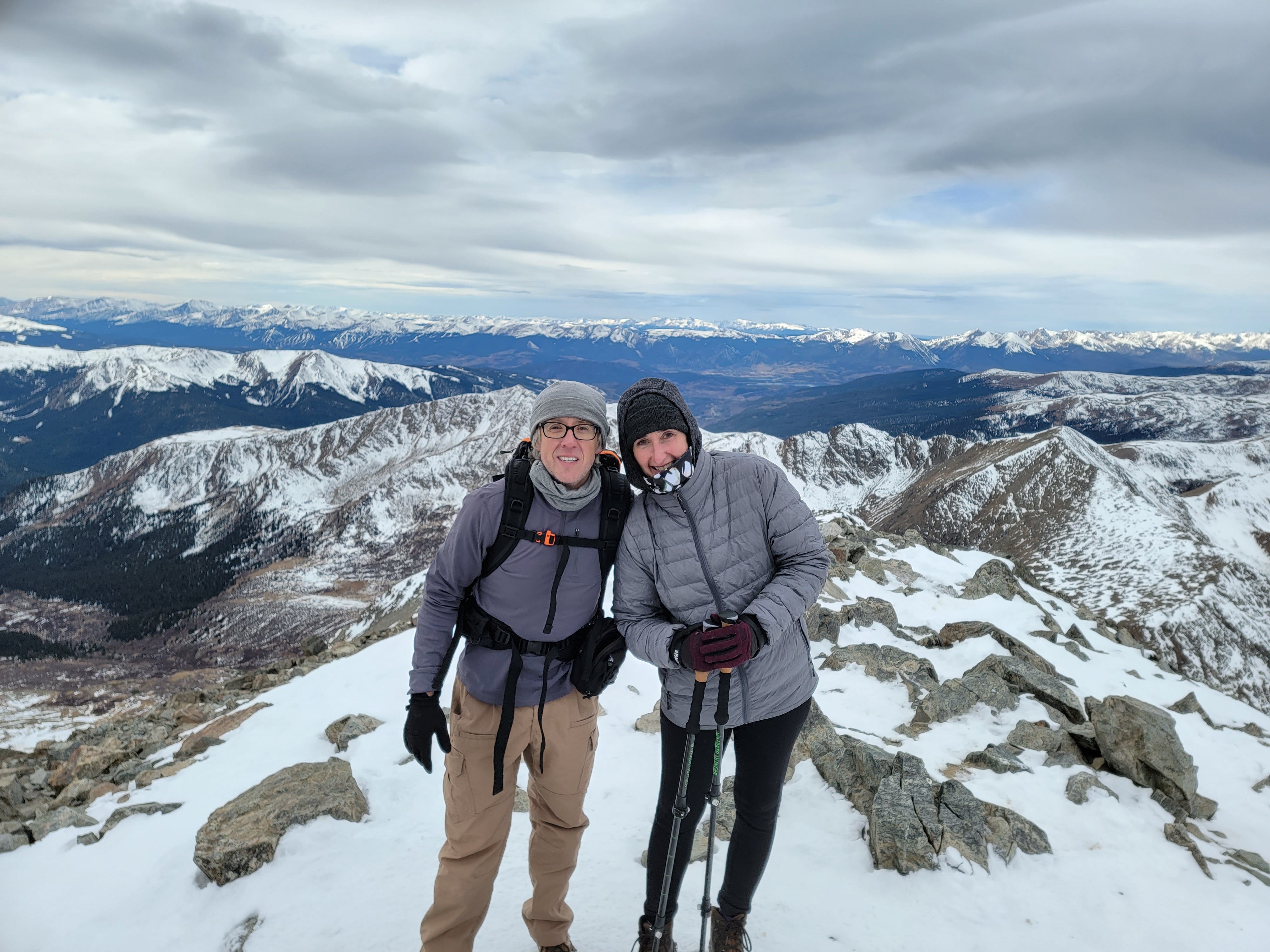
Normally, we hung our shoes from the ends of the hammock. That night, because the ground was buried in snow and neither of us wanted to step into it barefoot the next morning, I placed a large rock beneath us and set our shoes on top. It seemed like a small improvement to our routine.
In the middle of the night, Paula began lightly tapping my leg. When I woke, what struck me first was how quietly she spoke. We were alone on the side of a mountain. There was no neighboring camper to disturb. If she was whispering, she believed there was a reason.
“There is something moving around under our hammock. Get your flashlight and see what it is.”
I reached for the light, but I was not quiet enough or fast enough. By the time the beam cut through the darkness, whatever had been beneath us had moved away. The snow reflected the light, but beyond that small bright circle, the mountain remained completely black.
Then I looked down at the rock. Paula’s shoes were no longer where we had left them. One of mine remained on the rock, but the other had been pulled onto the ground. Its laces had been chewed apart in two places.
I climbed out of the hammock barefoot, stood in the snow long enough to retrieve everything, tied the severed laces together, and hung the shoes from the hammock as we should have done in the first place. There was little else to investigate in the dark, so we climbed back inside and tried to sleep.
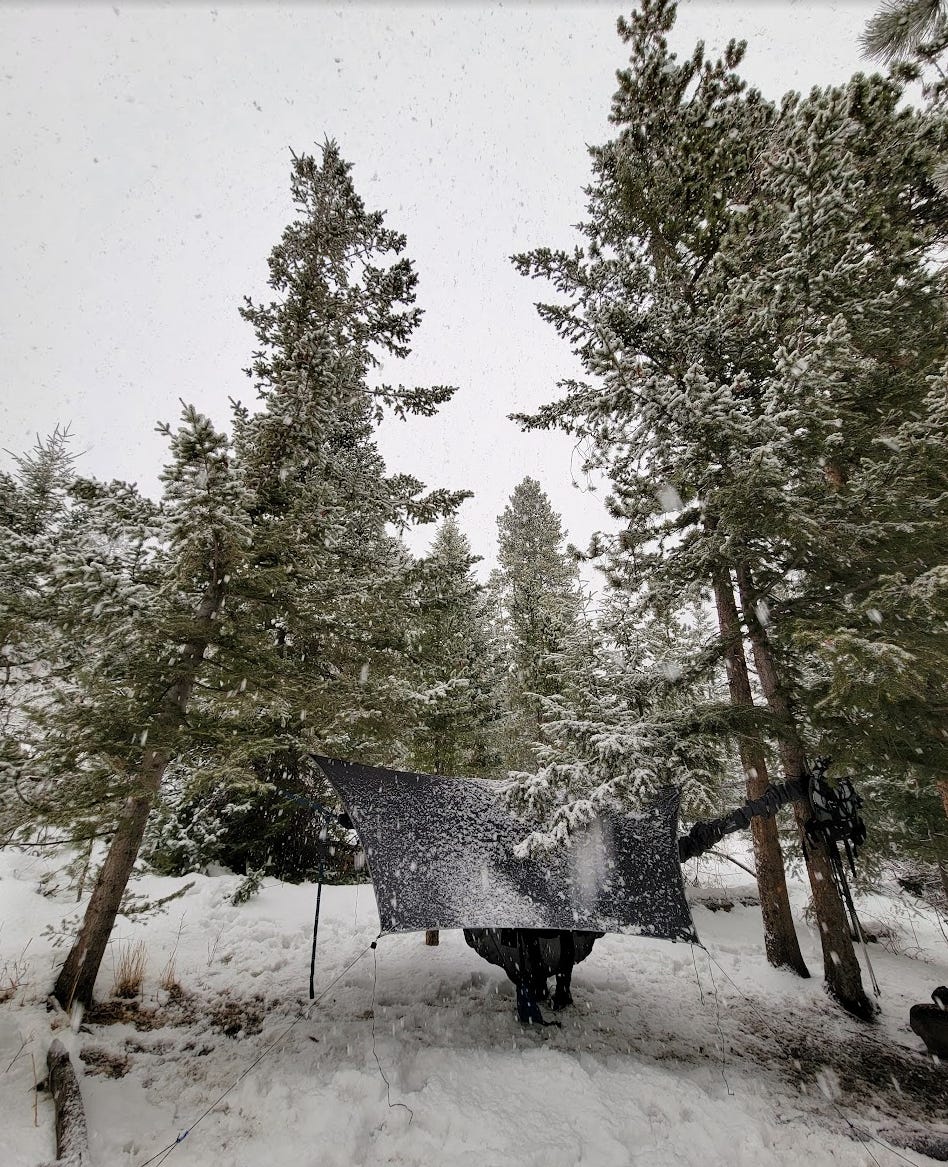
The next morning, sunlight revealed what the flashlight had missed. Large cat tracks crossed the campsite and circled the hammock. They were everywhere. I photographed them and later showed the pictures to a ranger, who confirmed that the tracks belonged to either a mountain lion or a lynx. During the night, a wild cat had moved beneath us, pulled our shoes from the rock, and chewed my laces like an oversized house cat playing with something it had discovered on the floor.
Paula later told me that the sound had entered her dream before it woke her. In the dream, her son was nearby and so was a bear. She told him not to worry because the bear was friendly, as long as he did not approach it. Then she woke and realized the noise was not part of the dream. It was directly beneath us.
To this day, Paula is disappointed that I made too much noise reaching for the flashlight. She wanted to see the mountain lion.
Honestly, so did I.
The animal could have turned the night into something dangerous, but it did not. It left us with damaged shoelaces, remarkable tracks, and the knowledge that for a few minutes, while we hung quietly above the snow, we shared our campsite with something wild enough to remind us that the mountain did not belong to us.
Small reflection: An adventure is partly the decision to enter places where we are not in control. Preparation matters, but humility matters too. The world remains bigger, stranger, and more alive than whatever we planned for it.
The Broken Wrist and the Subway
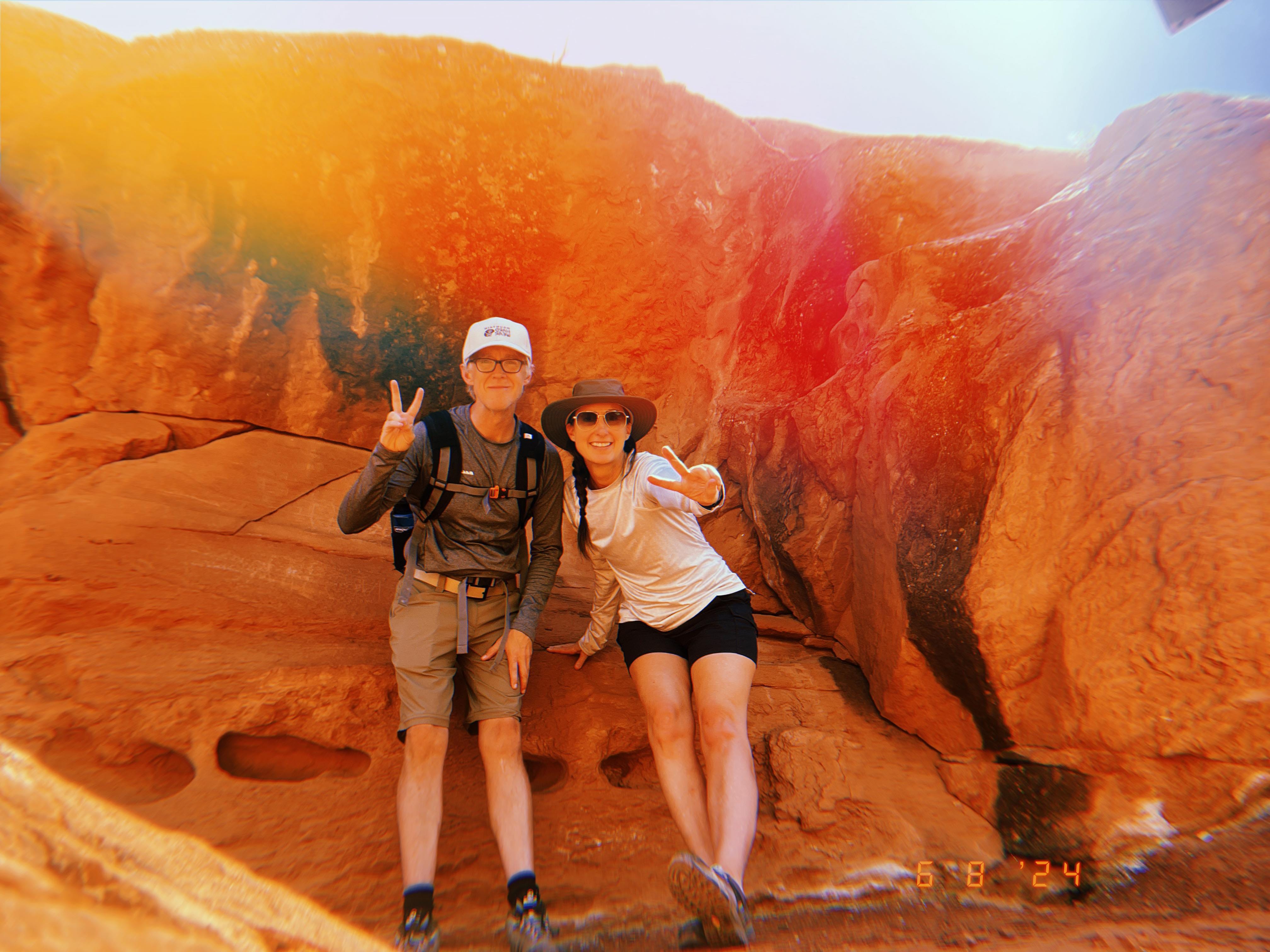
The story that best captures this part of Paula is the one from southern Utah. I had previously visited Zion National Park with my daughters and wanted Paula to experience the landscape. We camped outside Zion and filled the trip with the kind of days that leave dust on your clothes and beauty lodged in your memory. We explored Bryce Canyon, hiked among the hoodoos, wandered through slot canyons in Grand Staircase-Escalante, and spent hours moving through the Narrows.
We also hiked Angels Landing. The trail is famous for narrow ledges, exposed sections, and long drops. I had not taken my daughters onto the final section because of the danger, but Paula was willing to go. That willingness was never about proving that she was fearless. It was about deciding that fear and discomfort did not deserve the final vote.
The trip still had one larger goal: the Subway. Access required a permit, and permits were limited. I applied for every day we would be in the area. Each rejection made the remaining chances feel smaller. Then, on Saturday, I received the email. We had won the lottery for Monday, our final day.
I was thrilled. The difficult permit had become real. After days of uncertainty, we finally knew we would get to see the place we had imagined.
On Sunday, we drove to Snow Canyon near St. George. I wanted to show Paula the same lava caves I had explored with my daughters. Toward the end of the day, we climbed to the top of a lava mound covered with small, rounded volcanic rocks. They rolled beneath our feet like marbles. At the top, we met a ham radio operator, and like we often do, we started talking. Paula and I can begin conversations almost anywhere. Strangers become part of the day, and the day becomes larger because of them.
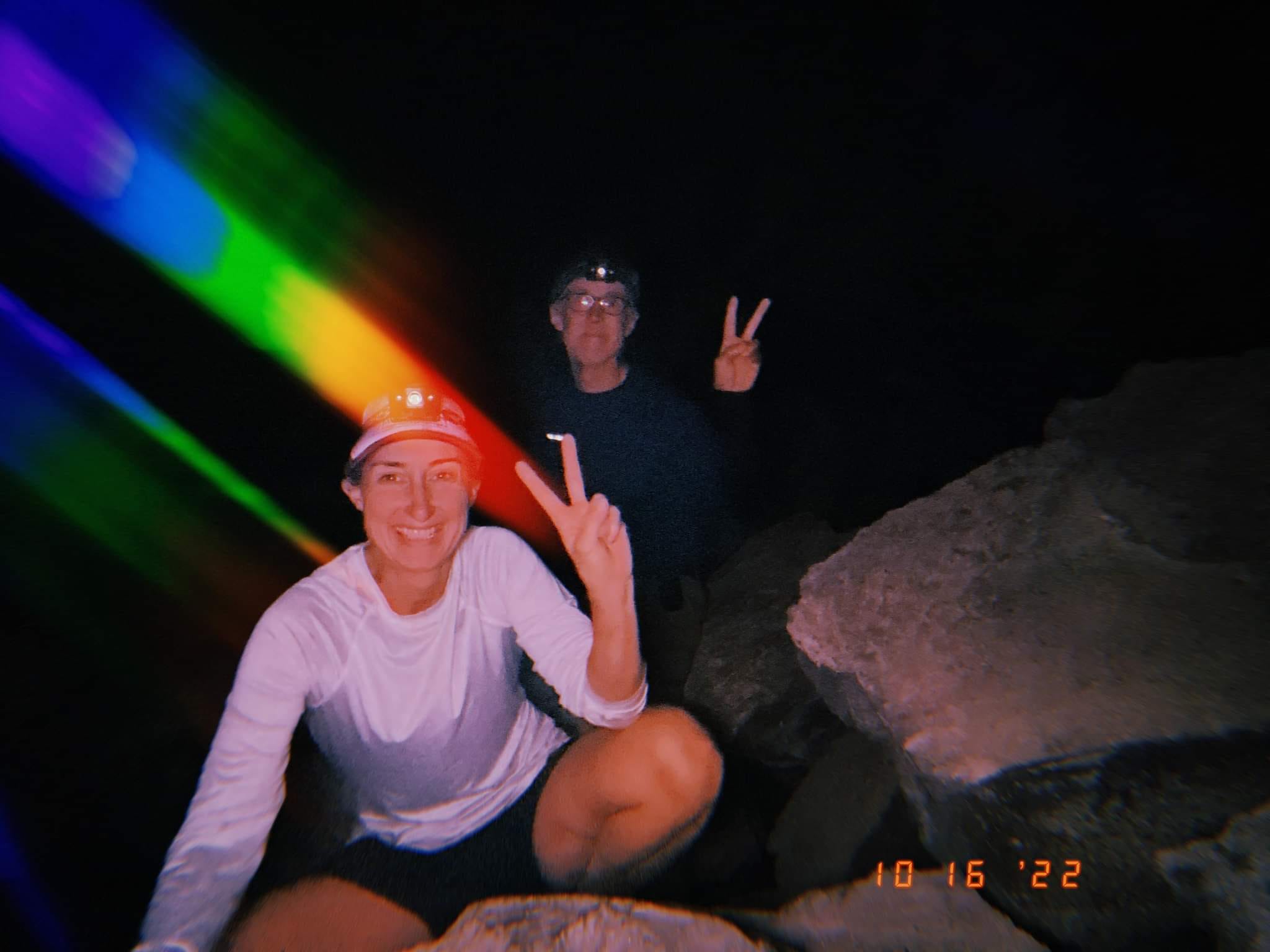
Eventually, we started down. Paula stepped on one of the loose round rocks, lost her footing, and fell. The pain was immediate and severe. Her wrist had broken across and down the end of the bone. She felt nauseous from the pain, and even before we reached medical care, it was clear this was not a minor injury.
Fortunately, we were only about half a mile from the car. We moved slowly, protecting the wrist as much as possible, and then drove to the hospital. They stabilized it in a temporary cast so she could see an orthopedic surgeon after we returned home.
As we sat in the hospital, I thought about the permit waiting for us the next morning. I felt terrible for Paula, but I also knew how rare the opportunity was. I told her I was sorry she could not go. I would hike it alone and take pictures so she could at least see what it looked like.
She looked at me as though I had completely misunderstood the person standing beside me.
She was going.
After leaving the hospital, we went for ice cream and returned to our tent outside Zion. The next morning, we woke early and drove to the trailhead. Her wrist was swollen, blue, and painful. She kept it elevated as much as possible, first in the car and then while hiking.
The Subway trail was not maintained. It began with a steep descent of roughly five hundred feet over rocky terrain. Trekking poles were useful, but Paula could not use them normally with one wrist immobilized. The route crossed uneven ground, downed trees, and fields of giant boulders. There was no simple walkway leading to the view. Reaching it required balance, patience, and repeated decisions to continue.
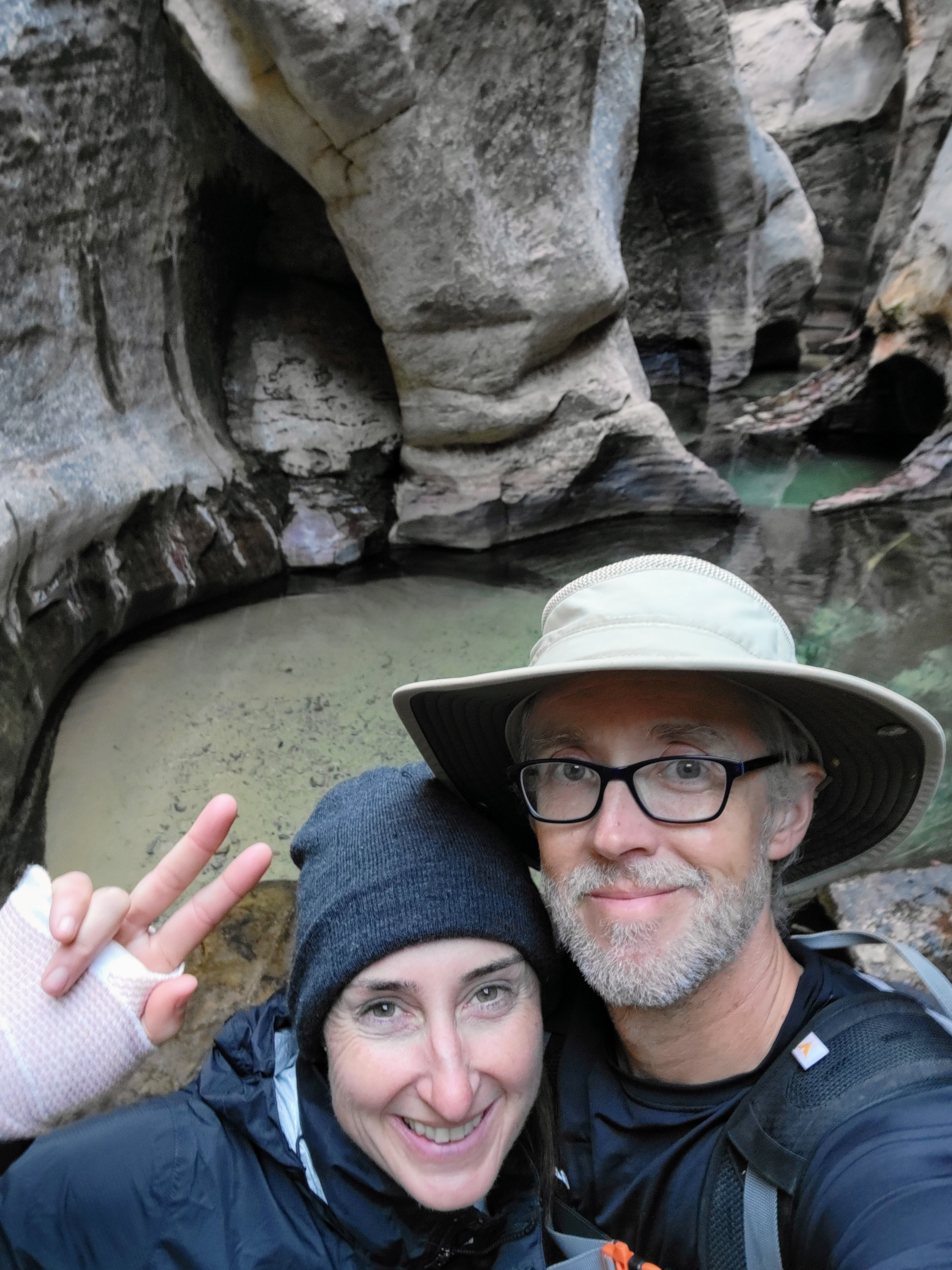
Paula moved through it all. She adjusted. She protected the broken wrist. She accepted that the hike would hurt and refused to confuse pain with impossibility. I watched her carefully, ready to turn around if necessary, but she kept moving forward. There was no performance in it. She did not need an audience. She simply wanted the experience more than she wanted comfort.
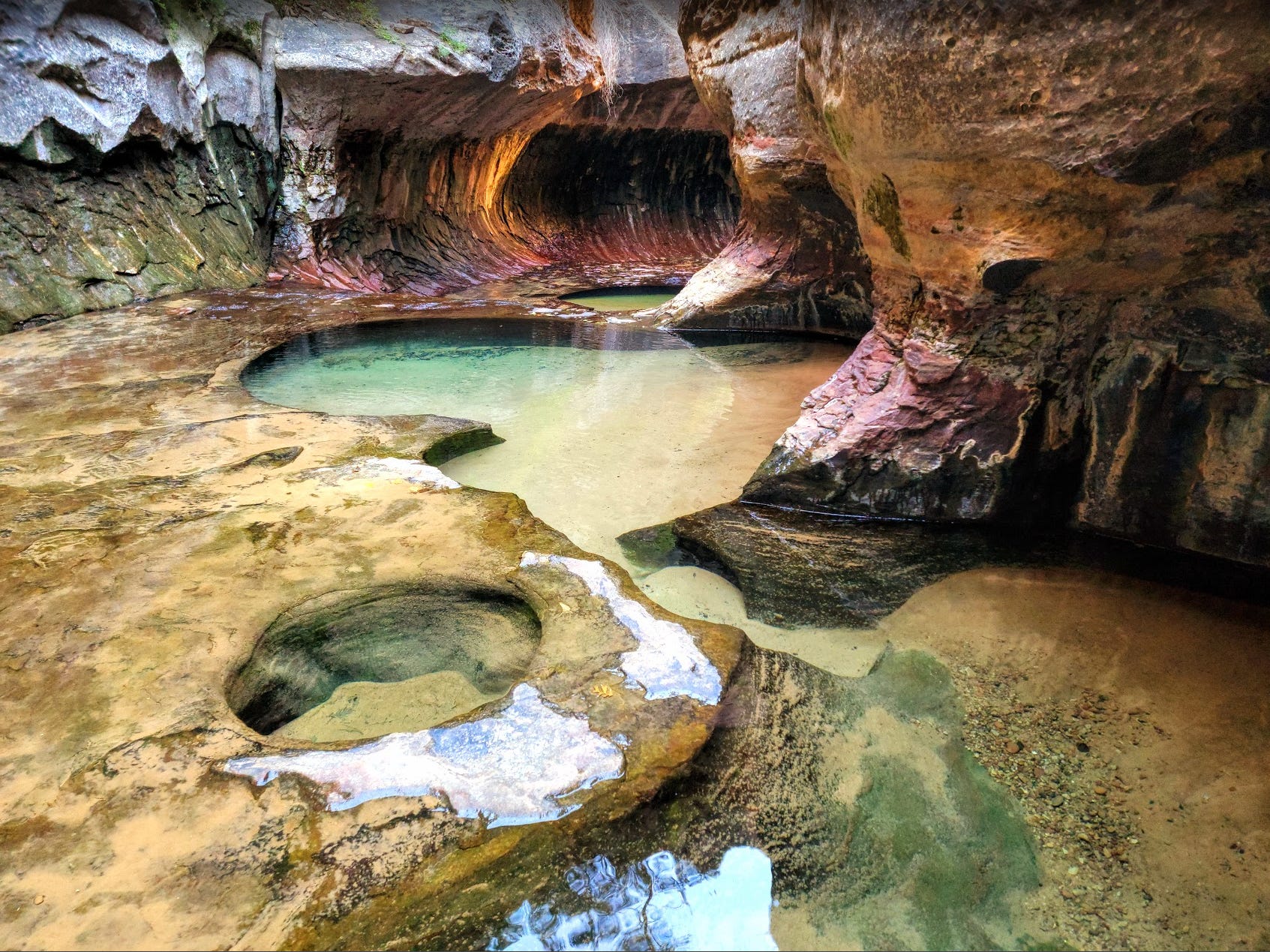
When we finally reached the Subway, it was everything we had hoped it would be. The curved rock formed a tunnel-like passage, shaped by water and time into something that looked almost designed. Because so few people were permitted on the trail, we were alone. The space felt hidden from the rest of the world, a place earned one careful step at a time.
The broken wrist had not ruined the hike. It had become part of what the hike meant.
Paula later said the experience was worth the discomfort a thousand times over. Her wrist healed without surgery. The photographs remain, but the deeper memory is not only what the Subway looked like. It is the sight of Paula moving through that difficult trail with one arm held close, unwilling to let a fall decide the ending of a trip she had worked hard to reach.
We still want to return and approach the Subway from the other end, where the route requires rappelling and swimming through water. That sounds exactly like us: not remembering the injury as a warning to stay away, but remembering the beauty as a reason to go back differently.
Small reflection: A full life is not the same as a comfortable life. Sometimes the cost of a meaningful experience is inconvenience, effort, fear, or pain. The question is not whether discomfort exists. The question is whether what waits beyond it is worth choosing.
What the Lemons Became
Looking back, these stories are not really about snowshoes, horse trailers, wild cats, or broken bones. Those are the details that make the stories entertaining, but they are not the lesson. The lesson is what happened after the plan failed.
The snow was deeper than expected, so we entered a silent world and made the first tracks. COVID erased our destination, so we found a horse trailer glowing with fairy lights and built a weekend around Wyoming. Snow buried our campsite, so we hung between two trees and woke to the tracks of a wild cat. A broken wrist threatened a long-awaited permit, so Paula carried it through the pain and stood inside the Subway anyway.
Every time, life offered us a smaller world. We kept looking for the opening.
I do not want to romanticize hardship. There are losses that need to be grieved, dangers that require us to stop, and injuries that should never be ignored. Courage is not recklessness, and optimism is not denial. Making the best of life does not mean pretending every bad thing is good.
It means refusing to believe that the first disappointment is the whole story.
That refusal has made our life rich. Not rich in money, possessions, status, or ease. Rich in remembered silence. Rich in ridiculous lodging. Rich in tracks around a hammock. Rich in the image of Paula hiking through southern Utah with a freshly broken wrist held above her heart.
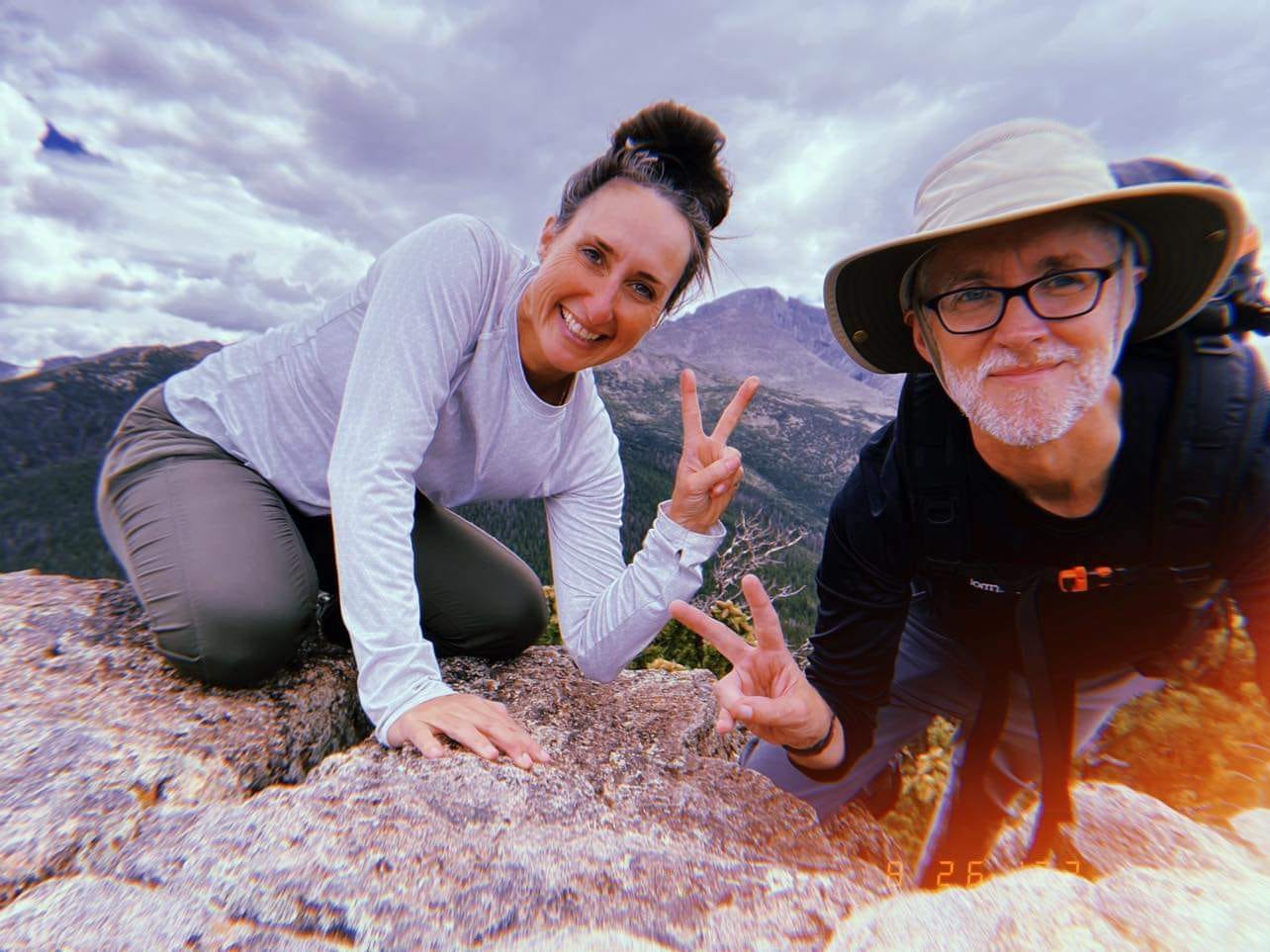
Comfort would have given us fewer stories. Control would have given us a smaller life. The spreadsheet may have pointed us toward the road, but the detours gave the journey its color.
This is one of the things I love most about Paula. She is willing to sacrifice comfort for a fuller life. She does not seek pain for its own sake, and neither do I. But when difficulty appears between us and something meaningful, she asks whether the experience is still possible. More often than not, she finds a way forward.
Together, we have learned that richness is not getting exactly what we planned. Richness is remaining open when the plan changes. It is carrying enough curiosity to explore the alternate route and enough courage to accept that the alternate route may ask more from us.
Life will continue to hand us lemons. Some will arrive as weather forecasts, phone calls, deep snow, chewed shoelaces, or X-rays. We will not always respond perfectly. We will sometimes be disappointed, tired, afraid, or tempted to turn around.
But there will still be a choice.
We can stare at the trip that disappeared, or we can ask what remains possible. We can measure life by comfort, or we can measure it by how fully we entered the days we were given. We can demand that every path match the map, or we can step into the unfamiliar landscape and begin making fresh tracks.
The lemons were never the point.
The life we made from them was.