

I do not travel to escape my life. I adventure because discovery enlarges it. When I was growing up, summer meant bicycles. My friends and I spent nearly every day riding through Carter Lake, the small Iowa city where we lived. Once breakfast was finished, we disappeared into the neighborhood and often stayed gone until dinner. We rode through streets, parks, schoolyards, vacant lots, and anywhere else we could reach on two wheels. We were too young to drive, too young to have money, and far too young to appreciate how good those years really were. What we had instead was freedom.
My bicycle was a chrome Mongoose that I absolutely loved. I received it when I was fairly young, and because I never grew very much during my teenage years, I continued riding that same bicycle until I left for college. Looking back, I probably took better care of that bike than I did some of my cars. It was polished, maintained, and admired regularly. More importantly, it represented independence. If I could reach a place on my bicycle, it felt accessible. The world only extended as far as my legs could pedal, but at that age, that seemed almost limitless.
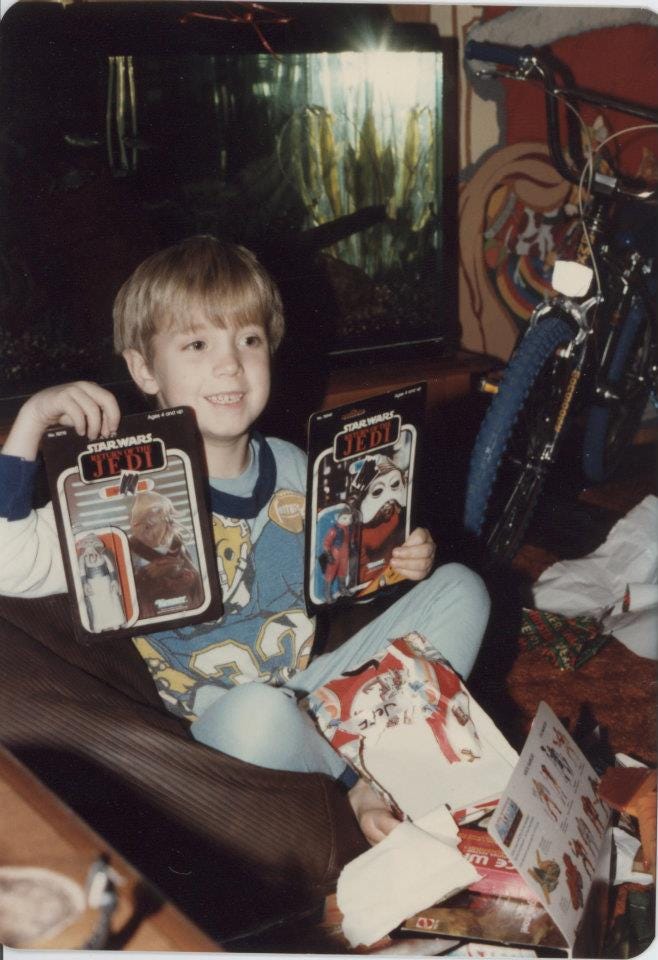
Carter Lake was not a large world. The city had roughly 3,500 residents and occupied only about two square miles. It was small enough that we believed we knew it. We knew the neighborhood streets, the school, the parks, and the houses where our friends lived. We knew which roads were busy, which yards had unfriendly dogs, and which routes allowed us to ride faster without worrying about traffic. When a place is that small, a child can begin to believe there are no mysteries left inside it.
One summer day, one of my closest friends told me he had heard about a place on the northwest side of the lake. The story was vague, which made it more interesting. Supposedly, beyond an area that had not yet been developed, there were woods, dirt hills, and trails where people rode motorcycles or dirt bikes. Someone had heard about it from someone else. Nobody seemed to know exactly where it was, who had created it, or whether we were supposed to be there.
That was enough for us.
Finding an unknown place in another city might have felt adventurous, but the idea that one existed inside Carter Lake seemed almost impossible. How could something that exciting be hidden within the same two-square-mile city where we had spent our childhoods? We believed we knew our surroundings, yet someone was telling us that an entirely different world existed just beyond the streets we normally traveled.
A few days later, we set out to find it. There were no roads leading into the undeveloped area, so we followed a narrow trail that ran beside the lake. In places, the path became little more than a ledge, with the water immediately beside us. Looking back now, it probably was not as dangerous as it felt, but to a boy in late grade school, it seemed as though we were entering unexplored territory. There were no signs telling us where to go and no guarantee that the rumored trails even existed. All we had was a direction, a possibility, and enough curiosity to keep pedaling.
Then the woods opened.
Tucked among the trees was a sprawling collection of dirt trails, ramps, hills, jumps, and banked turns. Paths disappeared into the woods and emerged somewhere unexpected. Large dirt mounds stood like mountains to us. Someone had clearly invested considerable effort shaping the terrain. Today, I suspect dirt-bike riders had built it, probably without permission. At the time, the legality of the place did not enter my mind. The fact that we were not certain whether we were allowed there only added to the excitement.
It felt like utopia.
Until that day, bicycles had meant sidewalks, streets, driveways, and loops around the neighborhood. Suddenly, there were hills to climb, ramps to launch from, and trails leading toward places we could not see. I remember stopping and looking across the area, trying to take it all in. I thought it was the most amazing place I had ever seen. I wanted to return every day for the rest of the summer.
Even now, I can still feel the excitement of that moment. The place itself may not have been extraordinary. If I saw it today, I might recognize a poorly maintained collection of unofficial dirt-bike trails. For that version of me, however, it was an entirely new world hidden inside the tiny city where I lived. Everything felt bigger. Every trail promised something. Every hill concealed another possibility. The world had expanded without requiring me to leave home.
We stayed for most of the day. We rode until our legs ached and our energy began to disappear, then followed the trail home while talking nonstop about what we had found. Over the next several days, we relived the experience. The jumps grew larger in our stories. The trails became more dangerous. The place took on an almost mythical quality. We discussed what we would try the next time, which paths we had not fully explored, and how soon we could return.
Naturally, we went back.
The strange thing was that the place had not changed, but the experience had. The second visit was still enjoyable. We rode the trails, attempted the jumps, and explored the woods. One of my friends got hurt while jumping one of the hills, which changed the tone of the day, but even before that happened, something felt different. The trail along the lake seemed shorter because we knew where it led. The clearing did not surprise us. The turns were no longer mysteries. We knew what waited beyond the next hill.
If the first visit had been a ten, the second was probably an eight. An eight was still good, but it was not magical.
That confused me. The jumps had not become smaller. The trails had not become less interesting. The setting had not diminished. The only thing that had changed was our relationship to it. We were no longer discovering the place. We were returning to it.
I did not yet have the language to explain what I was experiencing. I simply knew that something powerful had been present during the first visit and was already fading during the second. Years later, I would understand that the missing element was novelty. The first visit had awakened every sense. I had paid attention because I did not know what would happen next. The second visit required less of me. Familiarity had already begun replacing wonder.
What stayed with me was not simply the excitement of finding a new place. It was the way discovery enlarged my understanding of the world. That morning, Carter Lake had seemed small, familiar, and completely known. By the end of the day, it contained possibilities I had never imagined. I had followed a trail, entered somewhere unfamiliar, and returned home knowing that my world was larger than I had believed. Years later, I would recognize that same feeling whenever travel introduced me to a new landscape, culture, idea, or way of living. The fulfillment was not merely in seeing something different. It was in becoming slightly different because I had seen it.
There is something extraordinary about a first time. The first time commands our attention. It makes us listen more carefully, look more closely, and remember details that routine would normally erase. It carries excitement, uncertainty, and sometimes a small amount of fear. Our hearts beat faster because we do not know what is around the next corner. We are fully present because the experience has not yet taught us what to expect.
Most people cannot remember much about their drive to work this morning. The route is familiar, the turns are expected, and the surroundings require little thought. Many of us struggle to remember exactly what we did three days ago because ordinary days often blend together. Yet people can remember the first time they saw the ocean, entered another country, climbed a mountain, or stood in a city they had imagined for years. Novelty tells the mind to pay attention because something important may be happening.
My childhood contained only a handful of major trips, but I remember pieces of them with remarkable clarity. My family was lower middle class, and travel required planning, saving, improvising, and occasionally borrowing someone else’s vehicle. Because the trips were limited, they felt significant. They did not blend into one another. Each one opened another part of the world and left behind images that survived long after the ordinary weeks surrounding them disappeared.
South Dakota may have been my favorite. We pulled a rented pop-up camper through the Black Hills and Badlands, landscapes unlike anything I knew at home. The Badlands especially captivated me. Their formations seemed almost otherworldly, as though the earth had opened and revealed another planet beneath the prairie. There was something about the scale, ruggedness, and unpredictability of the landscape that stayed with me. Looking back, I suspect it was an early expression of the same attraction that would later draw me toward mountains.
One evening, my father took us to a stargazing event in the Badlands. He was an amateur astronomer, and the night sky mattered to him. Away from the lights of Omaha, the stars seemed impossibly numerous. They did not appear as isolated points scattered above us. They filled the darkness. Standing among the formations of the Badlands while looking into a sky that seemed to continue forever made me aware of how large everything was and how small our familiar world could be.
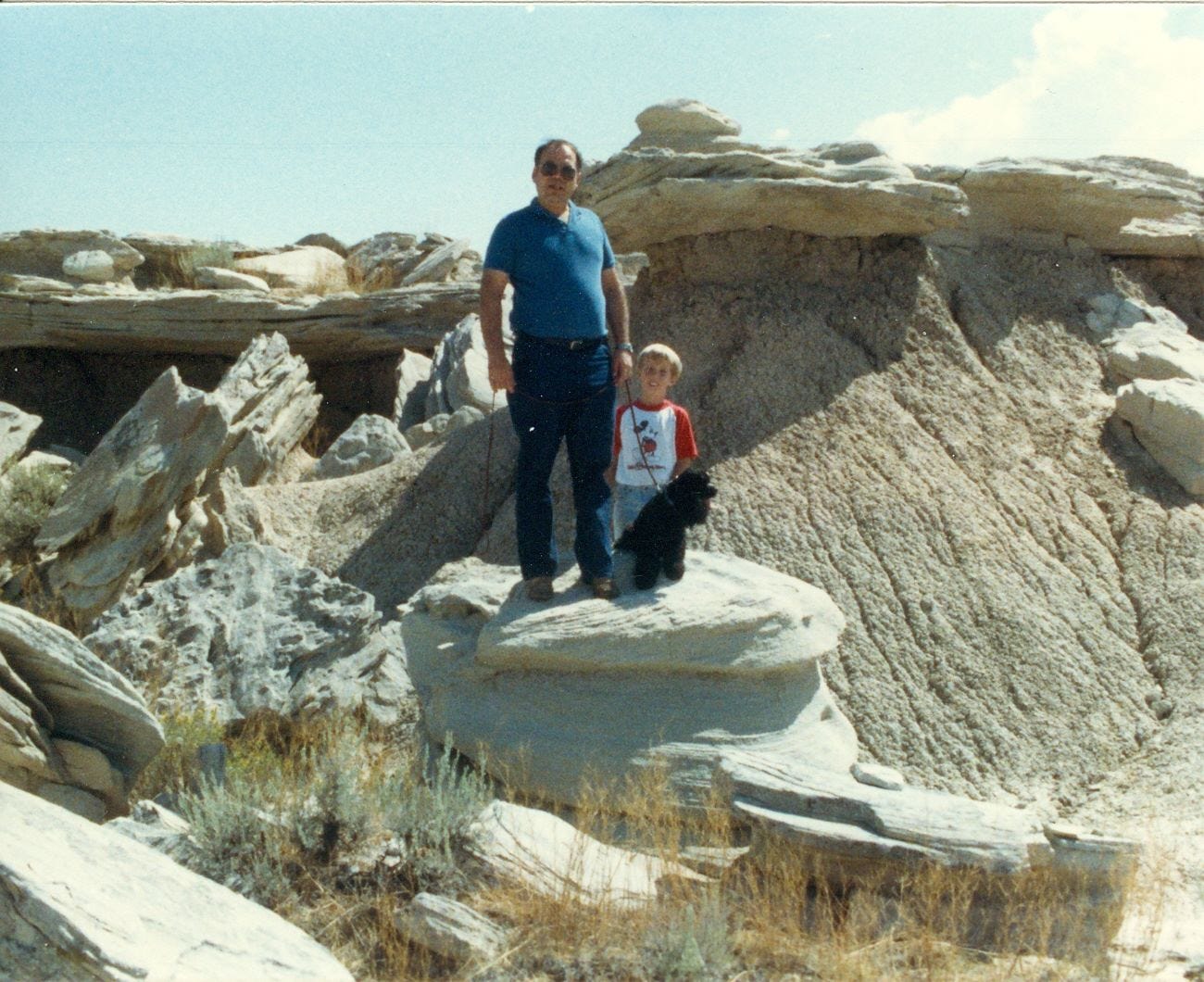
When the event ended, everyone began leaving. That was when we discovered we had no flashlights. After spending the evening looking at stars, planets, and objects millions of miles away, we found ourselves wandering around in the darkness trying to locate our own car. My father could help us identify constellations in the universe, but for a while none of us could identify where we had parked.
Years later, I returned to the Badlands with my daughters. I wanted Natalie and Annabelle to see the formations that had remained in my imagination since childhood. I did not know whether the landscape would affect them the same way it had affected me, but they loved it too. Watching them experience it allowed me to see it differently. The destination was no longer new to me, but their reactions were. My father had once given me that landscape, and now I was passing it forward.
That experience softened one of my early assumptions about travel. A place may not be new, but the person beside you can make the experience new again.
Our trip to Canada required a different kind of creativity. My father borrowed a pickup truck with a topper from one of his coworkers. My parents placed a mattress in the back, gave my sister and me walkie-talkies, and allowed us to ride there all the way to Canada. Today, the arrangement would probably inspire several conversations about seat belts, safety, and responsible parenting. At the time, it felt like freedom. My sister and I had our own private traveling compartment, with a mattress beneath us and walkie-talkies connecting us to our parents in the cab.
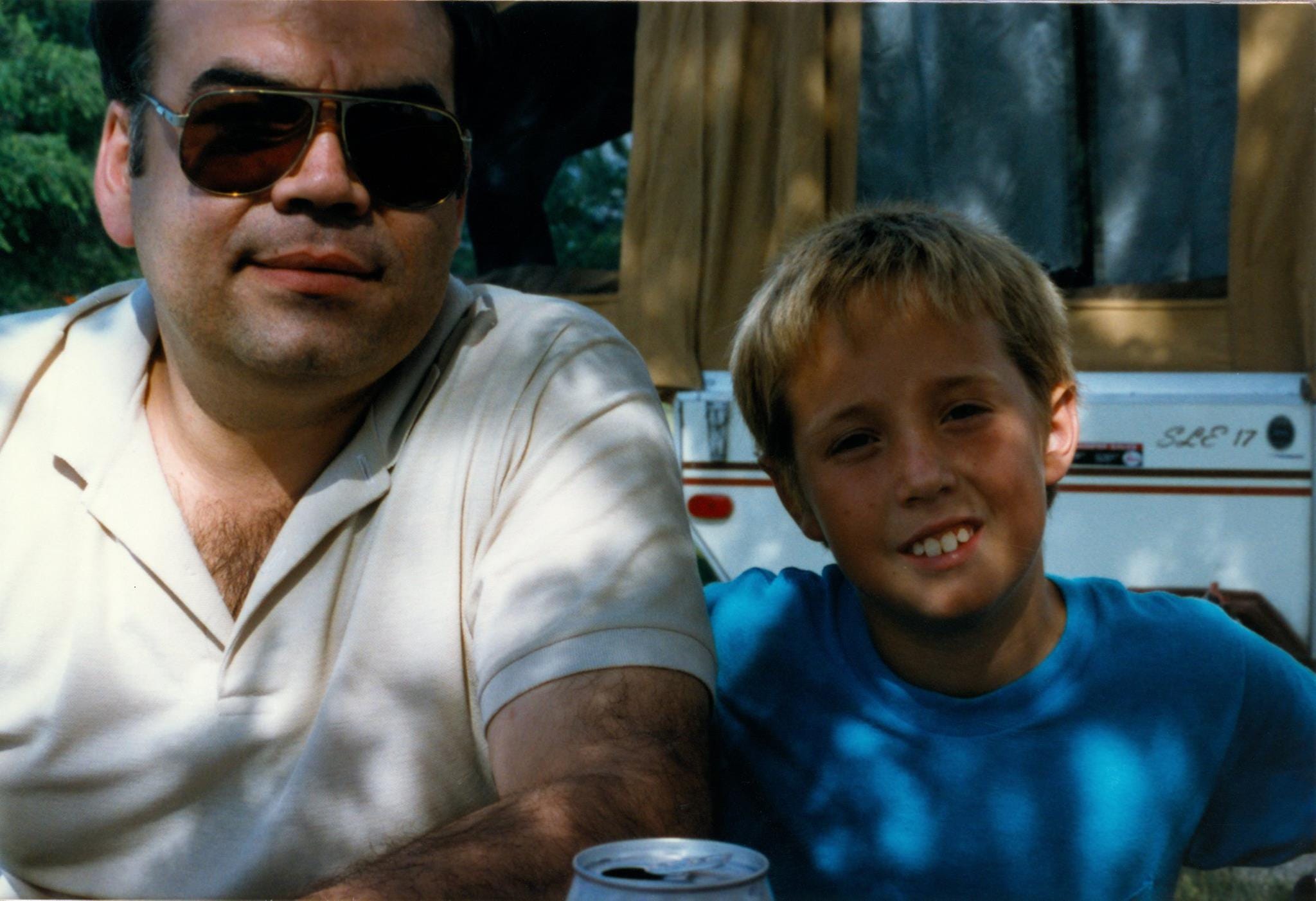
We stayed in a cabin beside a lake and went fishing every day. I remember the water, the cabin, and the rhythm of waking up knowing the day would be spent outside. The trip did not require a famous attraction or an elaborate itinerary. We had crossed into another country and were living beside a lake. For a child who rarely traveled, that was enough to make the experience feel enormous.
Orlando began with considerably more anxiety. It was my first time flying, and I became so nervous that I threw up before the airplane left the ground. Airports and airplanes were entirely unfamiliar to me. The process of checking in, waiting at the gate, and boarding felt larger than life. Flying is now something I do without much thought, but at the time it seemed almost unbelievable that people could enter a metal tube in Nebraska and emerge hours later among palm trees in Florida.
We visited Disney World, but we also traveled to Cape Canaveral and hoped to see a shuttle launch. My father had grown up during the space race, and as an amateur astronomer, he carried a fascination with space that stretched beyond our family vacations. Visiting Cape Canaveral allowed him to stand near the machines, history, and ambition that had captured his imagination for years. I was seeing something new, but I was also watching my father connect with something meaningful to him.
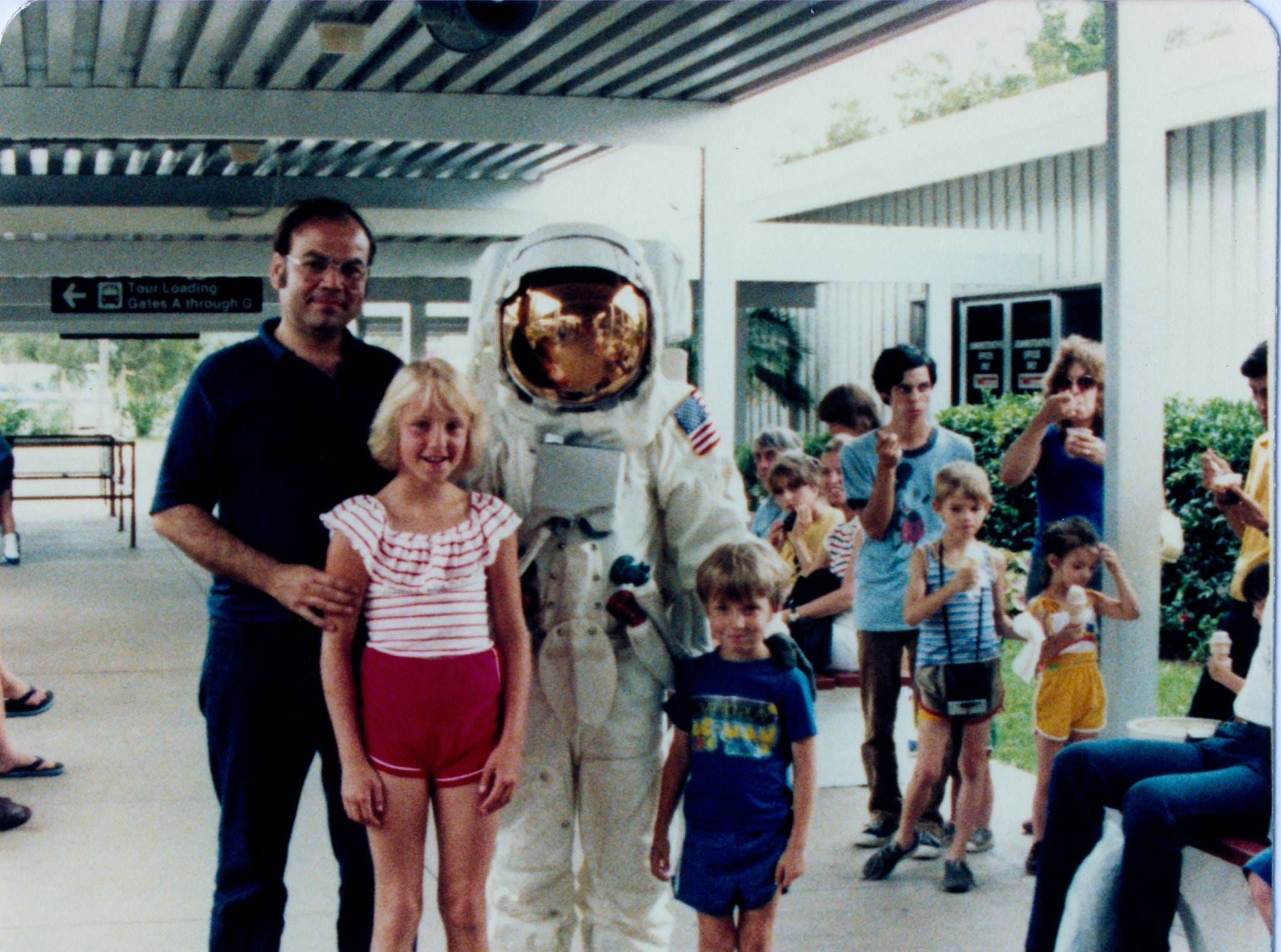
Looking back, I recognize that he was doing what I now try to do with my daughters. He was bringing his children into his curiosity and hoping some of it might remain with us.
Florida also gave me an early encounter with the Atlantic Ocean. I remember swimming at Cocoa Beach and feeling the warmer water around me. Later, during a family trip to San Diego, I encountered the Pacific. The water there was noticeably colder, but I remain grateful that I stood beside and swam in both oceans as a child. Standing at the edge of a continent does something to the imagination. The water continues beyond anything the eye can measure, and the world suddenly feels far larger than the neighborhood where a person began.
In San Diego, we stayed with one of my father’s friends, a bachelor whose life looked unlike any adult life I knew. He had a T-top sports car, a hot tub, a pinball machine, and a sailboat. We visited SeaWorld and went onto the ocean, where my mother became sick, but one of the images that remained with me was the world this man had created for himself.
Even as a child, I remember thinking, this guy is living.
I was not responding only to the sports car, sailboat, or pinball machine. His life appeared self-directed. It was unconventional and organized around things he seemed to enjoy. I did not yet know that I would someday create a Joy List, choose a small apartment over a large house, or build a life around experiences rather than possessions and convention. I simply saw an adult whose life looked different from the model I knew, and some quiet part of me paid attention.
Those childhood trips represented only a small portion of my early life, but they occupy a much larger portion of my memory. The ordinary weeks around them have mostly disappeared. The Badlands remain. The stars remain. The mattress in the pickup remains. Cape Canaveral remains. The two oceans remain.
I was learning. I was discovering. I was fully awake.
Then adulthood arrived and travel largely disappeared from my life. College was demanding, money was limited, and I worked more than forty hours a week while attending school. The years became a cycle of work, classes, studying, exercise, and sleep. I was moving forward, building skills, and accomplishing necessary things, but I was not exploring much. Nearly ten years of my life passed with very little travel.
Eventually I married, and travel returned, although in a different form. My former wife’s extended family vacationed together each year at Nebraska state parks. Later, there were trips using a family timeshare, and we traveled to the same handful of destinations. I genuinely appreciated those experiences. The locations were pleasant, the time together mattered, and the familiarity removed much of the anxiety that can accompany travel.
I began noticing, however, that we were seeking different things. My former family used vacations to relax. They enjoyed sitting together, staying in one place, and allowing the days to move slowly. Many people travel for exactly that reason. They want to escape their responsibilities, sleep later, sit beside a pool, read a book, and return home rested.
There was nothing wrong with that approach.
It simply was not mine.
Even our honeymoon took place at a timeshare we had already visited several times. It was comfortable, pleasant, and predictable. Looking back, it seems almost symbolic of much of my life during that period. My life functioned. It looked good from the outside. There was safety in knowing what to expect.
Increasingly, however, familiar was not enough for me.
After my divorce and the rebuilding of my life, travel became one of the central ways I rediscovered myself. Adventure became intentional. Exploration became a value rather than an occasional opportunity. I began keeping spreadsheets containing destinations, states, trails, parks, museums, cities, and experiences I wanted to pursue. The spreadsheet was not simply a record of where I had been. It was a reminder of how much remained available.
For a period of time, I became determined never to visit the same place twice. Life seemed too short and the world too large. There were too many mountains, cities, coastlines, trails, and communities I had not seen. Every repeat trip seemed to occupy time that could have been used to discover something new.
Over time, that rule softened. There are places worthy of returning to, especially when the people accompanying me change. Sometimes I visit a destination with Paula and immediately think that I need to bring my daughters there. Other times, I take the girls somewhere, learn the place with them, and return later with Paula to experience different activities. A familiar destination can become new through a different relationship. Seeing a place through someone else’s eyes can restore some of its original wonder.
Travel increasingly became less about my own discovery and more about helping the people I love discover.
One of my favorite examples occurred in Boston. We spent a day walking the Freedom Trail, and I loved standing in places where history had happened. My daughters were considerably less enthusiastic. At the time, I suspect they would have traded much of the Freedom Trail for an afternoon at Target. I wondered whether any of the experience mattered to them.
Months later, Annabelle sent me a text message from school.
“Dad, did we stand where the Boston Massacre happened?”
I remember smiling immediately.
Yes, we did.
That question made the trip worthwhile. She had connected something in a classroom to a place where her own feet had stood. The memory had become part of her internal map of the world, even though she had not seemed particularly impressed when we were there.
Travel plants seeds. Sometimes people appreciate an experience immediately. Sometimes its meaning arrives months or years later.
That is one reason I have been so determined to help my daughters visit all fifty states before they graduate. I want them to see the country where they live. I want them to encounter different landscapes, communities, climates, cultures, and possibilities. I want them to discover places that excite them and places that do not. Most importantly, I want them to understand that adulthood offers choices and that the place where they were born does not have to be the place where they remain.
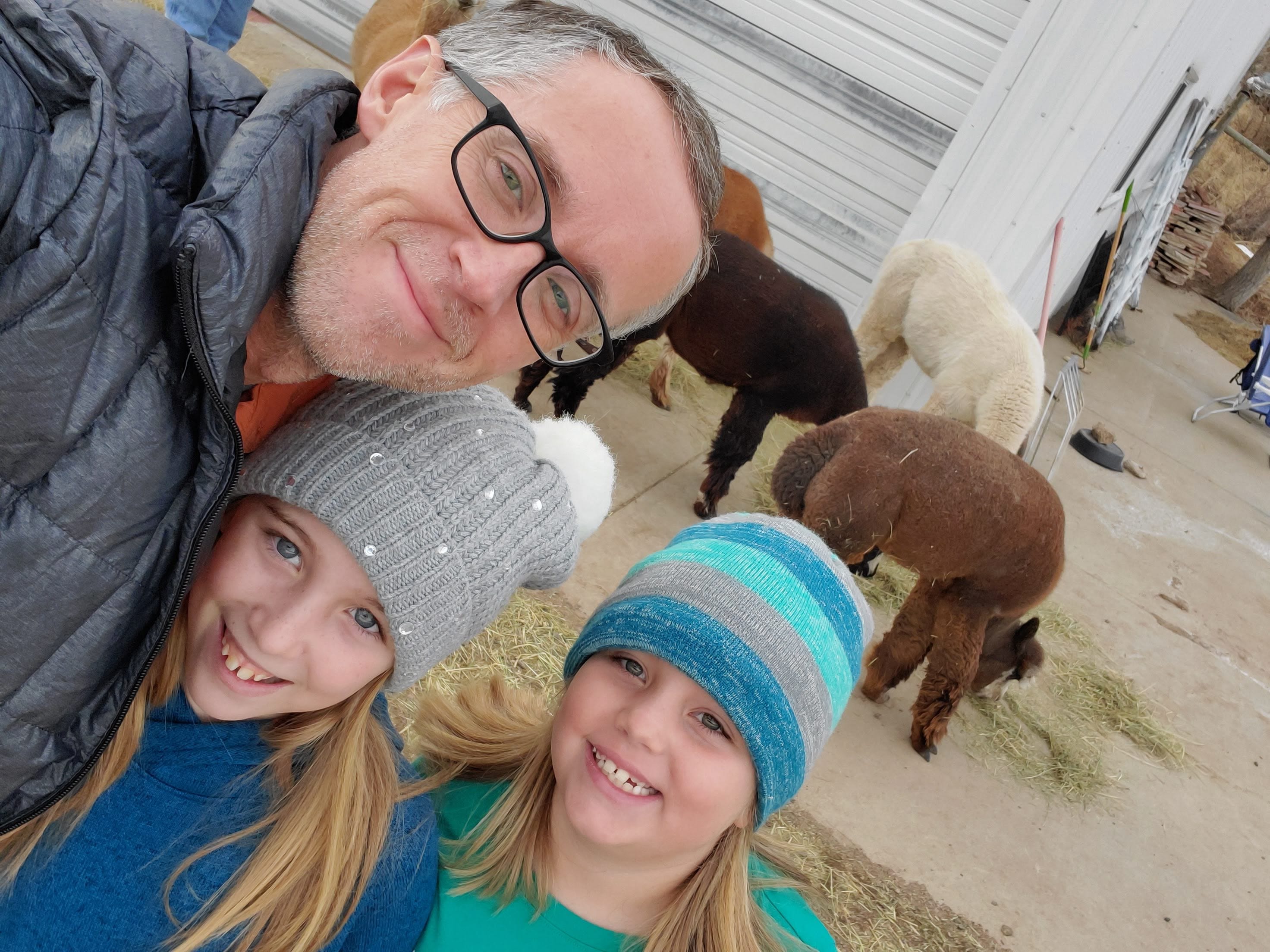
Somewhere out there, a city, mountain town, beach community, or quiet corner of the country may eventually call to them. I want them to recognize it when it does.
I often correct people when they ask whether I am going on vacation. I am not going on vacation.
I am going adventuring.
The distinction may seem unnecessarily precise, but the two words mean different things to me. A vacation suggests rest, relaxation, and a temporary escape from responsibility. Adventuring suggests participation, movement, curiosity, challenge, and the possibility of returning as a slightly different person. I have no objection to vacations. I simply have very little interest in taking one.
If I want to relax, I stay home. Home is quiet, orderly, familiar, and comfortable. Everything is where I expect it to be. There are no bags to repack, unfamiliar roads to navigate, changing weather conditions to evaluate, or twelve-hour days to maximize. Home gives me permission to slow down.
Travel does the opposite.
When I travel with Paula and the girls, we are often awake by five or six in the morning. That allows us to enter parks before the parking lots fill, walk through cities before the sidewalks become crowded, and experience popular places while they are still quiet enough to notice. Unless I am visiting somewhere specifically to rest, sleeping through half the morning feels like surrendering hours I may never have in that place again. I know we may not return, and I want to use the time we have been given.
That does not mean I abandon work or responsibility. Because of the work I do, I travel prepared to operate from almost anywhere. I carry a phone capable of connecting through two cellular carriers, satellite internet, and multiple devices in case one fails or cannot perform the work I need to complete. Sometimes I wake before everyone else and work for several hours while the rental property remains quiet. By the time Paula and the girls wake, I may have answered messages, checked systems, or helped a client. Then I close the computer, gather what we need for the day, and begin exploring.
I do not resent working while traveling. My work and adventures do not need to exist in opposition. The technology I carry provides the freedom to remain responsible without remaining stationary. I may work early in the morning, respond to something along the way, or step aside briefly when someone needs help. Then I return to the trail, city, museum, beach, mountain, or unfamiliar road in front of me.
I am not trying to disappear from my responsibilities. I am building a life in which responsibility does not prevent discovery.
By the end of an adventure, I am usually exhausted. I often return to work physically tired, with laundry waiting, equipment scattered around the apartment, photographs I have not reviewed, and stories I have not fully processed. Yet I would not have it any other way. My body may need rest, but another part of me has been restored. I have learned something, attempted something, seen something, or shared something that did not exist in my life a week earlier.
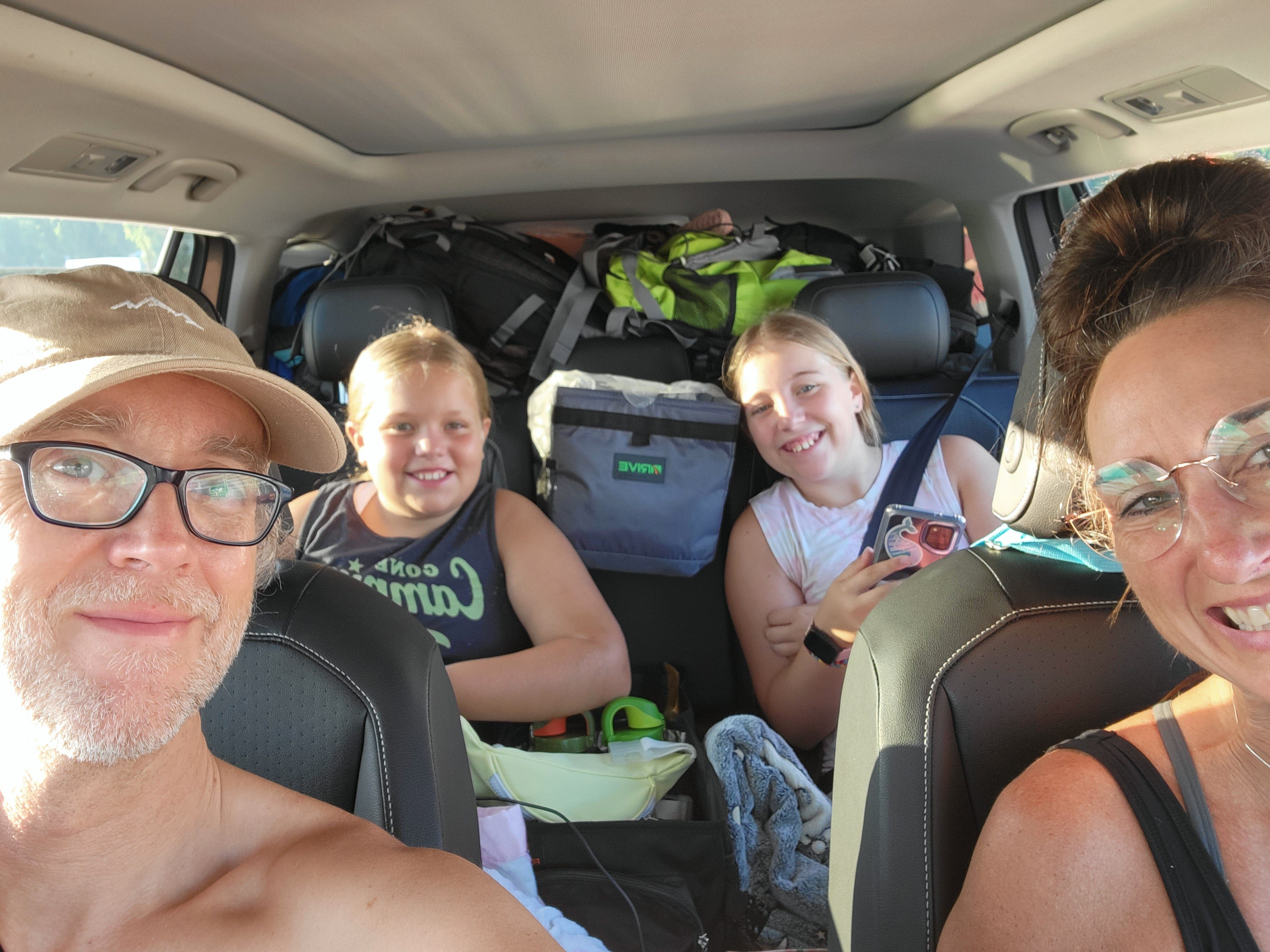
Travel tires my body. Adventure restores my sense of possibility.
The amount of travel in my life sometimes makes people assume we spend extravagantly. The reality is almost the opposite. Most of our adventures are planned far in advance, often a year ahead. They are entered into spreadsheets, coordinated around schedules, placed into budgets, and researched carefully. We usually stay in rental properties, often choosing unusual places that become part of the experience. A small cabin, apartment, converted trailer, or other unconventional property is frequently more interesting and affordable than a traditional hotel.
One of our first stops is usually a grocery store. We prepare many of our meals ourselves and save restaurants for the occasions when the food is part of understanding the place. We want to experience local flavors, but we do not need three expensive restaurant meals every day simply because we are away from home. Careful planning and frugality are what make frequent adventuring possible.
Adventure may look spontaneous in photographs, but much of mine begins in a spreadsheet.
That does not make the experience less adventurous. Planning creates the structure that supports freedom. Because the lodging has been researched, the money has been budgeted, and the major logistics have been considered, I can arrive ready to experience the place instead of worrying about whether we can afford it.
For all my desire to leave, I love returning home almost as much as I love going somewhere new. My small space feels especially comforting after days of constant movement. The familiar arrangement, the quiet rooms, the ordinary routines, and the absence of decisions create a kind of exhale. Travel heightens my senses. Home allows them to settle.
That has become one of the rhythms of my life. Something continually pushes me outward, toward another trail, state, city, culture, or experience. Then something pulls me back. I crave novelty, but I also crave the comfort of the small and orderly space Paula and I have intentionally created. I love waking somewhere I have never been, but I also love returning to the same bed, familiar routines, and the corner of the world that belongs to us.
Perhaps those desires are not opposites. Perhaps they sustain each other.
Home gives me the confidence from which I can leave, and travel gives me the perspective to appreciate coming back. If I never left, I might stop noticing home. If I never returned, movement might eventually lose its meaning. I travel once or twice during many months not because I am trying to escape my life, but because departure and return have become part of its rhythm.
Leaving wakes me up.
Returning reminds me where I belong.
Looking back, the lesson from those hidden trails in Carter Lake was much larger than I understood at the time. What I discovered that day was not merely a place to ride bicycles. I discovered that curiosity can make even a tiny and familiar world become larger. We had not crossed a state line or boarded an airplane. We had followed an unfamiliar path inside the two-square-mile city where we lived.
The first extraordinary destination of my life was hidden near home.
Travel later gave me more opportunities to recreate that feeling. I found it among the Badlands, beneath a sky filled with stars, beside lakes and oceans, in museums and historical sites, at farmers markets, along mountain trails, and in unfamiliar cities. Yet the destination was never the entire point. What I loved was the way discovery commanded my attention. It made me observe, question, learn, and feel.
For years, I believed I needed new places to feel fully alive. Eventually, I understood that new places were teaching me how to pay attention. Novelty awakens us, but curiosity is what keeps us awake. A person cannot live entirely through first experiences. Eventually, every city, relationship, home, and activity becomes familiar. The challenge is not endlessly abandoning what we know. It is learning how to remain present after the newness fades.
That chrome Mongoose is long gone. The trails near Carter Lake have probably changed beyond recognition, if they still exist at all. The small city where I began has become one of countless places on the map of my life.
The lesson remains.
I do not travel to escape my life or rest from it. I travel because adventure enlarges my life. I work, explore, learn, struggle, laugh, become exhausted, and return home carrying experiences that did not exist before I left. Then I settle back into the familiar space I love until curiosity begins pulling me toward the next unknown road.
I am not chasing destinations.
I am chasing discovery.
And every meaningful adventure still begins exactly as it did when I was a boy on a chrome Mongoose, following a trail beside the lake without knowing what waited ahead.
It begins with the pull of the unknown.