

The Story We Cannot See
Over the years, Paula has told me that one of my strengths is compassion. Whenever she says it, I usually laugh a little because it is not a word I would naturally use to describe myself. When I think about compassion, I think about nurses, counselors, social workers, teachers, and people who intentionally dedicate their lives to helping others. I spent most of my career working with computers, networks, businesses, and technology. Compassion never seemed like part of my professional identity.
Yet the more I have thought about it, the more I have realized what she means.
When people disappoint me, I rarely begin with anger. My first instinct is usually curiosity. I find myself wondering what happened. What are they carrying? What fear are they experiencing? What part of their story am I missing?
I suspect some of this comes from my own life. I know what it feels like to be misunderstood.
Most people do not know the experiences that shaped me. They do not know why authority sometimes makes me uncomfortable. They do not know what it was like growing up in a house where confrontation often felt terrifying. They do not know how often I cried when my father challenged me about something. They do not know how deeply those experiences influenced my views about conflict, communication, criticism, and control.
How could they?
They were not there.
Everyone is carrying experiences like that. Hidden experiences. Private experiences. Chapters that explain who they are but that nobody else gets to read.
The older I become, the more convinced I am that the majority of what makes people who they are remains invisible.
The Kite
I think I first learned that lesson when I was a child. The memory is still remarkably vivid.
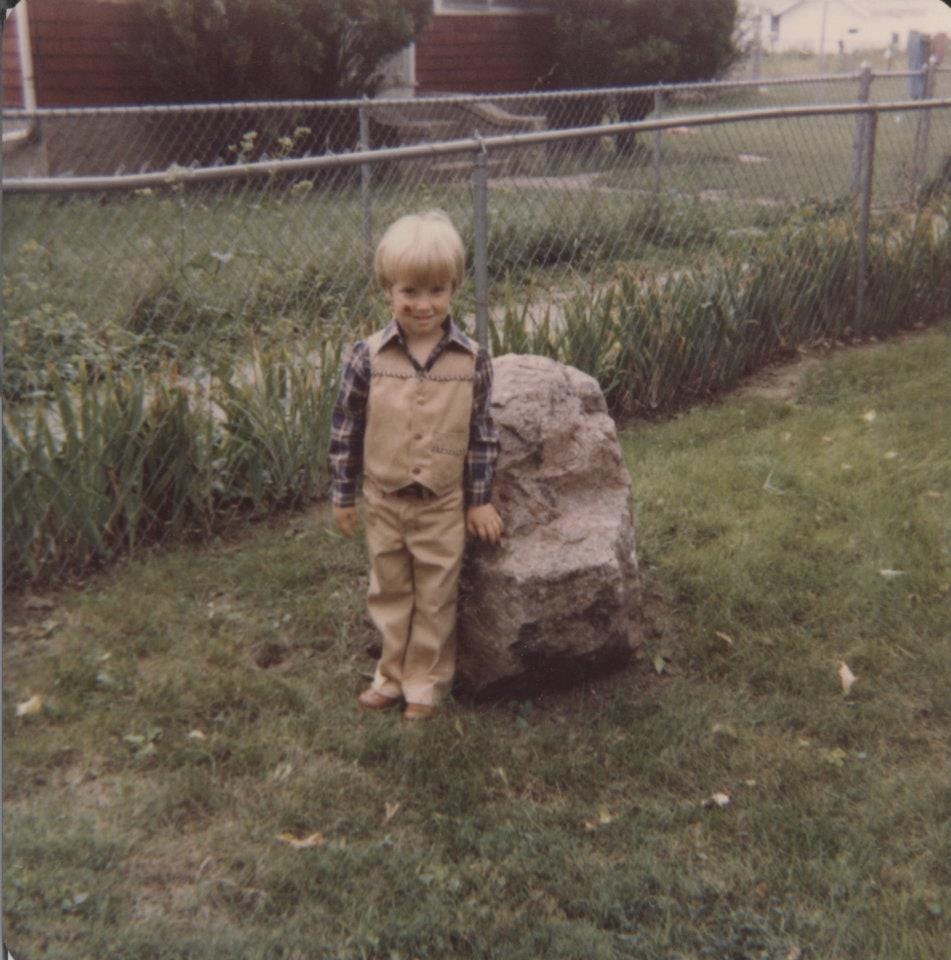
It happened when I was in second or third grade, sometime around the release of Return of the Jedi. Like many children in the 1980s, I loved Star Wars. The movies felt enormous. The characters felt larger than life. The stories were exciting, adventurous, funny, and sometimes a little mysterious. I watched them repeatedly and spent countless hours imagining my own adventures.
I had an Ewok poster hanging on the bulletin board in my bedroom. It was not necessarily because Ewoks were my favorite part of the movies. I simply loved Star Wars, and the poster represented something that mattered to me. At that age, the things we place on our bedroom walls often become little declarations of identity. They tell the world who we are and what we care about.
One afternoon, I came home from school and informed my mother that I needed a kite for school the next day.
The problem was that I had waited until the last possible moment.
The school had apparently announced the activity weeks before, but I had forgotten to mention it. My mother explained that I should have told her sooner. She was not going to run out at the last minute because I had failed to plan ahead.
Looking back, she was trying to teach me responsibility. At the time, I saw something completely different. I was furious.
I remember lying in bed that night feeling sorry for myself. I imagined all of my classmates arriving with colorful kites while I stood there empty-handed. I convinced myself that I was going to be embarrassed. I replayed the conversation repeatedly, becoming more upset each time I thought about it.
The next morning, I walked to school angry with my mother. By the time the kite activity arrived, I was still angry.
Then the classroom door opened. Several parents walked in, including my mother.
The moment I saw her, I felt relieved. I assumed she had changed her mind. She had gone to the store. She had bought a kite. The crisis had been avoided.
Then I saw what she was carrying.
It appeared that she had transformed my Ewok poster into a homemade kite.
My relief instantly vanished. I was horrified.
At eight years old, this felt like a complete social disaster. Other kids would have regular store-bought kites. I would have a homemade Ewok kite made by my mother. I remember feeling embarrassed, angry, and certain that she had somehow made everything worse.
Then we went outside. The kite would not fly. My mother tried. Other parents tried.
They adjusted the tail, changed the angles, tightened parts of the frame, and experimented with different solutions. Everyone seemed determined to make it work.
Nothing worked. The kite never left the ground. The more people tried, the more embarrassed I became.
Eventually, the activity ended, my mother left, and we returned to class. I spent the rest of the day stewing in frustration. By the time I walked home, I was convinced that the entire experience had been her fault.
I went straight to my room. Then something happened that has remained with me for over forty years. I looked at my bulletin board. My Ewok poster was still there. Exactly where it had always been.
Untouched. For several moments, I simply stared at it. Nothing made sense. Then I walked downstairs and found my mother. I asked her where the kite had come from. Her answer changed me.
She explained that she had known about kite day for weeks. She had learned about it through the school. She knew how much I loved Star Wars. She bought another Ewok poster, researched how to make a kite, purchased materials, and secretly worked on it while I was not around.
She was trying to surprise me. She genuinely believed I would love it. She was excited about doing something special for her son. As she spoke, the entire story I had been telling myself collapsed.
I thought she did not care. She cared deeply. I thought she was punishing me. She was planning a surprise. I thought she embarrassed me. She was trying to make me happy. Everything I believed was wrong.
I remember feeling absolutely terrible. Not because of the kite. Not because of the poster. Because I suddenly understood how completely I had misunderstood another person’s intentions.
For days afterward, I thought about it. I remember lying in bed at night replaying the event from her perspective. I imagined her shopping for the materials, researching how to build the kite, spending time assembling it, and anticipating my reaction. I thought about how excited she must have been. I thought about how hard she tried to make it fly.
Then I thought about my anger. I felt awful. More importantly, I learned something.
I learned that my version of a story is not always the whole story.
Years later, another experience reinforced that lesson.
I was fifteen years old and returning from church camp with a couple of friends. On the drive home, we stopped at a sandwich shop downtown for lunch. We ordered our food, sat down, ate, and talked about camp before preparing to leave.
As we walked out of the restaurant, another man exited behind us.
Based on his clothing and appearance, he appeared to be homeless. What I remember most clearly, however, was not how he looked. It was the expression on his face.
He looked genuinely happy. There was an excitement about him that caught my attention.
He carried a sandwich in plastic bag with a brown bag inside of it. For a brief moment, I found myself wondering about his day. Perhaps he had spent the morning collecting enough money for lunch. Perhaps the sandwich represented an accomplishment. Perhaps it was simply the best thing that had happened to him all day.
I did not know. What I did know was that he looked happy.
As he started down the stairs outside the shop, the bag slipped from his hands.
The sandwich landed on the ground. The plastic bag hit the concrete with a crash. Glass shattered.
I turned around and realized the plastic bag contained a paper bag with a glass bottle of whiskey in it.
What happened next lasted only moments, but it has stayed with me my entire life.
I watched his face change. Only seconds earlier, he had looked delighted. Now he looked devastated. The transformation was immediate.
It was as though everything joyful had been drained from him in an instant.
At fifteen years old, I understood enough about the world to recognize that alcohol addiction is a terrible disease. I could make assumptions about how he had acquired the money or how he ended up standing outside that sandwich shop.
But none of that was what stayed with me. What stayed with me was his humanity. In that moment, I did not see a homeless man. I did not see an alcoholic. I did not see a stereotype.
I saw a person. I saw hope. I saw happiness. Then I saw loss. For weeks afterward, I thought about that experience.
I kept returning to the same realization. I knew nothing about him. I did not know what happened in his childhood. I did not know what trauma he experienced. I did not know what mistakes he made. I did not know what losses he carried. I did not know what mental illness, addiction, heartbreak, or circumstances led him there.
What I did know was that he was human. He had feelings. He had dreams. He experienced joy. He experienced pain.
The details of his story remained unknown to me, but his humanity was undeniable.
As the years passed, those experiences gradually changed how I looked at people.
The lesson would eventually be tested in one of the most painful experiences of my adult life.
After my parents sued me, Paula and I met with them at the office to discuss what was happening. The entire situation felt surreal. Anyone who has read the earlier chapters knows how painful that period was. It challenged my understanding of family, loyalty, boundaries, and forgiveness all at once.
As the conversation unfolded, something became increasingly clear. My mother was not driving the lawsuit. She was present, but she was not leading it.
The more I listened and observed, the more I realized she had likely done what she had spent much of her life doing. My father made a decision, presented it as the appropriate course of action, and she followed along.
At first, this realization hurt.
What mother would allow her son to be sued?
What mother would not stand up and refuse?
Those questions sat heavily with me. Then I began seeing something I had not fully understood before. I saw fear. Not momentary fear. Lifetime fear.
I began recognizing that my mother had spent decades adapting herself around a much stronger personality. Some relationships gradually become organized around one person’s preferences, one person’s decisions, and one person’s version of reality. The other person learns to accommodate, avoid conflict, and survive within those boundaries.
Then something remarkable happened.
My mother looked directly at my father and said words I never expected to hear.
“We are not suing our son.”
Then she said, “We are selling this business, and we are going home.”
I remember watching her say it. I remember how terrified she looked. I remember realizing she had probably never challenged him that directly before. For a brief moment, I stopped seeing only my mother. I saw a person.
A person who had carried fear for a very long time.
A person who had been navigating dynamics I did not fully appreciate as a child.
A person who was trying to do something extraordinarily difficult.
The situation became even more complicated because it also changed how I viewed my father.
The lawsuit hurt deeply. It still does. Yet I cannot ignore his story either.
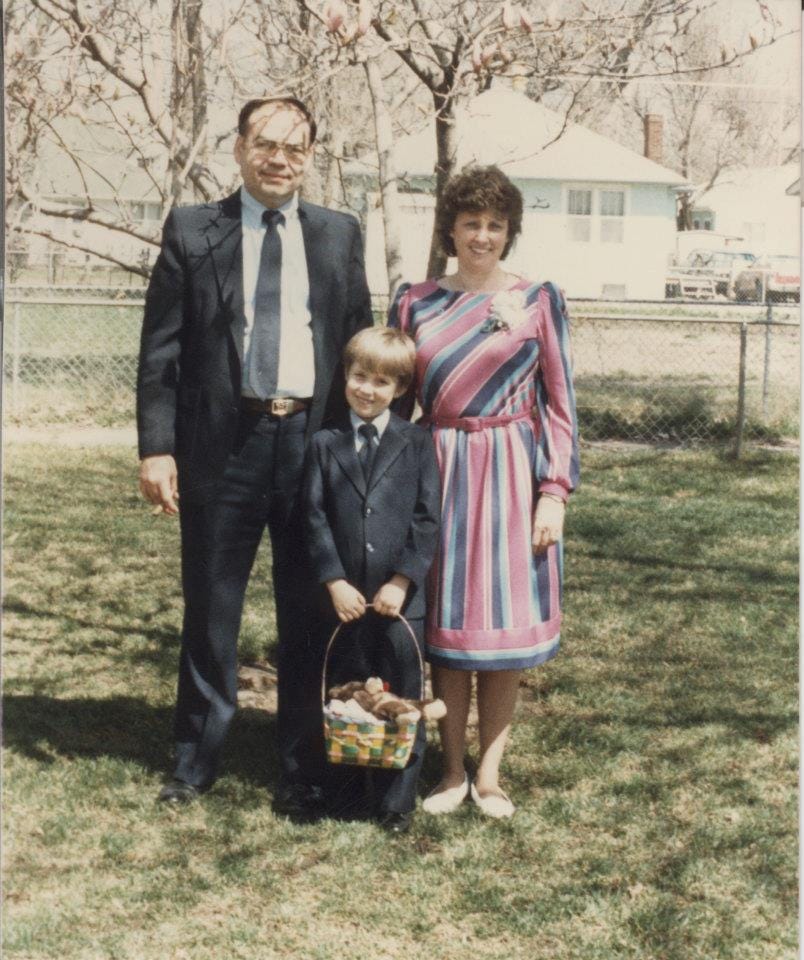
My father grew up poor. He came from a family touched by addiction and mental illness. Through education, determination, and hard work, he created success. He built a business and achieved financial stability.
But I have come to believe that underneath all of that success lived powerful fears.
Fear of losing control. Fear of becoming powerless. Fear of becoming poor again. Fear of losing what he spent a lifetime building. None of those fears excused his decisions. None of them made the lawsuit acceptable.
But they helped me understand it. Compassion is not the same thing as agreement. Compassion does not erase accountability. Compassion does not mean pretending painful things never happened.
Compassion simply means recognizing that human beings are more complicated than our first interpretation of them.
That is why I still have a relationship with my parents. Not because everything is resolved. Not because there is no pain. Not because I forgot.
I have a relationship with them because my mother did not deserve to lose her son and grandchildren due to actions she did not initiate. I have a relationship with them because my father is still a human being carrying experiences, fears, hopes, and wounds of his own.
When I look back now, I realize the lesson of the kite was never really about a kite.
The lesson of the sandwich shop was never really about a sandwich. The lesson of the lawsuit was never really about a lawsuit. All three experiences taught me the same thing. People are real. Their fears are real.
Their hopes are real. Their struggles are real. Their feelings are real.
Money comes and goes. Businesses come and go. Possessions come and go. Success comes and goes. Even the things we spend years protecting are often temporary.
People are different. People matter. People carry entire worlds inside them that we cannot see.
The older I become, the more convinced I am that nearly everyone is fighting battles invisible to the rest of us. Every person has hidden chapters. Every person has joys, fears, failures, regrets, dreams, and wounds that explain far more than we will ever know.
That realization first arrived through a homemade Ewok kite that never flew.
It grew stronger outside a sandwich shop watching a stranger lose something important to him.
And it was tested most painfully when my own father sued me. Through all of it, the lesson remained the same. We rarely know the whole story.
That is why compassion will always be a better place to start than judgment.