

The Shop
Some of my earliest lessons did not come from school. They came from a cinder block building in our backyard that my father simply called “the shop.”
By the early to mid-1980s, personal computers were beginning to appear in homes and small businesses. Before that, computers were mostly found inside banks, financial institutions, and large corporations. They were enormous, expensive machines built from heavy aluminum frames and components that often contained small amounts of valuable metals, including gold.
My father was part owner of a company that installed computer systems for banks. As technology advanced and banks replaced their older equipment with smaller systems, the retired machines were often carried out of the buildings and discarded in dumpsters behind the office.
Most people saw obsolete equipment.
My father saw opportunity.
A man from our church in Carter Lake owned a metal recycling business across the river in Council Bluffs. That connection gave my father an idea. If the old computer equipment contained aluminum and gold, then it was not really garbage. It was simply value that had not yet been separated from everything surrounding it.
My father built the shop in our backyard from cinder blocks. It had gas heat, which made it comfortable during the winter, although Nebraska summers could still turn it into an oven. It was part workshop, part salvage operation, part classroom, and eventually one of the places where I spent much of my childhood.
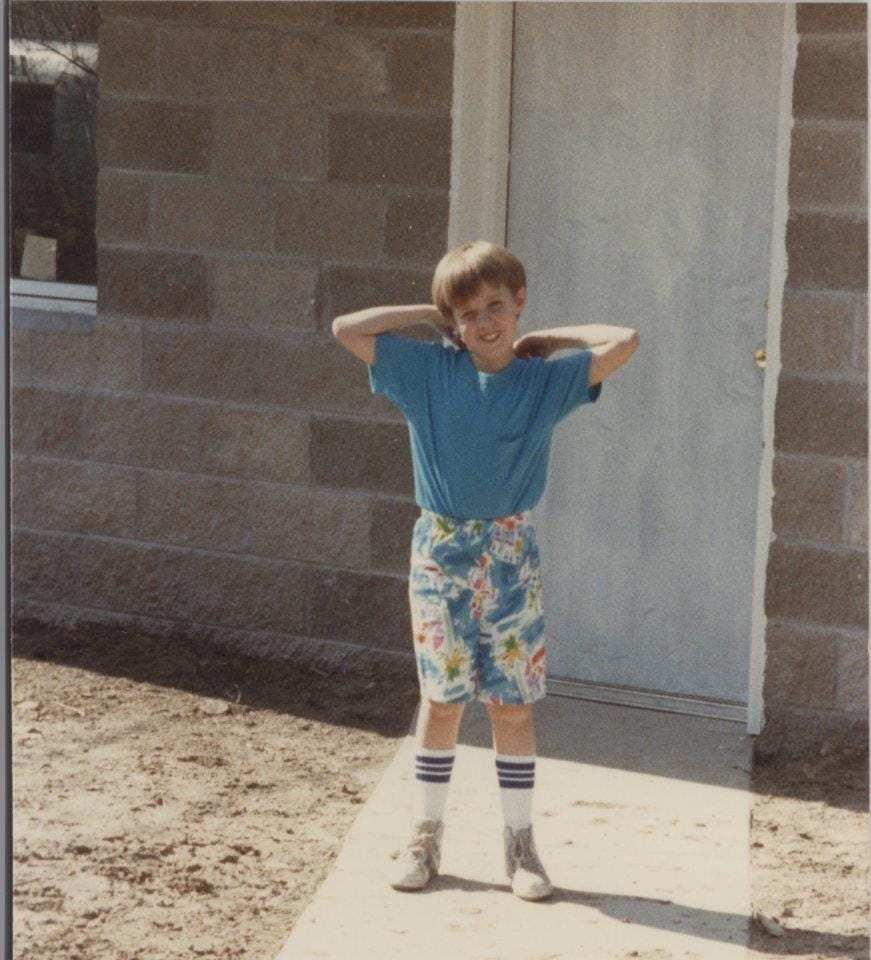
Old banking equipment began appearing at our house. Some of the hard drives were nearly the size of car tires, and the aluminum frames were large and heavy. These machines had once processed financial transactions and stored important information, but by the time they reached our backyard, their usefulness had been reduced to the value of their individual parts.
My father taught me how to take them apart. Sometimes that required screwdrivers and pliers. Other times it required a hammer and enough determination to separate two pieces that had never been designed to come apart easily.
I removed components from aluminum chassis, separated circuit boards, and pulled gold-plated contacts from equipment that had once cost more money than I could imagine. What looked impressive when assembled became piles of metal, screws, circuit boards, wires, and plastic when taken apart.
I learned how much value could be hidden inside something other people had thrown away.
That lesson extended beyond computers, although I did not understand it at the time. My father knew that value did not disappear simply because someone else had stopped seeing it. Something could be old, discarded, or no longer useful in its original form and still contain pieces worth saving.
Gold Hidden in What Others Discarded
I spent months separating gold-bearing components from everything around them. It was slow work, the kind that demanded more patience than strength. Eventually, the money from that work paid for my first telescope.
I remember being proud of that telescope because it was not simply handed to me. I had earned it one discarded computer at a time, pulling small pieces of value from machines other people had decided were worthless.
The telescope allowed me to look toward the stars, but the shop had already taught me where to find possibility.
Work created options.
Sometimes we loaded the aluminum into a truck and drove it to the recycling center. The material was weighed, and a check was written for its value. Occasionally, my father allowed me to keep the check, and the money was deposited into my savings account.
At least it remained there for a while.
Eventually, much of that money was taken from my account and used to help purchase a computer company. My father left his partnership in the banking computer business and moved into commercial and retail computers. I was still young and did not fully understand what it meant to buy a company or risk savings on the possibility of building something larger.
I remember helping paint the walls of a new computer store in Bellevue while we listened to Husker football. The voices of the announcers filled the unfinished space while we rolled paint onto the walls. The store did not look like much yet, but my father could already see what it might become.
Looking back, I realize that I was watching entrepreneurship before I knew the word for it. I saw that businesses did not appear fully formed. They were built from risks, long hours, discarded equipment, savings accounts, painted walls, and the belief that something more could be created from what was already available.
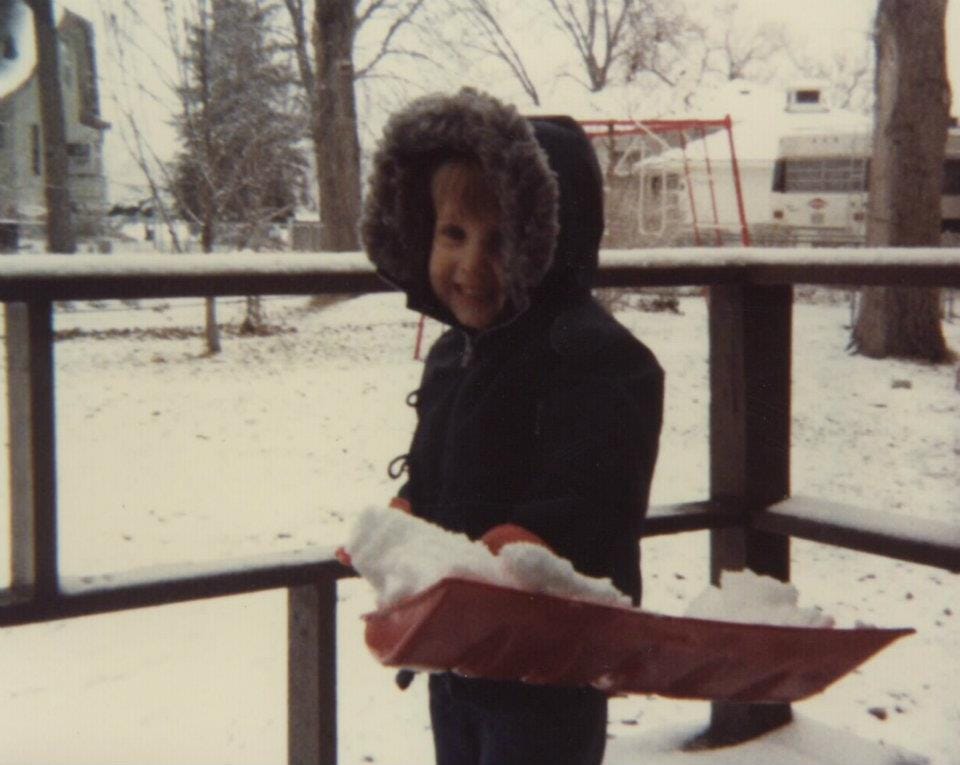
As I grew older, I eventually worked at the computer company doing odd jobs and warehouse work. Before that, much of my childhood labor happened in the shop. When I was not dismantling old banking equipment, I usually found something else to do with my hands.
Learning to Build
I loved woodworking.
There was always scrap wood somewhere in the shop, and I rarely saw it as scrap. I saw pieces of chairs, cabins, toys, decorations, or miniature versions of objects from the full-sized world. I would search through the piles for the right pieces and imagine what they could become.
I learned to use a drill press, saws, sanders, and other woodworking tools. I became comfortable in the shop, not because anyone gave me formal lessons in craftsmanship, but because I had an active mind and time to experiment. I learned through trial and error, which meant there was plenty of both.
I would spend hours cutting, sanding, fitting, and fastening pieces together. The objects I made were probably crude by any professional standard, but I saw them as little masterpieces. They had not existed before I imagined them, and that was enough to make them important to me.
Creation made me feel capable.
One day, I was working on a wooden toy or miniature. I no longer remember exactly what I was making, but I remember how much time I had invested in it. I had selected the wood, cut the pieces, sanded the edges, and slowly watched the project take shape.
The Hammer
Then I drove a nail into one of the pieces.
The wood split.
It was a small failure, but it did not feel small. In that moment, I did not see a piece that could be replaced or a mistake that could be repaired. I saw hours of work ruined by a single swing of a hammer.
Frustration rose quickly, followed by anger. Before I had time to think, I lifted the hammer and slammed it down onto the project.
The blow destroyed far more than the split piece of wood. The project broke apart, pieces flying off the workbench and onto the concrete floor. Whatever the nail had not damaged, my anger finished.
Then one of the broken pieces flipped.
A nail drove into my hand.
The pain arrived immediately, sharp and throbbing. Blood began to appear around the wound as I sat on the floor of the shop, surrounded by the remains of something I had once been proud to build.
A few seconds earlier, I had one problem.
Now I had several.
The wood had split, the project was destroyed, and my hand was injured. The burst of anger had felt satisfying for perhaps one second. Then the moment passed, leaving only the consequences behind.
Sitting on that concrete floor, I had one of those childhood epiphanies that would remain with me for the rest of my life. My anger had not repaired the wood, recovered my time, or made the situation fair. It had only enlarged the damage.
Anger had promised relief.
It delivered destruction.
What stayed with me was not simply that I had lost control. It was how quickly one act of uncontrolled anger had transformed disappointment into something worse. The split wood had been an accident, but everything that followed had been my choice.
That distinction mattered.
I had been surrounded by enough anger to recognize its pattern. My father struggled with rage, and there were times when the entire atmosphere of our house changed according to his frustration.
Tax season was one of those times. For a week or two, while the taxes were being prepared, I tried to make myself as invisible as possible. I kept my bedroom and bathroom clean, watched everything I did, and made certain that I did not provide a reason for his frustration to land on me.
I could hear my mother downstairs trying to keep him happy. I could hear the raised voice and feel the tension even from another room. She was always doing her best to maintain peace, but peace built around avoiding someone’s anger is fragile.
A child learns to read a house.
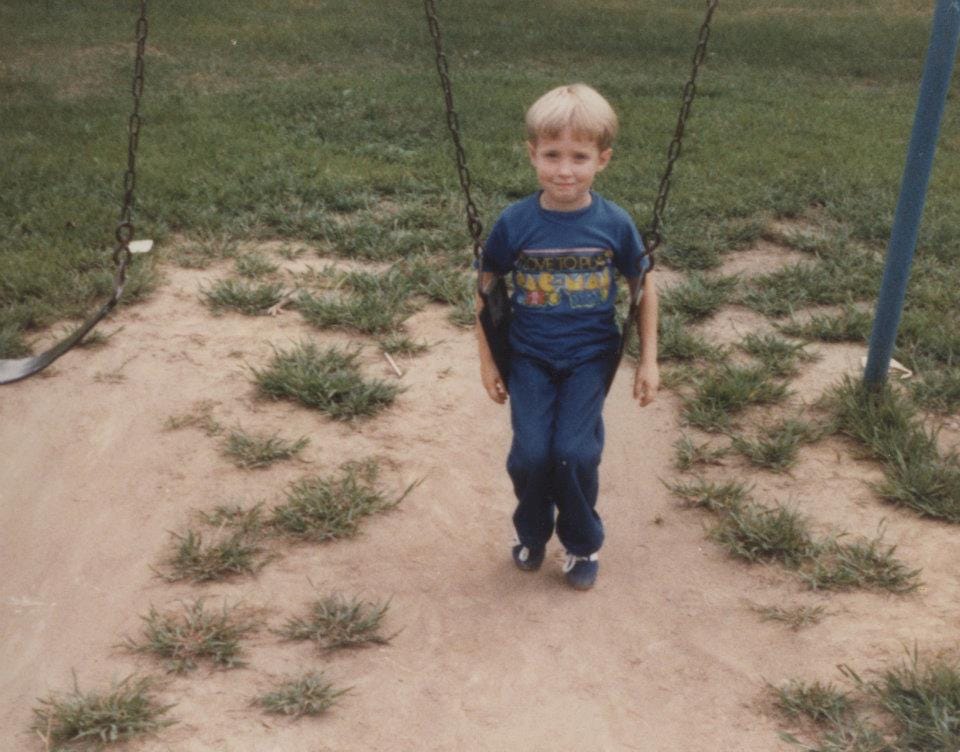
He learns the meaning of footsteps, the weight of a door closing, and the emotional temperature of a room before anyone speaks. He learns what needs to be clean, when to remain quiet, and how to take up as little space as possible.
I did not have the language to explain any of that at the time. I only knew that one person’s frustration could spread through an entire house and change how everyone else behaved.
Anger rarely remains with the person who creates it.
It moves.
It passes from a father to a mother, from a parent to a child, and from one wounded person to another. It makes everyone nearby responsible for preventing an explosion they did not create and could not control.
I believe that is one reason I do not often yell or scream in anger as an adult. I know what it feels like to be on the receiving end of someone else’s emotional storm. I understand that raising my voice might release something inside me, but it also forces the people around me to carry it.
That does not mean I never become angry. I do. Anger is a human emotion, and pretending not to feel it does not make it disappear. The lesson was never that anger itself made me bad.
The lesson was that anger should not be given control of my hands, my words, or my choices.
A few years after the incident in the shop, I learned another version of that lesson. I was in eighth grade and rode a school bus from Carter Lake to Council Bluffs. One day, I boarded the bus holding a baseball card, probably because I wanted to show it to one of my classmates.
As I walked down the aisle, a school bully grabbed my hand and crushed the card. I do not remember which player was on it or whether the card had any monetary value. I only remember that it belonged to me, I cared about it, and he ruined it simply because he could.
I must have given him a frustrated look or said something in response. I was a shy and quiet boy, but even quiet boys have limits. Whatever I did, it was enough for him to announce that he was going to beat me up when we got off the bus.
For the next fifteen minutes, I sat there thinking about what I should do. I did not imagine myself winning a fight. I imagined escaping one.
My plan was simple.
Run.
When the bus reached the stop before mine, I got off and started running toward home. Unfortunately, I carried a lot of schoolbooks, and my backpack made me considerably slower. The bully got off with one of his friends, and the two of them chased me.
Eventually, they cornered me. I dropped my backpack, looked at them, and made the most practical decision I could think of. I dropped to the ground and curled into the fetal position, protecting my head and neck.
The bully walked over and kicked me several times. He called me names, probably the same ones boys used whenever they wanted to shame another boy for being smaller, quieter, or different. Then he and his friend walked away.
That was the first and only fight of my life.
I picked up my backpack, dusted myself off, and walked home. My body hurt, but my pride probably hurt more. Even so, I did not regret refusing to fight him.
At the time, I only knew him as a bully. Later, I learned that his story had begun long before he crushed my baseball card. He came from an abusive family and lived with a physical disability connected to what he had endured.
Knowing that did not justify what he did to me. Pain does not grant anyone permission to create pain for someone else. But understanding his history changed the way I saw him.
He was still responsible for kicking me.
He was also a child who had been taught that power looked like violence.
Years after high school, I saw him again at a sandwich shop in downtown Omaha. He was selling drugs. I do not know what happened in all the years between the school bus and that encounter, but when I looked at him, I did not feel the revenge I might have expected.
I felt sorry for him.
The boy who had once made me feel powerless had grown into a man who still appeared trapped inside the life that had wounded him. Whatever anger had been handed to him as a child had not protected him. It had followed him.
I do not know where he is today. I do not know whether he eventually found stability, healing, or peace. I hope he did, because no child should have to survive the childhood he endured, and no adult should have to carry it forever.
For many years, I might have told these as separate stories. One was about salvaging old computers. One was about earning a telescope. One was about destroying a woodworking project, and another was about being kicked by a bully.
But they were all teaching me about the same thing.
The shop taught me that strength could be used in two very different ways. I could use my hands to dismantle, separate, build, sand, paint, and create value. I could also use those same hands to destroy something in a moment of rage.
The difference was not strength.
The difference was choice.
My father gave me a work ethic, resourcefulness, and the ability to see potential where other people saw waste. He showed me how to create value from what had been discarded and how to build something from what was available. Those lessons helped shape the person I would eventually become.
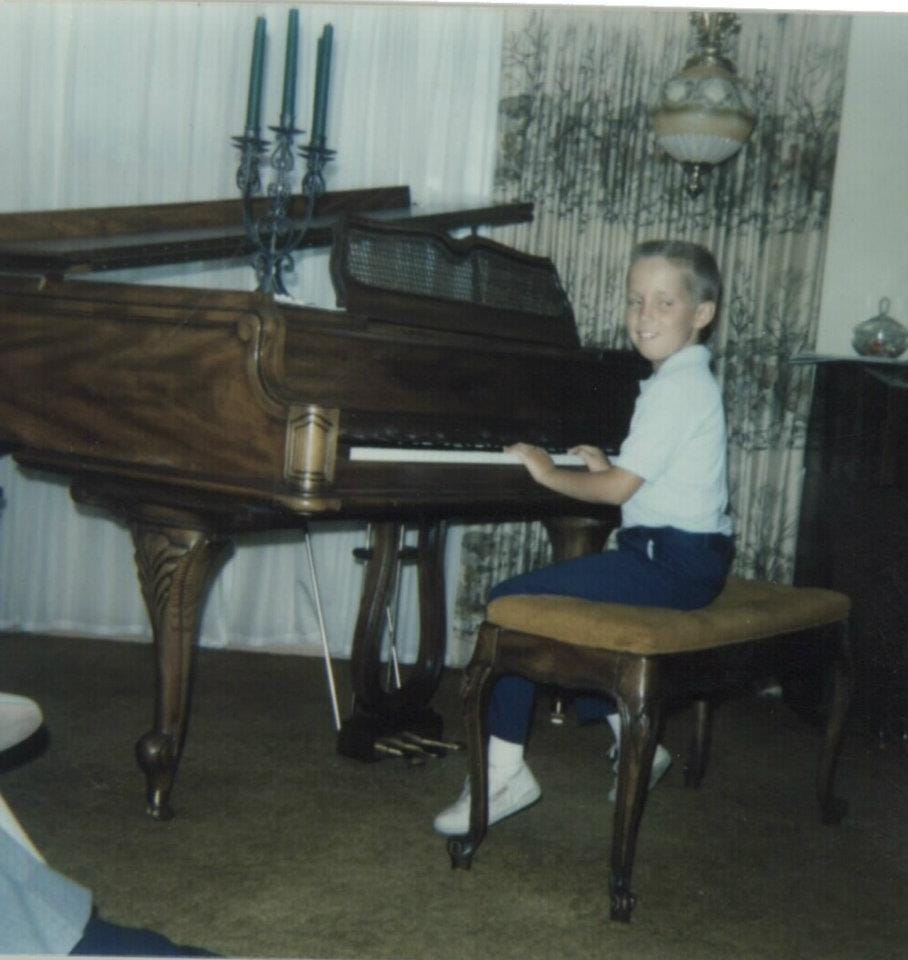
He also showed me, even if unintentionally, what anger could do to a home. I learned how one person’s frustration could become everyone’s burden, and how quickly the people closest to us could be wounded by emotions they did not create.
Both lessons became part of my inheritance.
But inheritance is not destiny.
We do not choose everything handed to us. We do not choose our beginnings, our parents, our childhood wounds, or many of the experiences that shape us before we are old enough to understand them. We do, however, have some say in what we carry forward.
Looking back now, I realize that I have spent much of my life doing what I first learned to do in that shop. I have been separating things. Sometimes it was gold from scrap. Sometimes it was truth from assumptions. Sometimes it was the parts of my childhood worth carrying forward from the parts that needed to be left behind.
The skill remained the same.
Only the material changed.
The older I get, the more I understand that life is not only about what happens to us. It is also about what we choose to keep. We are all handed pieces of other people, and some of those pieces are gifts while others are wounds. Sometimes they are both at once.
My father was both.
He gave me determination, curiosity, resourcefulness, and a strong work ethic. He gave me the ability to see possibility where others saw waste. I did not need to deny those gifts in order to acknowledge the fear and tension his anger sometimes created.
I could keep the work ethic without keeping the rage. I could inherit determination without inheriting intimidation. I could learn from my father without repeating every part of him.
That may have been the most important thing I ever built in the shop. It was not a wooden toy, a pile of salvaged aluminum, or enough gold to buy a telescope. It was the beginning of an understanding that I did not have to become every behavior I witnessed.
That understanding would follow me into the rest of my life. It would influence how I viewed family, identity, forgiveness, relationships, and love. It would eventually help me understand that being shaped by the past did not require remaining trapped inside it.
The bully had been handed violence and passed it forward. My father carried anger that sometimes spilled into our home. For one brief moment, I passed my own anger into a piece of wood, and the nail in my hand showed me exactly where that path led.
Pain can be inherited.
So can the decision to stop passing it on.
The telescope disappeared somewhere along the way, and I cannot remember what became of most of the things I built from scrap wood. The old banking computers were reduced to metal, the computer store became part of another chapter, and the wound in my hand eventually healed.
But the lesson remained.
In that small cinder block shop, I learned how to find value inside something that had been discarded. I learned how to separate what was worth keeping from what no longer served a purpose. It took me many more years to realize that the same process could be applied to a childhood, a family, and a life.
Not everything we inherit deserves to be preserved.
Not everything broken should be thrown away.
The wisdom is knowing the difference.
My father taught me how to separate gold from scrap. Life taught me to do the same with everything he gave me.
I kept the determination.
I kept the curiosity.
I kept the work.
I left the rage behind.
Real strength was never the hammer coming down.
It was learning when to put it down.