

When I first contacted Helen, I assumed the hardest part of the journey would be finding her. For thirty-five years she had existed somewhere beyond the boundaries of my life, present in my imagination but unreachable in every practical sense. Once I had her name, however, the search moved quickly. A birth certificate led to Google. Google led to the University of Idaho. A private investigator confirmed what I had already begun to suspect. Then one carefully written email traveled from Nebraska to Idaho and reached the woman I had wondered about since childhood.
Finding her turned out to be surprisingly easy.
Understanding her was something else entirely.
A few days after sending my first email and receiving her response, we began exchanging messages regularly. What started as a cautious introduction quickly evolved into something neither of us expected. The emails became longer, and then longer still. A simple question might generate several pages of response. One story led to another. Family history gave way to philosophy. Philosophy turned into opinions about education, nature, government, politics, relationships, travel, and the choices people make when deciding what kind of life they want to live.
Most people probably would have picked up the telephone. We did not. Perhaps we both needed the distance that writing provided. A telephone conversation happens immediately and then disappears, leaving only impressions and fragments behind. An email could be written carefully, read more than once, and revisited after the emotions settled. It allowed both of us to determine how much of ourselves we were prepared to reveal. After thirty-five years apart, there was comfort in moving at the pace of paragraphs.
Looking back, I suspect we were trying to accomplish the impossible. We were attempting to explain three and a half decades to someone who had missed all of them. There was no obvious place to begin. Childhood stories required family histories. Family histories required explanations of relationships. Career decisions led to discussions about education, values, and missed opportunities. Even ordinary questions opened doors to stories that had been waiting years to be told.
The answer, apparently, was one email at a time.
The first thing that struck me was Helen’s writing. She did not write emails the way most people wrote emails. Most messages are transactional. They convey information, answer a question, coordinate a schedule, or ask for something. Helen exchanged ideas. Her messages wandered through observations, memories, history, ecology, family relationships, and reflections about the world. She wrote the way a person might walk through a forest without a marked trail, following whatever appeared interesting and trusting that the journey would eventually lead somewhere.
A family story might become a discussion of human behavior. A description of a landscape might lead to a criticism of corporate power. She could begin with a practical detail about her schedule and end several pages later with an observation about freedom, nature, or the direction of society. Her writing required attention, but it rewarded it. I often read her messages more than once, not because they were difficult to understand, but because they contained more than I could absorb in a single reading.
Before finding Helen, I had unconsciously created a fictional version of my biological mother. I do not remember deliberately imagining a particular occupation, home, or personality, but empty spaces rarely remain empty. Our minds fill them with assumptions. I suppose I expected her to have lived a relatively conventional life. Perhaps she had married, raised a family, established a career, and settled somewhere far from Nebraska. I imagined numerous possibilities, but none of them resembled the woman I found.
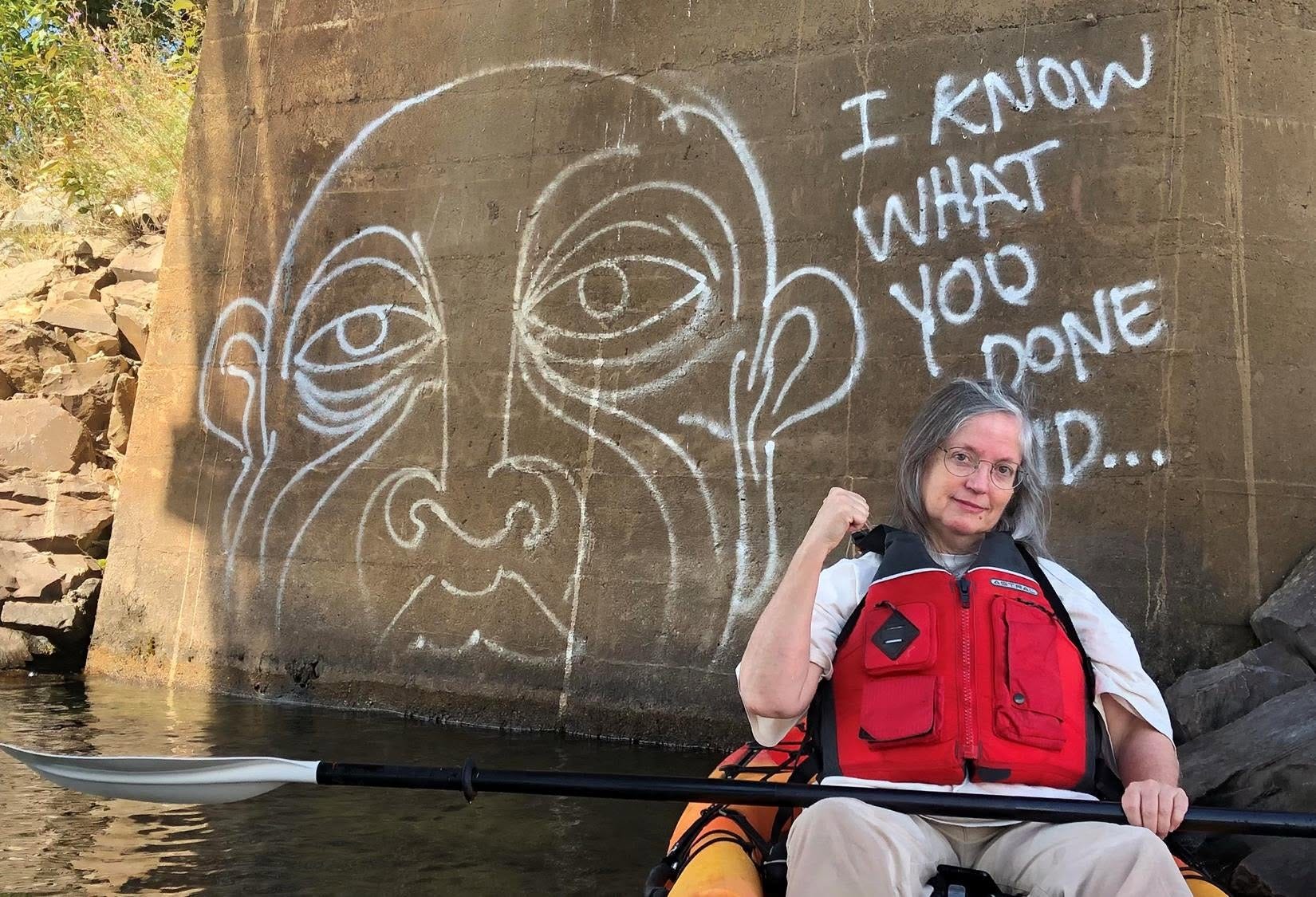
Helen had been stirring the pot, as she described it, since the late 1970s. Shortly before turning twenty-one, she left the East and Midwest for the Northwest, where the scale and relative purity of the region drew her into wild places and alternative ways of living. She hitchhiked from Seattle to Key West and back, lived in a tent outside cities and Alaskan coastal towns, worked labor jobs, avoided owning a vehicle, stopped eating red meat, and deliberately kept her possessions few. What began as immersion in nature gradually became a broader examination of the troubled relationship between American society and the natural world.
I had spent my adult life building structure. Helen had spent much of hers removing it.
By the time we found each other, I was married, raising two daughters, working in the family business, serving in the community, teaching fitness classes, and building a life around responsibility. I measured progress through education, career advancement, family, service, and the ability to create stability for the people who depended on me. My calendar was full. My obligations were clear. I was proud of the life I had built.
Helen’s life seemed to have grown from an entirely different set of priorities. She appeared content to own few possessions, live outdoors, take whatever work was necessary, and resist the normal social roles that most people accept without question. She described years when her response to corporate and government influence was to limit her participation in the systems that gave those institutions power. She avoided money, rent, conventional identification, and the consumer habits she believed were separating people from citizenship, nature, and one another.
At first, I viewed those choices as fascinating details from an unusual life. I did not yet recognize them as questions being placed in front of my own.
Helen had not merely rejected possessions. She had rejected the assumption that accumulating them represented progress. She had not failed to settle down. She had chosen movement. She had not wandered because she lacked a direction. Wandering had been part of the direction. Her life was not without consequences or hardship, but it was unmistakably her own.
While I had been building security, Helen had been protecting freedom.
At the time, I did not consider one approach better than the other. I was not ready to dismantle my life, abandon my responsibilities, or question every choice that had brought me to that moment. I loved my family, valued my work, and believed I was happy. I had told Helen exactly that in my first letter. Still, the contrast between us was impossible to ignore. We had traveled through adulthood following very different maps, yet those two paths had somehow arrived in the same inbox.
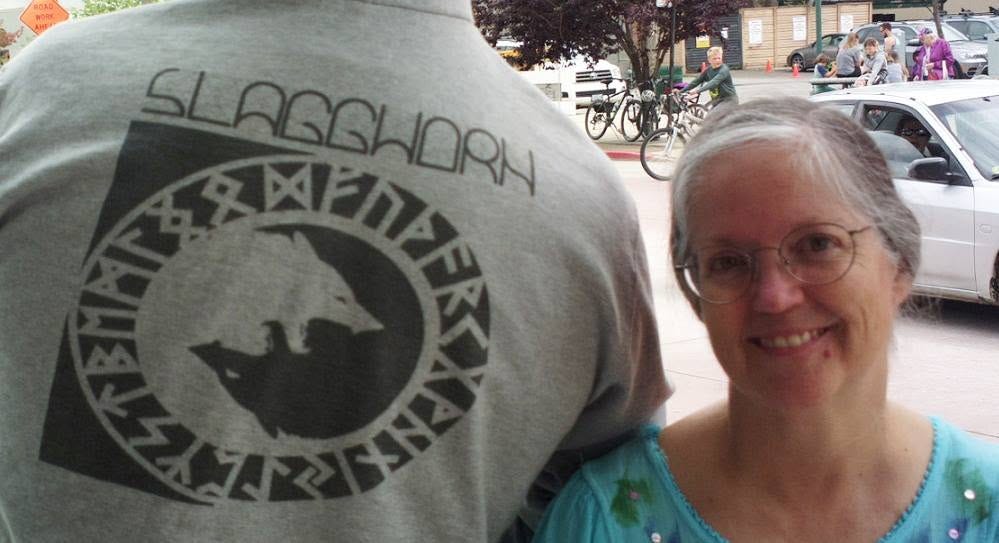
The more I learned about Helen, the more complicated that contrast became, because beneath the obvious differences I began recognizing something familiar. I saw a restlessness I understood, even though mine had been expressed differently. I recognized the curiosity that sent her into unfamiliar places, the instinct that made her question authority, and the desire to understand why people behaved as they did. I recognized the intensity with which she pursued an idea once it mattered to her. Even our shared tendency to write far more than a situation appeared to require suggested that our minds moved in similar ways.
For the first time in my life, the question of nature and nurture was no longer theoretical. It had a voice.
I had been shaped powerfully by the family who raised me. My parents taught me responsibility, loyalty, persistence, and the importance of work. My father built a business, and I grew up understanding that people depended upon us to solve problems. Our large Polish family valued tradition, participation, and togetherness. Family was not something you visited occasionally. It was an institution with rules, expectations, obligations, and a history.
Yet I had often felt as if some parts of me arrived from somewhere outside that history. My family members tended to be loud, confident, and deeply rooted in familiar traditions. I often gravitated toward ideas, reflection, unfamiliar experiences, and questions that did not always have practical answers. I could function within structure, and I became very good at building it, but part of me also seemed determined to push against it.
Reading Helen’s letters did not provide a scientific explanation for my personality. It offered something more human. It allowed me to see that traits I had considered mine alone might have a history. The thread I first saw while reading the adoption paperwork in my truck now extended beyond names and medical information. It reached into temperament, curiosity, stubbornness, and a shared unwillingness to accept every rule simply because someone in authority had created it.
Helen’s distrust of authority was not abstract. It had developed through decades of experience. She had watched conservation groups fight logging, mining, and other development projects while feeling that ordinary people were overmatched by corporate influence and government-supported extraction. Her response evolved from personal boycotts and unconventional living into education, organizing, and direct action.
One event appeared to sharpen that commitment more than any other. Helen had spent years exploring remote areas of Oregon, Washington, Alaska, British Columbia, and the Yukon. Those places were not merely scenery to her. They were where she had worked, traveled, learned, and discovered the person she wanted to become. Then, on Good Friday in March 1989, the Exxon Valdez struck a reef in Prince William Sound, only miles from a place where she had once worked on a fishing boat.
Helen described grieving for months. The cold, mountainous, seemingly protected Alaska she had known was suddenly vulnerable. A landscape she had believed was too remote and powerful to be destroyed had been wounded by the same industrial system she had spent years trying to escape. She made herself a promise that she would not stand aside the next time those forces threatened one of the wild places she loved.
I found that promise remarkable, partly because of how long she carried it.
Many of us are moved by an event. We are saddened, angered, or inspired. We donate money, share an opinion, or promise ourselves that we will become more involved. Then life resumes, the urgency fades, and the promise becomes another good intention buried beneath ordinary responsibilities.
Helen reorganized her life around hers.
At thirty-five, the same age I was when I found her, she returned to college. She entered the University of Montana to study resource conservation, eventually earning minors in environmental and wilderness studies and wildlife biology. She worked with conservation and wilderness advocacy organizations, transferring years of interpersonal experience from waitressing into canvassing, organizing, petitioning, fundraising, writing, editing, and public education. She later pursued a master’s degree in environmental education and then doctoral studies in conservation social sciences and natural resources at the University of Idaho.
That detail stayed with me. At thirty-five, I was opening adoption records and discovering where I came from. At thirty-five, Helen had returned to college to determine where she wanted to go. Neither of us had treated that age as too late to begin again.
Her education did not tame her activism. It gave it language, research, and direction. Helen had concluded that environmental destruction could not be understood only through biology or land management. The deeper problem existed in the human mind and in the political and social systems people created. She wanted to understand why societies repeatedly harmed the natural systems upon which they depended.
She briefly worked as a graduate research assistant supported by a Forest Service grant, but the institutional environment pulled her back toward more radical work. She later described becoming frustrated by the office-bound requirements of a conservation position. She wanted to return to the streets, speak directly with people, and work for change face to face.
The more I read, the clearer it became that Helen did not separate identity from action. Her environmental concerns were not opinions she expressed after work. They determined how she lived, what she studied, where she traveled, which jobs she accepted, what she owned, and the risks she was willing to take.
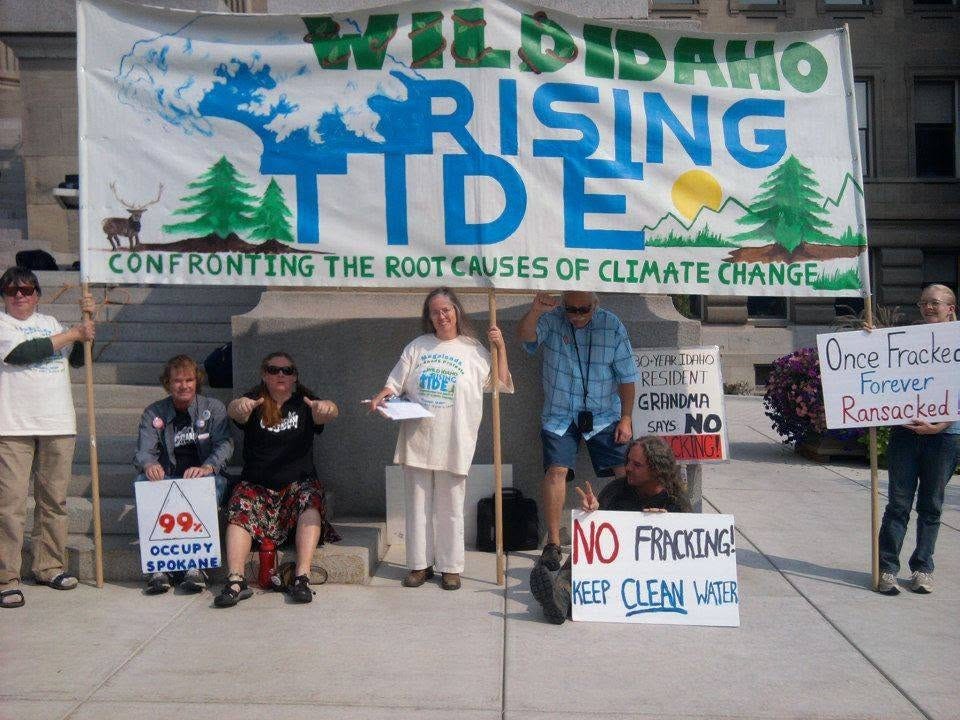
That commitment eventually placed her in the center of the megaload protests in Moscow, Idaho. In 2010, ExxonMobil’s plans to transport enormous pieces of industrial equipment through Idaho toward the Alberta tar sands brought the corporation connected to the Prince William Sound disaster back into Helen’s life. The shipments threatened another region she loved, and the promise she had made after the Exxon Valdez spill came due.
Helen helped organize residents, activists, academics, conservationists, tribal members, and others who opposed the shipments. She canvassed, wrote newsletters and alerts, maintained online information, coordinated logistics, helped arrange nonviolent direct-action training, and became one of the movement’s most visible organizers. She resisted traditional leadership titles, preferring to describe herself as a community organizer and attempting to build a less hierarchical movement even as reporters labeled her a founder, leader, and spokesperson.
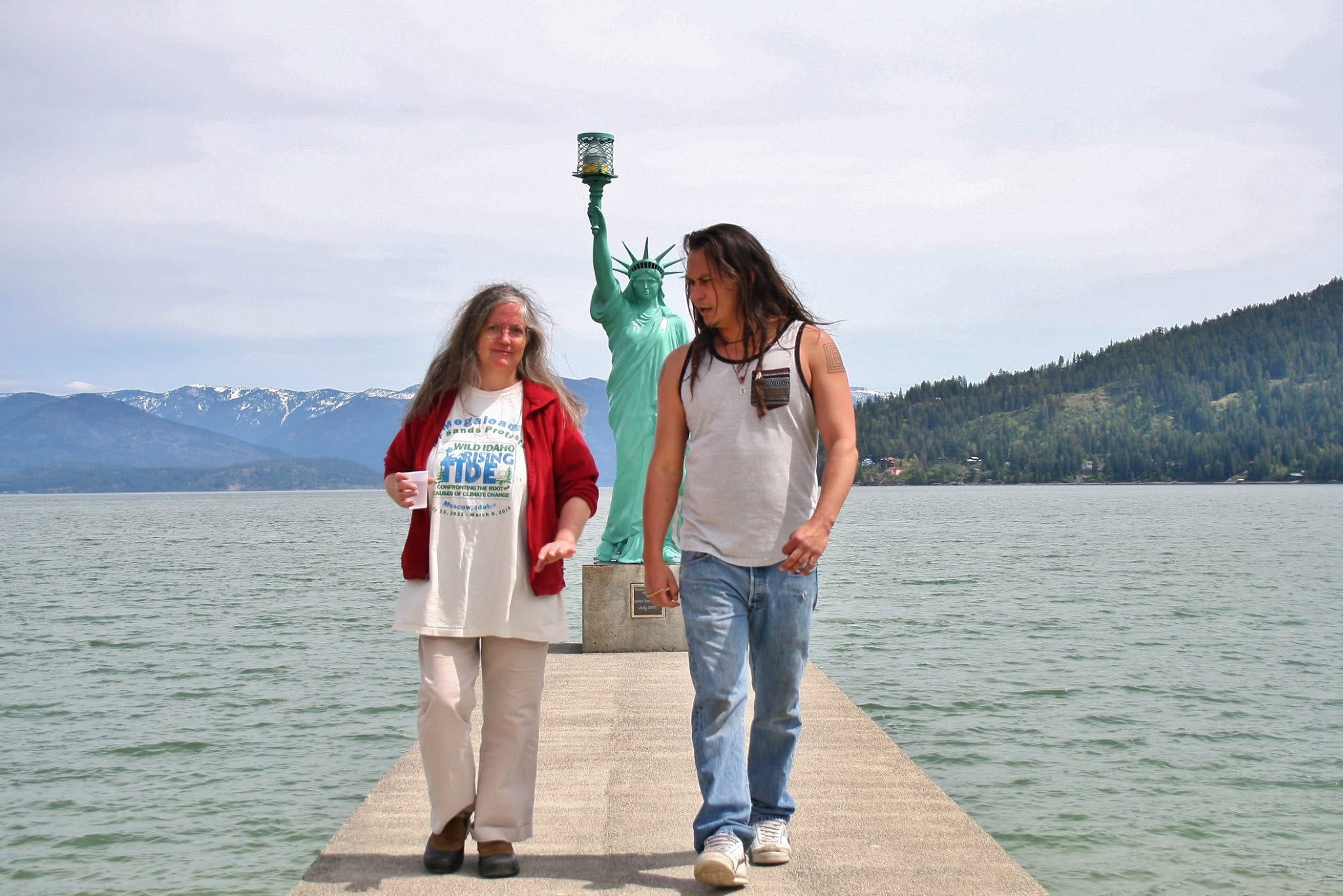
That tension told me a great deal about her. She was willing to carry responsibility but suspicious of authority, including her own. She wanted action without hierarchy, organization without control, and leadership without anyone becoming more important than the cause. The balance was difficult. In the interview, she acknowledged feeling overwhelmed as much of the tactical and administrative work fell to a small number of people. Still, she also described being humbled by the creativity and commitment of the larger community.
I understood parts of that instinct immediately. I had spent years leading through service, education, problem-solving, and community involvement. I knew what it felt like to step forward because something needed to be done, only to discover that stepping forward often meant becoming responsible for far more than expected. I also understood the frustration of wanting other people to participate fully rather than waiting for one person to carry the work.
Helen’s methods were different from mine, but the compulsion beneath them felt familiar.
The protests also explained why she initially struggled to trust me. Her activism had exposed her to surveillance, aggressive police presence, arrests, public criticism, and strained relationships within her community. She described the atmosphere around protests as a police state in which officers sometimes outnumbered demonstrators and authorities limited access to sidewalks and crosswalks as the enormous shipments passed through town. She believed federal and state agencies were involved in monitoring the demonstrations, and several arrests had intensified distrust within the activist community.
This was the world into which my email arrived.
Only weeks before I contacted her, Helen had been arrested while monitoring one of the shipments. During the booking process, officers asked her about identifying scars. She told them about the scar from the Cesarean section she had undergone when I was born. Most people in her activist community did not know she had given birth to a child at nineteen. Then, shortly after disclosing that deeply private information to the police, she received a message from a stranger in Nebraska claiming to be that child.
From my perspective, the timing felt extraordinary.
From hers, it felt suspicious.
Helen had spent decades distrusting institutions and challenging the relationship between government and corporate power. The protests had only deepened that distrust. She wondered whether I had somehow been created by the government or whether someone was using knowledge of her past to reach her. I was waiting to discover whether my biological mother wanted to know me. She was trying to determine whether I existed.
Before fully trusting the message, she contacted the adoption agency and asked them to verify my identity. Only then could she begin to believe that the son she had last seen as an infant had actually found her.
The irony was difficult to miss. For most of my life, I had wondered whether Helen was real in any meaningful sense. She had no name, no face, no voice, and no place within the life I knew. When I finally found her, she briefly wondered the same thing about me.
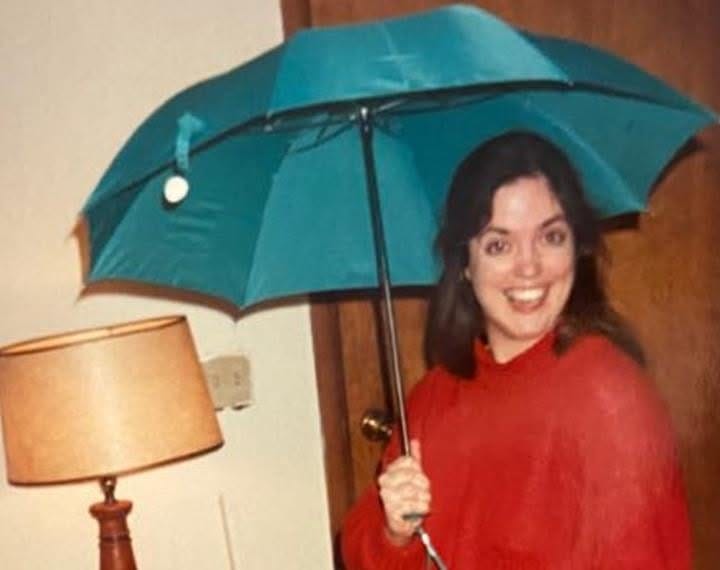
Once those suspicions were resolved, the emails opened a door neither of us seemed eager to close. Helen told me she had always believed I would find her when I was ready. She had intentionally resisted searching for me herself because she believed the choice belonged to me. She had already made one profound decision about the direction of my life when she placed me for adoption. She did not believe she had the right to force another.
For years I had worried that I had waited too long. Helen had worried that she had waited too patiently.
The truth was that we had both been waiting for each other.
As the weeks passed, our correspondence moved beyond adoption. The circumstances of my birth remained important, but neither of us wanted our entire relationship to be defined by a decision made in 1976. We began exchanging the fragments that make up a person’s life.
Helen told me about places she had traveled, wilderness areas she had explored, schools she attended, jobs she worked, people she loved, causes she embraced, and mistakes she had made. She described living outdoors and working labor jobs, waiting tables, canvassing neighborhoods, studying ecosystems, writing for conservation organizations, and organizing protests. Her stories moved through the Pacific Northwest, Alaska, the Canadian wilderness, Montana, Oregon, and Idaho. Even when she remained geographically still, her mind seemed incapable of staying in one place.
I told her about the family who raised me, the business, my education, my community involvement, and the ordinary responsibilities around which my life revolved. I told her about my wife and our home. Most of all, I told her about Natalie and Annabelle.
I sent photographs. Lots of photographs. There were pictures of birthdays, family gatherings, ordinary afternoons, and the small expressions children make when they do not know an adult is preserving the moment. To anyone else, the images might have seemed unremarkable. To Helen, they were glimpses into a family she had not known existed.
She was fascinated by the girls. She asked questions, noticed expressions, and imagined the personalities developing behind their faces. I had been Helen’s only child, and Natalie and Annabelle were her only grandchildren. They were approximately eighteen months and five months old when I found her. Before Helen had spoken to them or held them, she was already trying to know them through photographs and stories.
Helen was introducing me to a family at the same time. For most of my life, my biological family tree had ended with an empty space. Suddenly new branches appeared. There were siblings, nieces, nephews, grandparents, migrations, histories, traits, and stories. Names that had never meant anything to me slowly became connected to people, places, and relationships.
The family tree was no longer blank, but it was not yet mine in the same way the family who raised me was mine. These were people connected to me by biology but separated from me by experience. I knew facts about them before I knew the sound of their voices. I saw photographs of faces to which I was related but had never seen across a Thanksgiving table.
The experience made me understand that belonging is not created by biology alone, but biology is not meaningless either. It had taken only a few pages of adoption paperwork to reveal the thread. Now the emails were giving that thread texture. The origins I had discovered in the truck were becoming stories.
Helen’s life interested me for reasons I could not yet explain. On the surface, we were remarkably different. She had deliberately stepped outside many of the institutions I had worked hard to enter. She had avoided money while I built a business. She had resisted conventional roles while I accumulated them. She traveled lightly while I built a home. She challenged government authority while I served on a school board and worked through established systems to solve problems.
Yet something in her life looked familiar, not because I had lived it, but because part of me seemed to recognize the desire beneath it.
Freedom.
Helen was willing to give up certainty for freedom. At times she gave up money, comfort, employment, possessions, relationships, and social acceptance for the ability to remain aligned with her convictions. She did not always make life easy for herself, but ease did not seem to be her objective.
At the time, I still considered comfort evidence of success. A stable job, a home, a family, financial security, and professional recognition were not merely things I possessed. They were proof that I had built my life correctly. I had followed the rules, worked hard, and earned a place within the structure around me.
Helen’s life quietly suggested that a person could work just as hard and move in the opposite direction.
I did not yet understand how much that idea would matter. I was not reading her letters as instructions. I was reading them as stories from the mother I had finally found. Still, stories can enter us before we understand what they are changing.
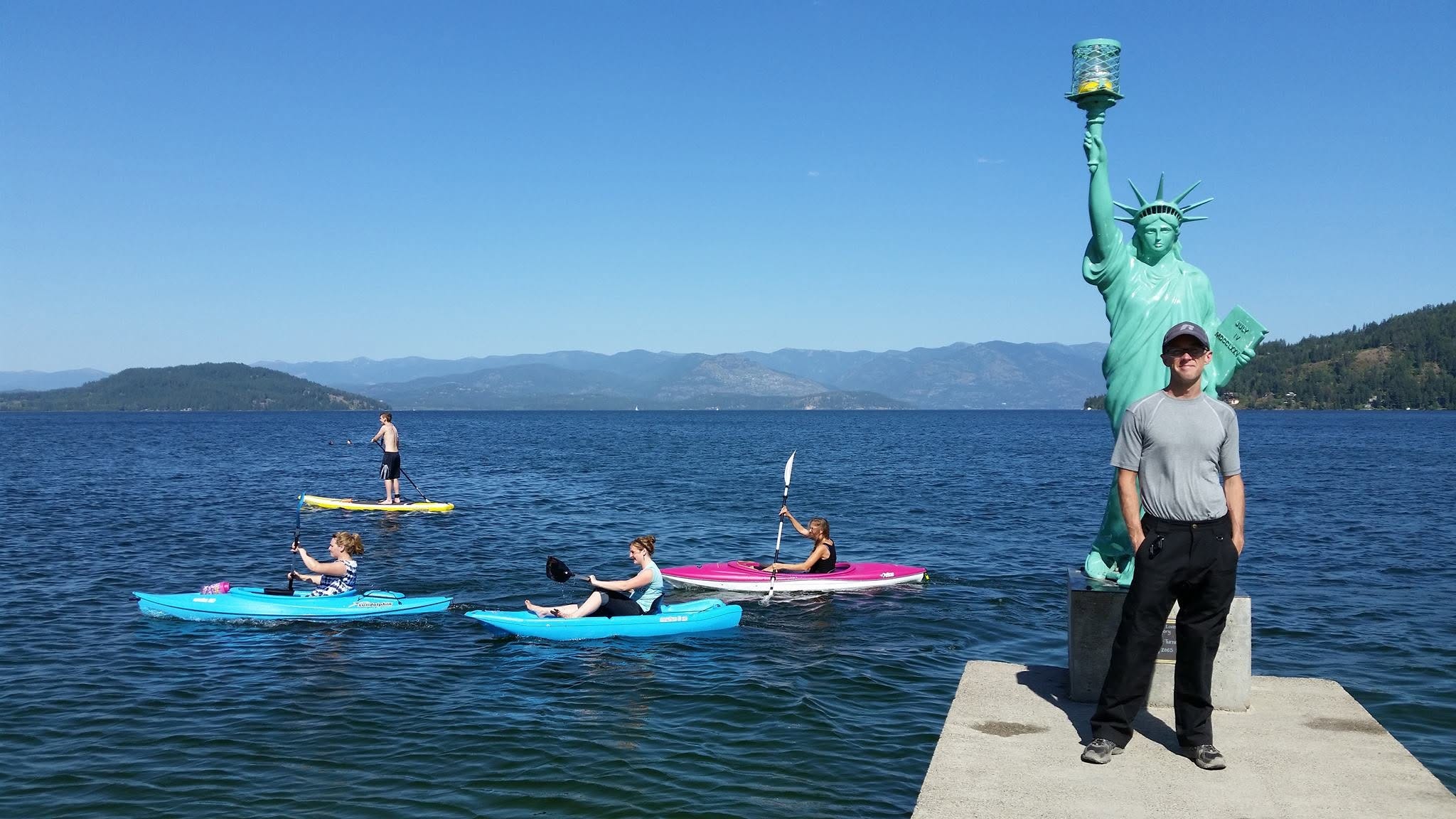
As our correspondence continued, the possibility of meeting shifted from an abstract hope into a practical plan. Helen was preparing to travel east by train to visit members of her family. Traveling by train fit her perfectly. Airplanes were faster, but speed did not seem to be her preferred measurement of a journey. A train allowed her to move through the landscape instead of over it. It made the distance visible.
Omaha became one of her stops.
The idea was exciting, but it also created an entirely new set of questions. Finding Helen had taken research. Meeting her required vulnerability. Email gave us time to consider every sentence. We could reread, revise, and decide when we were ready to respond. Face-to-face conversation allowed none of that protection.
I wondered whether I would recognize her immediately. I wondered whether she would recognize me. I wondered if the conversation would feel natural because we had spent months exchanging letters, or awkward because we had never heard each other speak. I wondered whether biology would produce some immediate sense of familiarity or whether we would simply be two strangers who knew an unusual amount about one another.
I also wondered what it would feel like to watch Helen meet my daughters. Those two little girls had prompted the search. Becoming their father had allowed me to understand the enormity of what Helen had done at nineteen. Now the child she had placed for adoption was preparing to introduce her to the grandchildren she never expected to have.
As the trip approached, the transformation became surreal. For thirty-five years, Helen had been a question. Then she became a name on a birth certificate, a university biography, a background report, and an email address. Through her letters and the interview, she became a traveler, student, activist, organizer, environmentalist, writer, daughter, and mother.
Now she had become a train ticket.
She would arrive in Omaha shortly after five in the morning on the California Zephyr. She planned to spend several days with my family before continuing east to visit relatives. The details were ordinary. Arrival time. Departure plans. Luggage. Breakfast. Where she would stay. Yet beneath those practical arrangements was the significance of what was about to occur.
By the time the date arrived, I realized I no longer felt as if I were preparing to meet a complete stranger. I had never seen Helen standing in front of me. I had never heard her laugh, watched her respond to a question, or sat across from her during a conversation. Still, through months of messages, family stories, photographs, reflections, and explanations, I had begun to know her.
The search had found her.
The letters had introduced her.
The interview had allowed me to see the forces that shaped her life and the promises she had refused to abandon. I understood why she had chosen wild places, why she questioned institutions, why she resisted conventional definitions of success, and why trust came slowly. I knew more about how she saw the world than I knew about the daily routines of many people I had known for years.
Now there was only one thing left to do.
It was still dark when I pulled into the Omaha train station. The city was quiet, and the January air carried the kind of cold that makes every sound seem sharper. Somewhere west of Omaha, the train was moving toward me across the final miles of a journey that had begun decades earlier.
For thirty-five years, I had wondered what Helen looked like.
For three months, I had wondered what it would feel like to meet her.
Somewhere inside that approaching train was my biological mother. She was no longer simply the nineteen-year-old woman described in my adoption records or the activist whose life I had discovered through articles and an interview. She was the person whose long emails had crossed the distance between us, one story at a time.
In a few minutes, those words would have a voice.
The person holding the other end of the thread was almost there.