

Three months earlier, Helen had been little more than a name on my original birth certificate. Then she became an email address, followed by a reply and a growing collection of stories. We exchanged messages long enough to begin learning about each other, but email can only take a relationship so far. Words on a screen offer distance, time, and space for reflection. A person sitting across from you introduces an entirely different kind of reality.
In December, Helen boarded a train and traveled from Moscow, Idaho, by way of Salt Lake City, to Omaha. I had spent most of my life wondering whether I would ever meet the woman who gave birth to me. I imagined the possibility many times, although I do not know that I ever developed a clear picture of what the meeting might look like. Perhaps I expected the significance of the moment to announce itself. After thirty-five years, surely there would be an overwhelming rush of emotion, a dramatic embrace, or tears that neither of us could control.
Real life was much quieter.
It was still dark when I arrived at the train station. The city had not fully awakened, and the cold December air made the empty streets and parking lot feel even more still. Somewhere outside Omaha, the train was moving toward me. Helen was no longer a mystery hidden in an adoption file or a collection of ideas written in long emails. She was physically approaching the city where I had lived almost my entire life.
I waited and watched passengers arrive, knowing that one of them was the woman I had wondered about for nearly thirty-five years. I studied faces and tried to imagine whether I would recognize her. We had exchanged photographs, but photographs capture only a single expression. They do not reveal how someone moves through a room, how they carry themselves, or how their face changes when they see someone they have waited decades to meet.
When we recognized each other, we walked toward one another, said hello, and shared a brief hug.
That was it.
There were no tears. Neither of us collapsed into the other’s arms. There was no cinematic moment in which decades of separation disappeared. We said hello. We hugged. Then we picked up her bags.
For years afterward, I wondered whether the emotion had simply been buried somewhere too deep for either of us to display. Perhaps thirty-five years of questions were too large to process in the middle of a train station. Perhaps the relationship was still too new, and we were both trying to understand what connection, if any, would emerge from our shared history. Biology had brought us together, but biology alone could not tell us how to behave.
Or perhaps the meeting was exactly what it needed to be.
Two people who had never truly known each other were finally standing in the same place. Neither of us needed to perform for the other. We did not need to create a dramatic scene to prove that the moment mattered. The importance was contained in the simple fact that she had come and I was there to meet her.
Breakfast
After leaving the station, we drove to a local restaurant for breakfast. It seemed like the most ordinary thing we could do after something so extraordinary. The sun had not yet risen completely, and the restaurant was occupied by the kind of people who are awake when most of the city is still sleeping. We found a table, sat across from each other, ordered food, and began to talk.
By then, we had already exchanged long emails. I knew facts about Helen’s travels, education, activism, family, and experiences. I had read the interview in which she described the wilderness areas she explored, the environmental battles she fought, and the promises she made to herself. She knew about my family, my work, my daughters, and the life I had built.
Still, speaking face-to-face was different.
Email allows a person to pause, revise, and decide exactly how much to reveal. You can organize a memory, remove unnecessary details, and make yourself sound more certain than you were when an event occurred. Conversation moves at its own pace. A question leads somewhere unexpected. One memory interrupts another. A raised eyebrow, a laugh, a hesitation, or the way someone tells a story reveals almost as much as the words.
We were not experiencing an instant mother-and-son reunion. We were beginning the slower process of becoming real to each other.
I looked at Helen across the table and tried to connect the person in front of me with the mystery I had carried since childhood. This was the woman whose name I had stared at on my birth certificate. This was the person who contacted the adoption agency on my eighteenth birthday and kept her information current in case I ever decided to look for her. This was the woman who had initially been suspicious of my first email because she could not immediately believe that the child she had placed for adoption had suddenly appeared in her inbox.
Now she was eating breakfast with me in Omaha.
There was something reassuring about the ordinariness of it. A mystery can become so important in our imagination that no real moment could possibly carry its full weight. Breakfast gave us something tangible. There were menus, coffee, food, and other people talking at nearby tables. The world had not stopped because we found each other. It continued moving around us, making room for our reunion without demanding that we transform it into something larger than it was.
The extraordinary had become ordinary, and somehow that made it more believable.
Two Histories of Omaha
After breakfast, Helen took me to North Omaha. She showed me the house where she had been living with my biological father when she became pregnant with me. I had lived in the Omaha area for most of my life, but I had never known that this particular house was connected to the beginning of my story.
Until then, my birth had existed mostly in documents and imagination. There was a hospital, an adoption agency, a birth certificate, and the accounts of people who had been there. Seeing the house gave the story a physical location. This was not simply somewhere Helen once lived. This was where part of my life began before I was old enough to remember it.
I looked at the house and tried to imagine Helen living there as a young woman. I tried to imagine the conversations, uncertainty, decisions, and emotions that had existed inside those walls. At nineteen, she could not have known what the next thirty-five years would hold for either of us. She could not have pictured the business I would help build, the classes I would teach, the community roles I would accept, or the daughters who would eventually lead me back to her.
The house itself could answer none of my questions. It stood there quietly, carrying no visible evidence that something life-changing had once happened within it. The people who lived there after Helen probably knew nothing about its connection to my life. To them, it was simply a house.
To me, it was an origin point.
For the first time, one of the missing pieces of my beginning had an address.
We continued driving through Omaha while Helen pointed out places connected to her life. The city had changed during the decades she had been away, but enough remained for her memories to attach themselves to the streets. She had stories in a place I thought I knew. Her memories created another version of Omaha that had always existed beside mine, invisible because I had never known where to look.
Later, the direction of the tour reversed.
I took Helen to Carter Lake, Iowa, the small community beside Omaha where I grew up. I showed her the house where I lived, the lake where I swam, and the elementary school I attended. She had shown me pieces of the life that existed before my adoption, and I showed her pieces of the life that came after it.
We were exchanging histories.
Helen showed me where my story began. I showed her where it continued.
The physical distance between North Omaha and Carter Lake was not great, but the emotional distance between those two places felt enormous. One represented the life that might have been. The other represented the life I actually experienced. Between them were decisions, court documents, sealed records, years of waiting, and two families connected through a child they did not share.
As we drove, I wondered what it felt like for Helen to see those places. She had spent decades not knowing where I grew up, what kind of home I lived in, where I attended school, or whether I had been happy. She had entrusted all of that to people she had never met. Now she could see a few of the physical landmarks that had shaped my childhood.
I could not give her the missing years.
I could show her where they happened.
Meeting the Girls
Later that day, my wife came home from day care with Natalie and Annabelle. The girls were still very young, approximately eighteen months and six months old. They could not understand the history behind the person they were meeting. They did not know Helen had spent decades wondering about me or that she had boarded a train in Idaho to meet the infant she placed for adoption thirty-five years earlier.
To them, she was simply a new person in the house.
To Helen, they were her only grandchildren.
I was her only child, and suddenly she was standing inside a home with a son, a daughter-in-law, and two small granddaughters. A family that had existed primarily through photographs and emails was directly in front of her.
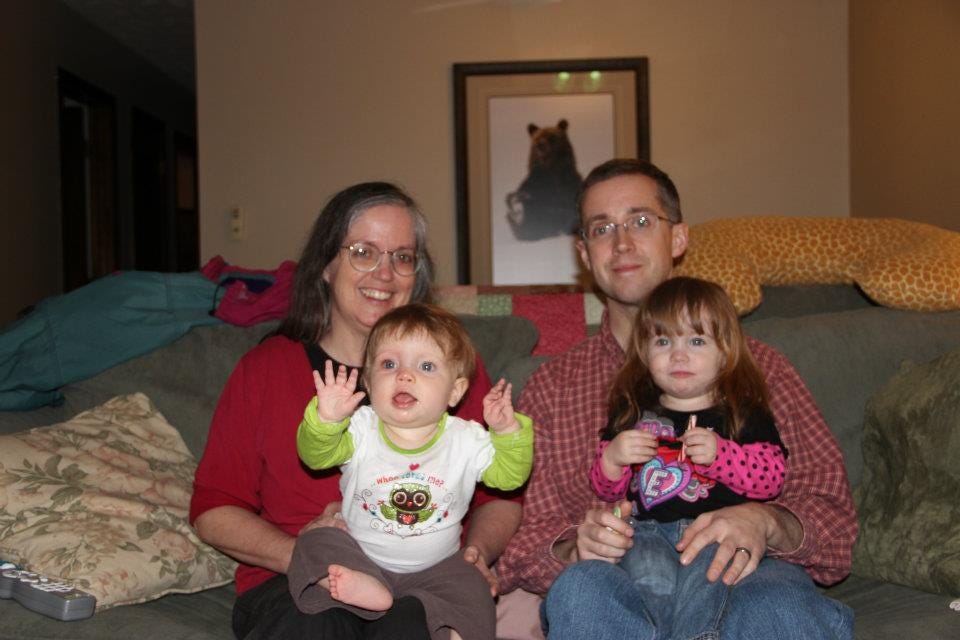
There was something powerful about watching Helen meet the girls, although the moment did not need to become dramatic to matter. Babies do not cooperate with carefully written reunion scenes. They need to eat, sleep, be changed, and decide for themselves whether they are interested in the unfamiliar adult attempting to gain their attention.
That ordinary reality helped us. There was no pressure to manufacture emotion when two small children were setting the pace. We could talk, laugh, prepare food, and gradually settle into the strange reality that a relationship interrupted decades earlier was beginning again in the middle of ordinary family life.
The girls did not carry the emotional weight of the reunion. They did not know they were supposed to make the moment significant. Their innocence freed the rest of us from trying too hard. Helen could simply be present with them. She could watch them play, listen to their sounds, and observe the beginning of personalities she had previously known only through my descriptions.
When Helen placed me for adoption at nineteen, she surrendered not only the opportunity to watch me grow but also everything that might come after me. She could not have known whether I would marry, become a parent, or whether she would ever know the family that grew from the child she released into another life.
Now two small girls were standing in front of her.
A Meal Between Worlds
During the visit, we shared a meal with my wife’s family. They were welcoming, gracious, and interested in meeting Helen. They asked questions and listened as she spoke about her life, her travels, her environmental work, and the unconventional path she had followed.
I was grateful for their kindness. At the same time, I could sense that they were not entirely sure what to make of her.
Helen spoke openly and directly. She said what she believed and did not devote much energy to softening her opinions so they would be easier for other people to receive. Her life had taken her far outside the conventional patterns many people recognize. She had hitchhiked, lived simply, worked in isolated places, challenged institutions, questioned authority, and organized much of her life around principles that mattered deeply to her.
To people whose lives had followed more conventional paths, Helen could be difficult to categorize.
Different people may have experienced her differently. Some might have seen her as independent and courageous. Others might have found her intensity unfamiliar or her openness surprising. I sensed curiosity around the table, but I also sensed uncertainty.
No one behaved unkindly. There was no confrontation or visible rejection. What I noticed was subtler, expressed through pauses, expressions, and the way a room sometimes changes when someone enters who does not follow its unspoken rules.
Some of them may simply have thought she was unusual.
That observation stayed with me long after the meal ended.
I had spent much of my life learning how to move comfortably through conventional settings. I knew how to speak professionally, how to meet expectations, how to make other people comfortable, and how to present the parts of myself that fit the room. I had built a successful career partly by understanding what different people needed from me and supplying it.
Helen seemed far less interested in performing that kind of adjustment.
She brought herself into the room.
All of herself.
Watching other people respond to her created an unexpected question inside me. I had already begun noticing parts of myself in Helen: the curiosity, long explanations, intensity, desire to learn, preference for unconventional experiences, and willingness to question accepted systems.
If other people experienced her as unusually different, what did that say about me?
Was I equally different but simply better practiced at concealing it?
Had I learned to translate myself into a version that other people found easier to understand?
The question unsettled me because I could not immediately dismiss it. For most of my life, I believed I was simply adaptable. Perhaps I was. Adaptability can be a strength, and moving thoughtfully through different social settings is part of living among other people.
Still, adaptation can slowly become performance.
Performance can gradually become identity.
Sitting at that table, watching Helen remain unmistakably herself while others tried to understand her, I began wondering how much of my own life had been constructed around fitting in.
The question would not transform me overnight. It would, however, remain.
Two Mothers and a Father
Another meal carried an entirely different kind of emotional weight.
My adoptive mother wanted to meet Helen. My adoptive father initially said he had no interest in doing so, which surprised me. Helen was not arriving to challenge anyone’s role or to reclaim a place in my childhood. Thirty-five years separated the young woman who placed me for adoption from the person who had traveled to Omaha to meet me.
My father ultimately agreed to accompany my mother, and the four of us sat down together.
It would be misleading to suggest the meal felt effortless. It brought together people connected by one of the most consequential decisions of all our lives, but who had never spoken to each other. Helen had given birth to me and entrusted my future to people she did not know. My parents had accepted that responsibility and raised me from infancy into adulthood.
Now they were sharing a table.
My mother was relatively quiet during much of the meal. I could not know everything she was processing, and I did not want to interpret her silence for her. Perhaps she was observing. Perhaps she was considering what to say. Perhaps there were simply no words adequate for the situation.
Helen, true to herself, spoke openly. She shared reflections and pieces of her history without pretending the circumstances were simpler than they were. She did not arrive apologizing for existing, nor did she behave as if she were entitled to occupy a role someone else had filled.
Then my father said something I did not expect.
He thanked her for her sacrifice.
As he spoke, he began to cry.
I had almost never seen my father cry. He came from a generation and culture in which men were expected to remain composed, project strength, and keep powerful feelings contained. Emotion existed, but it was not always displayed. Tears were private, if they appeared at all.
Yet there he was, sitting across from Helen, openly crying as he expressed gratitude for the decision she had made thirty-five years earlier.
The moment stopped me.
For all the complexities that would eventually emerge in my relationship with my parents, that expression of gratitude was real. Whatever discomfort or uncertainty my father had felt about meeting Helen, he also understood that her decision had made his experience of fatherhood possible.
Helen’s sacrifice was not an abstract event to him.
It had given him a son.
I do not remember every word that followed. I remember the tears because they revealed something I had rarely been allowed to see. My father’s usual emotional armor opened briefly, and beneath it was gratitude, vulnerability, and recognition of what Helen had surrendered.
There were two mothers at that table.
One had carried me and let me go.
The other had raised me.
My father sat between those histories, thanking one woman for the opportunity that allowed him and my mother to create a family.
No one at the table had experienced the same story. For Helen, adoption meant separation and decades of unanswered questions. For my parents, it meant receiving and raising a child. For me, it meant spending an entire life moving between both realities.
The meal did not resolve those differences. It did not need to.
For a few moments, it allowed all of them to occupy the same room.
Seeing Helen Through Their Eyes
My parents also appeared uncertain about aspects of Helen. Her lifestyle, directness, and strong convictions were far removed from their experience. They had built lives around business, stability, predictability, and going to work every day. Helen had spent decades traveling, protesting, questioning systems, pursuing environmental causes, and accepting uncertainty as part of living according to her beliefs.
Each side could reasonably find the other difficult to understand.
I tried to view their responses with compassion. Most people interpret others through the lives they themselves have lived. Someone who has valued security may struggle to understand a person who repeatedly chooses freedom over stability. Someone who questioned institutions may struggle to understand the comfort another person finds inside them.
Different did not have to mean wrong.
Still, the contrast was impossible to overlook.
Helen did not fit neatly into the world that had raised me. Yet the more clearly others recognized her differences, the more clearly I began to recognize my own.
I had spent decades succeeding within established structures. I pursued education, built a career, supported customers, served on a school board, raised children, and accepted responsibility. I knew how to operate within organizations and how to be understood by the people inside them.
Yet I was also the person who wanted to travel alone, explore unfamiliar places, question inherited expectations, write long reflections, choose experiences over possessions, and imagine a life outside conventional measures of success.
Perhaps those parts of me had always existed.
Perhaps I had simply kept them behind the parts that received approval.
Meeting Helen did not provide an easy answer. It did something more valuable.
It made the question visible.
The Ordinary Work of Beginning
Over the next few days, we built the visit around ordinary family activities rather than treating every moment as a reunion ceremony. We went to the Omaha zoo. I had been uncertain about how Helen would react because her life and education reflected a deep concern for conservation and the natural world.
Her response was thoughtful and balanced. She acknowledged that seeing animals in captivity could be difficult, but she also recognized the role a zoo might play in education. If seeing animals helped people understand and appreciate the natural world, perhaps that appreciation could lead them to care more deeply about protecting it.
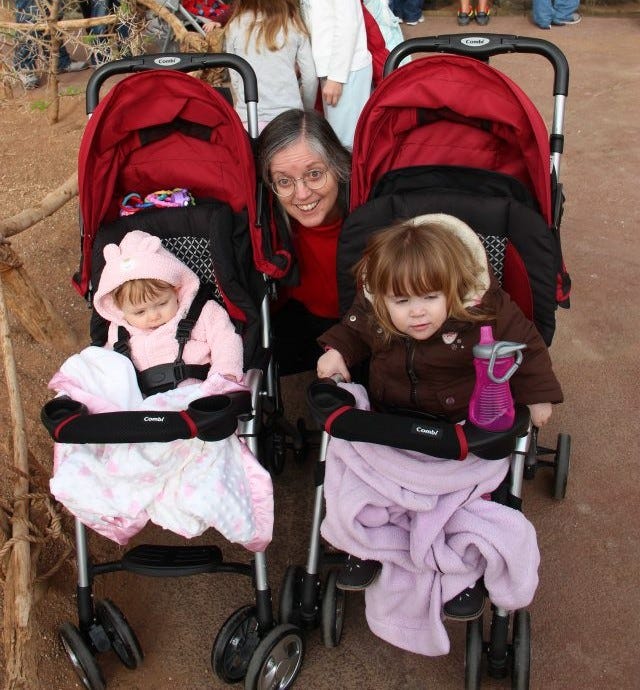
That response felt very much like Helen. She was unwilling to ignore the ethical conflict, but she was also able to consider the larger purpose. Captivity could be troubling, and education could still create value. People could participate in imperfect systems while questioning how those systems should change.
The zoo allowed us to move, observe, and talk. We did not have to spend every hour discussing adoption, family history, or the missing years. Sometimes we could simply look at animals with two little girls.
We also attended a Sesame Street Elmo performance at a local playhouse. There was something wonderfully strange about it. After thirty-five years of separation, one of our first shared family experiences involved a children’s character performing for an audience filled with young families.
It was not the sort of moment anyone would predict when imagining an adoption reunion.
That may be why it belongs in the story.
Life rarely gives us the scenes we expect. It gives us breakfast restaurants, diaper changes, zoos, children’s performances, family photographs, slightly uncertain meals, and conversations squeezed between ordinary responsibilities. Meaning grows inside those moments if we allow it.
The visit helped me understand that meeting a biological parent does not instantly create the relationship one imagines has been missing. Biology can introduce familiarity, but it cannot manufacture shared experience. Helen and I had not spent holidays together. She had not attended my school events, helped me with homework, taught me to drive, or watched me graduate. I did not know her daily routines, expressions, or the small habits people learn only through time.
We had a connection, but we still needed a relationship.
That distinction mattered. It protected the family who raised me from being diminished, and it protected Helen from being asked to fill a role that could not be recreated. She was my biological mother, but we were not pretending the missing thirty-five years had never happened.
We were beginning where we actually were, not where we wished we could have been.
What Remained After She Left
Helen spent part of the visit working, another reminder that our reunion did not exist outside ordinary life. She had responsibilities, deadlines, and a journey that would continue after Omaha. When the visit ended, she returned to the train. Her travels would take her east to visit other members of her family.
After leaving, Helen thanked us for our hospitality and shared how much the moments with the girls had meant to her. She did not demand that we instantly behave like a family that had never been separated. She did not expect biology to erase thirty-five years of different lives. Helen approached the relationship with gratitude, curiosity, and a willingness to let it become whatever we were capable of building.
Her sister waited until after the visit to introduce herself through email. Helen’s mother also wrote, thanking us for welcoming her and expressing interest in getting to know me. One relationship was beginning to open doors to others.
I had started with a birth certificate. Then came an email, followed by a train, a breakfast, two houses, two little girls, several family meals, the zoo, Elmo, and a farewell.
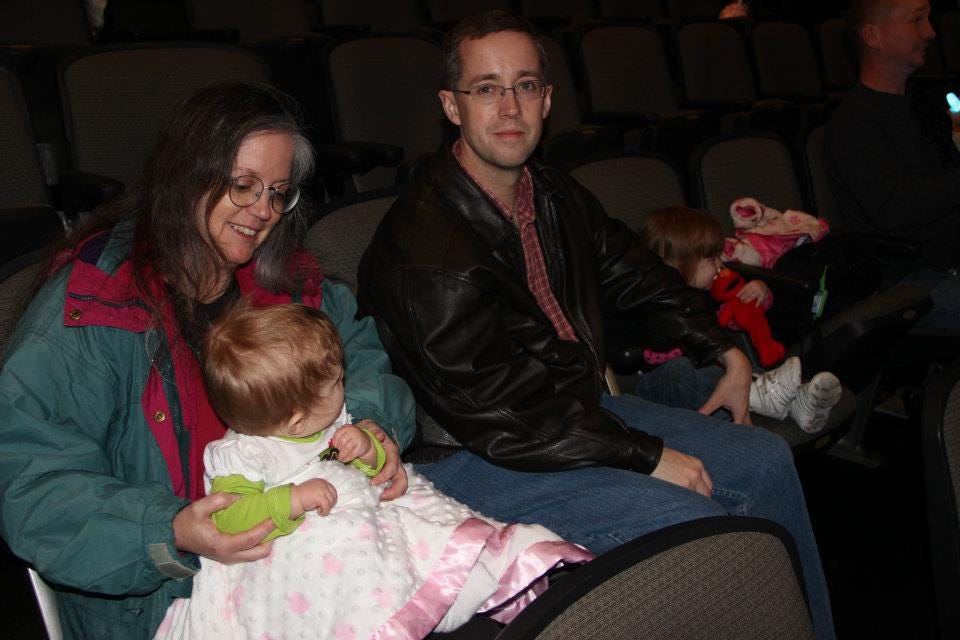
The family tree I had imagined as a child was beginning to grow names, faces, places, and stories.
When Helen’s train departed, I was left with a strange combination of answers and new questions. I knew what it felt like to sit across from my biological mother at breakfast. I had watched her meet her only grandchildren. We had driven through the neighborhoods holding both sides of my story. I had also watched her sit across from my adoptive parents as my father thanked her, through tears, for a decision that had shaped all of our lives.
The reunion had not been overwhelmingly emotional.
It had been real.
Real relationships are not built from a single embrace at a train station. They are built through conversations, visits, misunderstandings, laughter, shared experiences, patience, and time. Helen and I did not need to cry in each other’s arms to prove that the meeting mattered.
She had come. I had welcomed her. Our lives had finally occupied the same space.
And something else had happened during those few days.
I had seen Helen through the eyes of other people. I had watched them struggle, however gently, to understand her intensity, directness, openness, and unconventional life. Their reactions had not caused me to turn away from her.
They had caused me to look more carefully at myself.
For thirty-five years, I had searched for the woman who gave birth to me because I wanted to understand where I came from. When I finally met her, I expected to learn about my past.
I did not anticipate that her presence would cause me to question the person I had learned to become.
Perhaps I was not as conventional as I appeared.
Perhaps I had simply become skilled at appearing that way.
Helen had spent much of her life marching to a different drummer. She spoke what she believed, followed her convictions, and accepted that some people would not understand her choices. I was not prepared to imitate her life, nor did I believe that was the lesson of meeting her.
Her life simply made a new question impossible to ignore.
How much of myself had I spent years translating, softening, or hiding so I could remain understandable to everyone else?
Helen stepped off the train and entered my life quietly. There had been no dramatic embrace, no tears, and no single revelation that instantly altered everything that followed.
Instead, she left behind an example.
She had spent her life being unmistakably herself, even when doing so made her harder for other people to understand.
I watched her train leave Omaha carrying the woman I had wondered about for most of my life. I had found an origin, a history, and the person holding the other end of the thread.
I had also found a reflection.
And I was only beginning to understand what I saw.