

I never expected a sheriff to become part of my family story.
If someone had told me in 1997 that I would one day stand inside a new workplace while a sheriff served me with a lawsuit connected to the company my parents owned, I would not have believed them. At that point in my life, the possibility would have seemed absurd. My parents were starting a business, I was joining them, and together we were going to build something meaningful.
That was the future I imagined.
For nearly twenty-four years, I devoted a significant part of my life to making that future real. The business became more than where I worked. It became part of my identity, my daily routine, and my understanding of family. I believed we were building something together, and because we were family, I assumed we were bound by more than payroll, ownership, or contracts.
I believed we were bound by loyalty.
That belief would eventually be tested in ways I never anticipated.
The moment most people would identify as the beginning came much later, when a sheriff entered my new workplace and asked for me by name. I had not been there very long, but I had been there long enough to begin feeling hopeful. I knew the organization well because it had been a client since 1998. I respected its nonprofit mission and the people who worked there. After decades inside the family business, I was beginning to imagine what my life might look like somewhere else.
Then the sheriff handed me a stack of legal documents.
The company my parents owned was suing me.
Technically, the lawsuit came from the business. There were corporate names, formal allegations, attorneys, procedural requirements, and legal distinctions. But those technicalities did not change what the moment meant to me. My mother owned the company. My father ran its daily operations. I had spent almost a quarter century helping them build it.
Standing there with those papers in my hands, it felt as though my parents were suing me.
Still, the lawsuit was not where this story began.
It was where I finally understood what the story had become.
Building the Business
In 1997, I joined my parents in their new business venture. I was young, ambitious, technically capable, and eager to help create something successful. There were customers to find, systems to build, technologies to learn, and problems to solve. Like most small businesses, the company required constant attention, especially during its early years.
I enjoyed much of that work. I liked solving difficult problems, helping clients, and figuring out how technology could make organizations more effective. As our customer base grew, I began forming relationships that would last for years. Clients learned they could call me when something went wrong, and they trusted that I would remain involved until the problem was resolved.
Over time, my responsibilities expanded beyond the technical work. I helped grow the customer base, maintained client relationships, led the managed services and technical side of the organization, supported employees, and became involved in nearly every challenge that affected the company’s success. I was not merely completing assignments. I was carrying responsibility for customers, employees, projects, revenue, and the reputation of the business.
As the company grew, the boundaries between my work and the rest of my life became increasingly difficult to see. Customer problems came home with me. Technical emergencies interrupted evenings, weekends, and vacations. Even during quieter moments, my mind continued working through unfinished projects and unresolved issues.
I did not initially view any of this as unhealthy. I saw it as dedication. I was helping build a successful company with my family, and I believed the sacrifices were part of that shared undertaking. When the business needed me, I responded. When clients needed me, I found a way to help. When employees needed direction, I stepped in.
There is pride in being dependable. There is satisfaction in knowing people trust you and believe you can solve their problems. But there is also a danger in becoming the person everyone relies upon. The more dependable you become, the more responsibility people place on you. Eventually, carrying that responsibility can begin to feel like the source of your value.
I became very good at carrying things.
What I did not become good at was putting them down.
For years, I rarely stopped to ask whether I was happy or whether the life I was building was sustainable. The company was successful. People depended on me. My family benefited from the work. Those facts seemed sufficient, even when the stress began following me into every part of my life.
I thought this was what commitment looked like.
More importantly, I thought this was what family looked like.
The First Crack
The first crack in that belief did not begin with the business. It began during my divorce and the custody proceedings involving my daughters.
I do not want to retell the details of my marriage or turn this chapter into a disagreement about two parents. That is not the story I am trying to tell. The part that changed me was the decision my parents made to submit affidavits supporting the opposing side during the custody proceedings.
I remember reading the documents and focusing less on the legal language than on the names of the people who had signed them.
My parents.
I read the words more than once, trying to understand what they meant. The difficulty was not that my parents considered me a bad father. I did not believe that was their position. Their own words elsewhere described me as hardworking, deeply involved in my community, committed to my daughters, and a significant contributor to the family business. They had written that I participated in my daughters’ school programs and activities and that they believed I would strive to act in my children’s best interests.
In my own court affidavit, I described my involvement in my daughters’ education, healthcare, routines, activities, and daily lives. I explained my belief that children benefit from meaningful and balanced time with both parents.
What separated my father and me was not love for my daughters. It was a difference in how we understood parenting and family structure. My father held more traditional beliefs. He believed mothers should have the primary role in raising children and that the girls should sleep in the same home and bed every night. I believed my daughters deserved an active and fully involved father, not someone who appeared occasionally around the edges of their lives.
I wanted to share ordinary life with them, not just special occasions. I wanted mornings, dinners, school days, difficult conversations, long drives, unexpected laughter, and all the small moments that form a relationship. I wanted them to experience two engaged homes and to know that the end of a marriage did not require the loss of a parent.
People can disagree about parenting. Families often carry different beliefs across generations. What unsettled me was not simply that my parents saw the situation differently. It was the realization that during one of the most difficult periods of my life, the people for whom I had worked so hard did not appear to be standing beside me.
That realization did not arrive as anger. It arrived as confusion.
For most of my adult life, I had accepted the stress of the family business because I believed our connection transcended the organization. I believed that when life became difficult, family would remain family. Suddenly, I found myself questioning whether the loyalty I had offered for so many years was actually mutual.
I began asking myself questions I had never permitted myself to consider.
What was I doing working so much of my life away for my parents if they did not have my back when I needed them?
What exactly had I been sacrificing for?
If my value came from the customers I retained, the revenue I helped produce, and the technical responsibilities I carried, what would happen if I stopped being useful?
Was I part of a family that owned a business, or was I part of a business that happened to be owned by my family?
Those questions followed me long after the custody proceedings ended.
A Different Life With My Daughters
I eventually received joint custody of my daughters, and I remain deeply grateful for that outcome. It allowed me to build a full life with Natalie and Annabelle, one shaped by presence, curiosity, exploration, and shared experience.

We traveled together. We hiked, explored museums, visited unfamiliar cities, discovered unusual roadside attractions, and took road trips to places that looked interesting on a map. We experienced mountains, trails, neighborhoods, restaurants, parks, and parts of the country that expanded how all three of us saw the world.
Some of those experiences were carefully planned. Others were wonderfully unplanned. Together, they became part of the relationship I had hoped to create with my daughters. I wanted them to understand that there is more than one way to build a meaningful life. I wanted them to remain curious, question expectations, and discover what brought them genuine joy.
I also wanted them to understand that a father could nurture, teach, listen, guide, comfort, and create a home. Fatherhood was not a supporting role in my life. It was one of its central purposes.
As I encouraged my daughters to explore the world, they unknowingly encouraged me to examine my own life. I wanted them to believe they could make intentional choices rather than simply inherit expectations. Eventually, I had to confront the fact that I was asking them to embrace a freedom I had not yet given myself.
I was telling them to live authentically while I remained trapped inside a life built largely around obligation.
That contradiction became harder to ignore.
Wanting to Breathe
By then, the questions about the family business were no longer arriving in isolation. I was becoming profoundly tired, but not in a way that could be corrected by a weekend away or a few nights of better sleep.
This exhaustion had accumulated across years.
I felt responsible for the company’s customers. I felt responsible for its employees. I felt responsible for keeping the technical side moving, maintaining relationships, resolving emergencies, bringing in business, and protecting the organization’s reputation. Even when a problem was not technically mine, it often ended up on my shoulders.
For a long time, I believed this burden was proof of my importance. Eventually, I began to understand that being indispensable can become another form of captivity.
I wanted to breathe.
I wanted mornings that did not begin with an immediate inventory of problems. I wanted evenings when my mind was not still working after my body had left the office. I wanted time with my daughters that was not interrupted by the knowledge that someone, somewhere, needed something from me.
I wanted to discover who I was outside the company.
That desire initially felt selfish. After decades of connecting loyalty with sacrifice, imagining a life built around my own well-being felt almost like betrayal. But slowly, the idea became less frightening. I allowed myself to consider that leaving might not mean abandoning my responsibilities. It might mean finally accepting responsibility for my own life.
The affidavits had not caused me to leave. No single document or disagreement held that much power. They had simply opened a door in my thinking. For the first time, I could imagine that perhaps I did not have to remain where I was merely because I had always been there.
Maybe there was another life available to me.
One with more peace.
More room.
More meaning.
More air.
Looking back, I can see that I started leaving long before I ever walked out the door. The separation happened gradually. Emotionally, mentally, and spiritually, I had already begun stepping away. I continued doing the work and carrying the responsibility, but part of me had started imagining what freedom might feel like.

Five Weeks
In 2021, after nearly twenty-four years in the family business, I decided to leave.
I gave five weeks’ notice. I wanted the departure to be orderly and respectful. I wanted the company to have time to prepare, transfer responsibilities, and begin making plans for a future that did not include me in the same role.
I was not leaving to create a competing business. I was not leaving because I wanted revenge. I was not searching for a way to damage what my parents owned.
I wanted out.
I wanted relief from the stress of feeling as though the success or failure of an entire organization rested on my shoulders. I wanted to work for a mission I respected and build a life that did not require me to sacrifice myself to prove my loyalty.
I accepted a position with a nonprofit organization that had been a client since 1998. I knew the organization and respected its work. For the first time in years, I could imagine waking up without feeling personally responsible for an entire company.
When I left, I felt lighter.
I felt hopeful.
I felt as though I could finally take a full breath.
I believed I was closing one chapter and peacefully beginning another.
I was wrong about the peaceful part.
The Phone Call That Never Came
After I departed, the company struggled with customer and employee retention. I was blamed for some of those difficulties. I understood that my exit would create disruption. I had maintained many of the client relationships and led much of the technical operation. A person cannot occupy that kind of role for decades and leave without creating a gap.
What I did not expect was for the relationship with my parents to move almost immediately into legal territory.
First came a cease and desist letter.
Then came additional legal correspondence.
What hurt was not only the content of those documents. What hurt was that my father never called me to discuss his concerns. He did not ask what had happened. He did not sit down with me and explain what he believed I had done. He did not attempt to resolve the conflict directly.
My father knew my phone number. My father knew where I lived. My father knew where I worked. After decades of working beside me, my father knew exactly how to reach me.
Still, the telephone remained silent.
During that period, I was already questioning my identity and my relationship with the family whose name I carried. The treatment surrounding my departure, followed by the cease and desist letter, moved those questions from abstract reflection into something much more immediate.
Between the cease and desist letter and the lawsuit, I changed my name.
By the time the sheriff arrived, Jeffery Joyous Journey already existed.
That story deserves its own chapter.
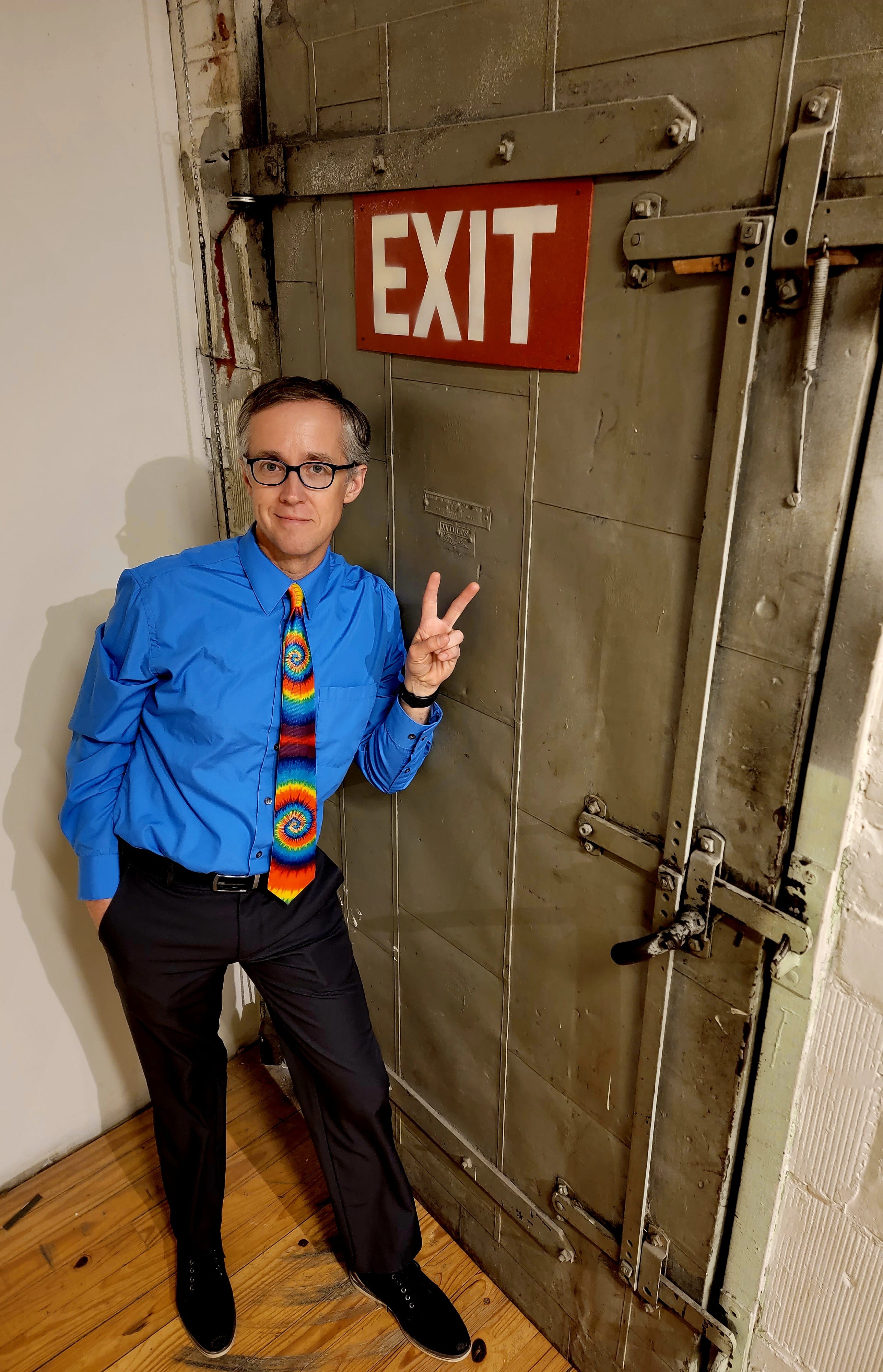
The Sheriff
When the sheriff entered my new workplace and handed me the lawsuit, I wondered why I had been served there. I cannot know the intention behind that decision, and I do not want to present my interpretation as fact. I only know what it felt like.
It felt public.
It felt intimidating.
It felt as though a conflict that might once have been resolved through a family conversation had been deliberately carried into the new life I was trying to build.
I stood there holding the documents while my past arrived in the middle of my future.
The company had sent legal correspondence. I had been served personally by the sheriff. That distinction stayed with me because it intensified the one question I could not answer.
Why had my father never called?
The lawsuit eventually moved through the court process. According to my recollection, it was dismissed after my father and his attorney did not respond to discovery. I had expected the dismissal to feel like a victory, but it did not.
Mostly, it felt sad.
Winning was never what I wanted. I had wanted freedom, peace, and an opportunity to build a life outside the business. By the time the lawsuit ended, the legal result could not repair what had already been broken.
The court dismissed the lawsuit.
The court could not restore the relationship.
The Question Beneath Everything
For almost five years, I have carried this story privately. I have replayed the events, questioned my choices, considered other perspectives, and wondered whether telling it publicly would serve any worthwhile purpose.
I am not sharing it to ask readers to choose sides. I am not pretending that I handled every moment perfectly, nor am I claiming that my parents experienced these events exactly as I did.
This is the story of what those events revealed to me.
I had spent most of my adult life equating loyalty with sacrifice. I believed that carrying the weight was proof of love and that remaining useful was a form of belonging. The custody affidavits first caused me to examine that belief. My departure from the business tested it. The cease and desist letter damaged it. The lawsuit finally broke it open.
The day my parents sued me was not the day I lost my family.
It was the day I could no longer avoid asking what family meant.
It was also the day I saw how far I had already traveled away from the person I once believed I had to be. I had left the business to breathe and to discover whether another life was possible. Before the lawsuit ever arrived, I had also taken another step toward that new life.
I had chosen a new name.
Not because I wanted to erase everything that came before.
Because I wanted to decide what came next.
And that is where the next chapter begins.
You were incredible in your role at the prior company, and I imagine you bring the same qualities to your current position. Your story is resonant to me in so many ways, as I’m sure it will be for others. Suffice it to say, you have me thinking. Keep writing!